


Days After PM Modi’s Fuel-Saving Appeal, Petrol and Diesel Become Costlier — Is India Preparing for a Bigger Economic Shock?
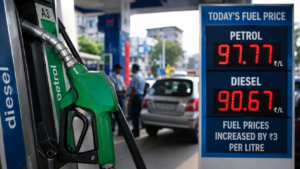
India woke up on Friday morning to a sharp and unexpected increase in fuel prices, triggering fresh concern over inflation, rising household expenses and the larger health of the economy. Petrol and diesel prices were increased by nearly ₹3 per litre across several cities, making this one of the most significant fuel revisions in recent times.
The sudden hike has come at a particularly sensitive moment. Only days ago, Prime Minister Narendra Modi appealed to citizens to conserve fuel, reduce unnecessary travel, use public transport whenever possible and avoid wasteful energy consumption. The message was presented as a precautionary step amid rising geopolitical tensions and uncertainty in global oil markets.
Soon after that appeal, Petroleum Minister Hardeep Singh Puri attempted to calm public anxiety by assuring the country that India currently has nearly 60 days of crude oil reserves and sufficient LPG stocks. Government officials repeatedly stressed that there was “no shortage” and no reason for panic.
Yet despite those assurances, fuel prices have suddenly increased overnight.
This contradiction is now raising an uncomfortable question across the country: if India’s reserves are stable and supply is secure, why is the burden reaching consumers so quickly?
The Sudden Hike: What Changed Overnight?
The fuel price increase may appear small on paper, but its economic and psychological impact is much larger.
In Delhi, petrol prices moved close to ₹98 per litre while diesel crossed ₹90. In Mumbai and several other cities, petrol prices again moved above the ₹105 mark. The increase was immediately reflected at fuel stations early in the morning, surprising many consumers who were already worried about rising living costs.
Unlike gradual monthly adjustments, sudden hikes create panic because they signal urgency. They suggest that oil companies and policymakers may be reacting to larger pressures building in international markets.
Industry experts believe the increase is linked to the recent surge in global crude oil prices following escalating tensions in West Asia and uncertainty around key oil shipping routes. Global traders are increasingly worried that prolonged instability could disrupt supply chains and push crude prices even higher in the coming weeks.
India, which imports nearly 85 percent of its crude oil requirement, remains extremely sensitive to such global movements. Even a slight increase in international crude rates can significantly impact domestic pricing because India purchases oil in US dollars.
At the same time, there is growing pressure on oil marketing companies. Reports suggest that public sector fuel retailers had been absorbing heavy losses for weeks in order to avoid sudden shocks to consumers. But with international crude prices climbing rapidly, maintaining older retail prices may no longer have been financially viable.
Still, many consumers are questioning why the hike was introduced immediately after repeated public reassurances about reserve strength.
PM Modi’s Appeal and the Public Reaction
The timing of the hike has become one of the biggest talking points nationwide.
Prime Minister Modi’s recent appeal asking people to save fuel was initially viewed as a preventive economic measure. Citizens were encouraged to:
- reduce unnecessary travel,
- use metros and public transport,
- share vehicles where possible,
- conserve electricity,
- and avoid excess fuel consumption.
The message was positioned as a responsible national effort during a period of global uncertainty.
However, after Friday morning’s fuel hike, many people are now looking at that appeal differently.
For some, the sudden increase appears to confirm fears that the government may be preparing for a prolonged period of pressure in global energy markets. Social media discussions quickly shifted from conservation to concern, with many users asking whether the country is witnessing the beginning of another inflation cycle.
The confusion has deepened because government ministers continue insisting that there is no fuel crisis.

The “60-Day Reserve” Assurance: Why Are People Still Worried?
Petroleum Minister Hardeep Singh Puri recently stated that India possesses crude oil reserves sufficient for nearly two months. According to the government, LPG and energy supplies also remain stable.
The statement was intended to reassure both markets and the public.
But economically, reserves and retail pricing do not always move together.
Experts explain that fuel prices are determined not just by present stock availability but also by:
- future procurement costs,
- international crude trends,
- shipping insurance,
- currency fluctuations,
- refining expenses,
- and anticipated geopolitical risks.
In other words, even if India has enough reserves today, oil companies may still increase prices if they believe future imports will become significantly more expensive.
However, this technical explanation has not entirely convinced the public.
Many consumers are now openly questioning:
- If reserves are healthy, why raise prices immediately?
- Is the government expecting a deeper global crisis?
- Are more hikes likely in the coming weeks?
- And if this is only a precaution, why is the common man paying the price first?
Why Fuel Price Hikes Matter Beyond Petrol Pumps
Fuel prices influence nearly every sector of the Indian economy. That is why even a ₹2–₹3 increase can eventually affect millions of households far beyond transportation alone.
Diesel powers India’s logistics network. Trucks transporting vegetables, milk, medicines, construction materials and daily essentials depend heavily on fuel.
When diesel becomes expensive, transportation companies increase freight charges. Once transportation costs rise:
- vegetables become costlier,
- food delivery prices rise,
- online deliveries become expensive,
- manufacturing costs increase,
- and retailers eventually revise prices upward.
This chain reaction is what economists call “cost-push inflation.”
The biggest concern is that inflation rarely remains limited to one sector. It spreads gradually through the entire economy.
Impact on Inflation and Household Budgets
For ordinary households, fuel hikes are often felt immediately.
Daily commuters now face:
- higher petrol expenses,
- increased cab and auto fares,
- more expensive school transportation,
- and rising travel costs.
But the larger impact may emerge over the next few weeks when food and retail prices begin adjusting.
Middle-class families already dealing with:
- expensive groceries,
- rising electricity bills,
- school fees,
- EMIs,
- and healthcare costs
may soon feel even greater pressure on monthly budgets.
Small businesses are also vulnerable. Delivery operators, retailers, restaurant owners and transporters often struggle to absorb higher fuel expenses. Eventually, most businesses pass these costs on to customers.
Economists warn that if global crude prices remain elevated, India could witness another broad inflationary cycle similar to previous oil shocks.
Pressure on the Rupee and India’s Economic Balancing Act
Another major reason behind the government’s caution is the stability of the Indian rupee.
Since India imports most of its crude oil using US dollars, any weakening of the rupee increases import costs further.
A falling rupee creates a dangerous cycle:
- imports become expensive,
- fuel prices rise,
- inflation increases,
- and economic pressure intensifies.
This is why the Reserve Bank of India has been actively intervening in currency markets to prevent excessive volatility. India’s forex reserves are being closely monitored to maintain investor confidence and stabilize the rupee during global uncertainty.
The government is also attempting to reduce long-term dependence on imported crude through:
- ethanol blending,
- renewable energy,
- electric vehicles,
- solar expansion,
- and public transport development.
But these are long-term structural changes. In the short term, India remains heavily dependent on global oil markets.
Political and Economic Questions Are Growing
The fuel hike has now become both an economic and political issue.
Opposition parties have criticized the timing, arguing that consumers are being forced to bear the burden of international instability despite repeated public assurances of preparedness.
Meanwhile, economists are divided.
Some believe the government acted early to prevent larger future losses for oil companies.
Others argue that sudden price shocks risk damaging consumer confidence at a time when inflation is already hurting purchasing power.
But beyond politics and market analysis, the strongest reaction is coming from ordinary citizens who feel caught between reassurance and reality.
The government says there is no shortage.
The reserves are reportedly stable.
Yet prices have still increased sharply overnight.
And that is precisely why this latest hike has created more anxiety than a routine revision.
What Happens Next?
Much now depends on international crude oil prices and geopolitical developments in the coming days.
If tensions in global energy markets continue escalating, analysts believe:
- fuel prices may rise further,
- transportation costs could increase,
- food inflation may accelerate,
- and consumer spending may weaken.
For now, India appears to be walking a tightrope — trying simultaneously to:
- control inflation,
- protect the rupee,
- avoid panic,
- maintain fuel supplies,
- and preserve economic stability.
But after Friday morning’s sudden increase, one question is now echoing across households, markets and businesses alike:
If India has enough reserves and there is officially “no crisis,” why did fuel prices rise so suddenly — and is this only the beginning?