

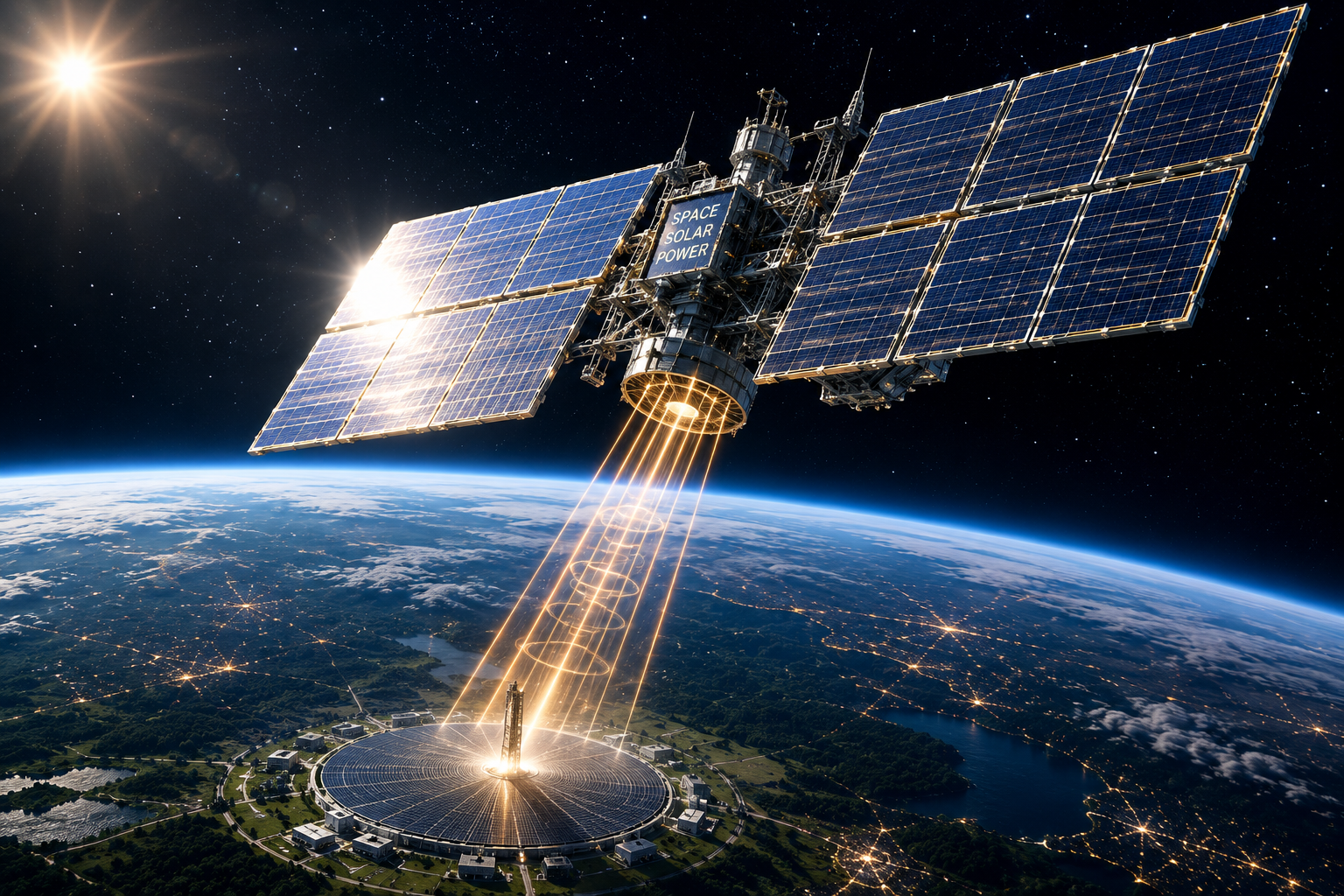
What is SSP and why would it constitute the next step for clean energy? What exactly is SSP and why would this be the next step in clean energy?
The exploration of an ambitious concept is seeking to change the future of electricity generation: Space Based Solar Power (SBSP).This is an ambitious idea that has the potential to revolutionize the way we produce electricity as the world strives to create sustainable methods to meet the growing demand for energy. Space-based solar power systems would be able to harness sunlight in space and beam it back to Earth, allowing them to generate power even during the night or cloudy days that are common on Earth.
While still in the development phase, experts say it could be a source of continuous clean energy, aiding countries to lessen dependence on fossil fuels and global climate goals.
What is space-based solar power? What is SBSP?
Space-Based Solar Power is an idea to use large solar panels in orbit around Earth to absorb sunlight all year round. The solar power is converted to either microwave or laser beams then sent wirelessly to receiving stations on Earth. These ground stations then convert the energy into electricity to be provided to homes, businesses, and industries.
This method can enable the solar power systems to overcome many of the restrictions faced by the traditional conventional solar power system.
How is it different to conventional solar energy?
The electricity is generated by solar panels only during the day time and they are influenced by weather changes. They are also affected by geographic location and season.
However, space-based solar power eliminates these issues since satellites can receive continuous sunlight throughout most of the year. This sparks them to produce a lot more energy than equivalent-sized solar farms here on Earth.
Electricity generation could also be continuous, thus eliminating the need for large battery storage systems which are currently employed in the case of renewable energy sources.
Potential Benefits
Continuous Renewable Energy
The greatest benefit of SBSP is that it can produce electricity nearly 24/7, irrespective of climate or time of day.
Reduced Carbon Emissions
The use of renewable energy for remote areas.
Helping to meet increasing electricity demand. Meeting and enabling increased electricity demand.
Space-based solar power could be another reliable source of renewable energy, as EVs, artificial intelligence and data centers continue to consume ever more electricity.
Major Challenges
Although it has great potential, there are several hurdles in the way of making SBSP commercially viable.
High Launch Costs
It is very costly to launch large solar arrays into space. Complex Engineering
The challenges of building, assembling and maintaining large solar power stations in orbit involve the use of robotics and autonomous systems.
Wireless Power Transmission
Researchers continue to develop ways to safely and efficiently carry a lot of energy over a great distance — thousands of kilometers.
Space Debris
As the number of satellites in Earth’s orbit grows, so do the chances of collisions with space debris, making space traffic management systems essential.
Global Research and Development
Several countries are actively researching space-based solar power, as is a few private space power companies..
Commercialization is still years away, but investments in SBSP are increasing.
What are the prospects for space-based solar power? What lies ahead for space solar power?
Experts feel that future space power stations may operate together with the ground-based renewable energy resources (wind, hydroelectric, traditional solar fields).
AI could also apply to the control of solar arrays in orbit, energy distribution and handling, and even robotic maintenance.
With the success of these technology and economic challenges, SBSP can be a reliable clean electricity source for millions of humans and can also contribute to the long-term carbon neutrality goals of countries.
Conclusion
One of the most ambitious concepts in the field of renewable energy is considered Space-Based Solar Power.