


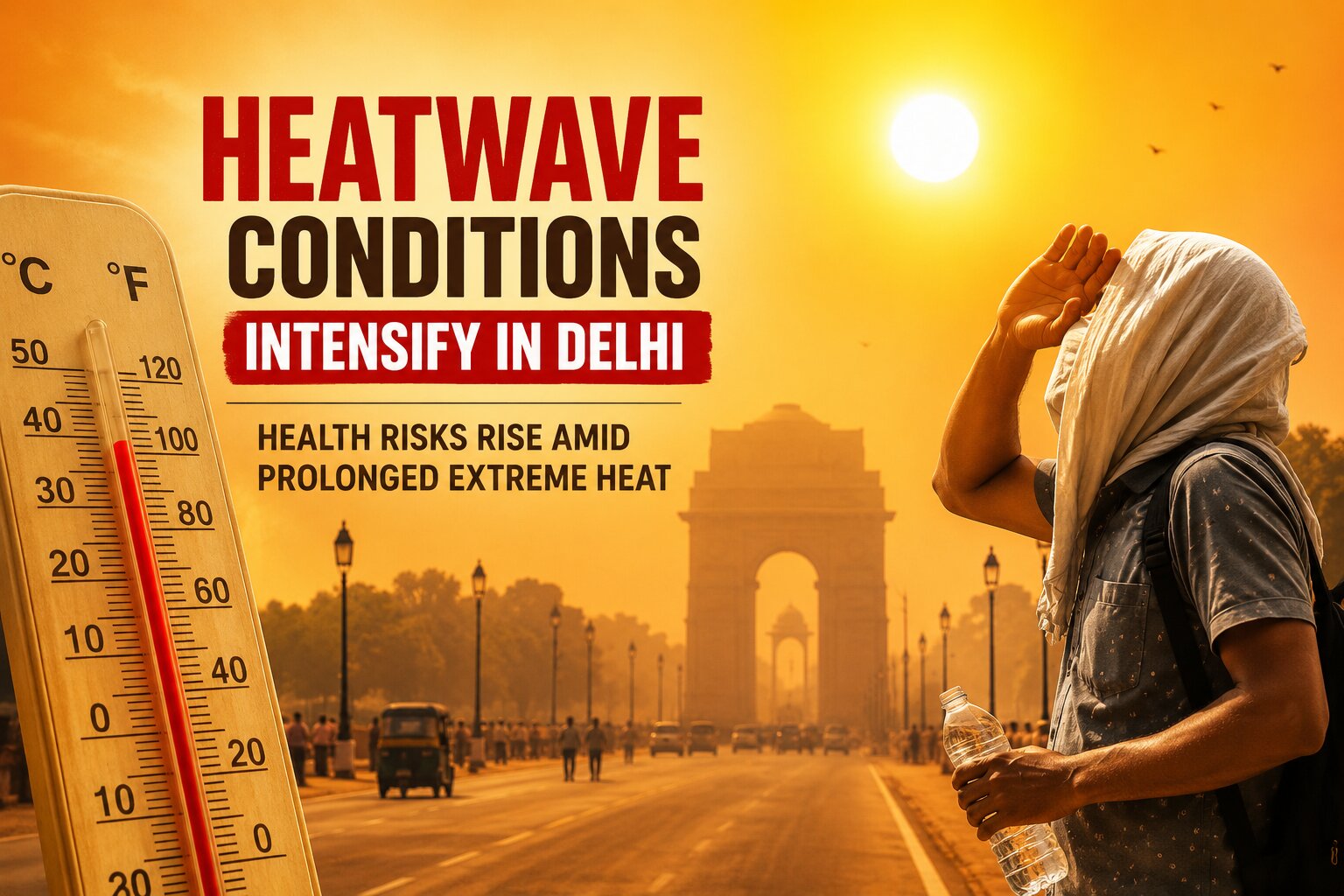
Delhi is currently under the grip of intense heatwave conditions, with temperatures frequently soaring to approximately 44°C–46°C across various sections of the city and its surrounding National Capital Region. The India Meteorological Department has issued yellow to orange alerts, cautioning inhabitants about amplified health hazards stemming from extended exposure to the extreme warmth.
Based on meteorological readings, the area is also experiencing uncommonly mild nights, where minimum temperatures are staying above average. In certain locales, elevated humidity is exacerbating the heat stress, contributing to greater discomfort and an increased likelihood of heat-induced ailments. Officials have suggested that these conditions might persist for a number of days.
Medical professionals stress that heatwaves are frequently labeled “silent calamities” because, unlike visible destruction from floods or storms, they can inflict severe and occasionally lethal consequences on human well-being. Extended exposure to extreme heat can result in dehydration, heat exhaustion, and sunstroke, with those most at risk including outdoor labourers, senior citizens, and youngsters.
Research in climatology and public health suggests that heatwaves rank among the most lethal weather-related incidents worldwide. Differing from abrupt natural catastrophes, their consequences often develop slowly, leading to an undercount of heat-related deaths in numerous regions. Nevertheless, specialists also point out that comparisons with other disasters fluctuate based on magnitude, duration, and the ways in which data is recorded.
Meteorological organizations underscore that while heatwaves are natural atmospheric occurrences, their occurrence and severity have grown over recent times. Contributing elements such as swift urban expansion, diminished green spaces, and escalating global temperatures are fostering more extreme heat circumstances in metropolitan zones like Delhi.
Authorities are persistently advising residents to steer clear of direct sun during the height of afternoon hours, maintain adequate fluid intake, and restrict outdoor pursuits whenever feasible. Public health advisories continue to be in effect as officials keep a close watch on the changing weather patterns.