

Introduction
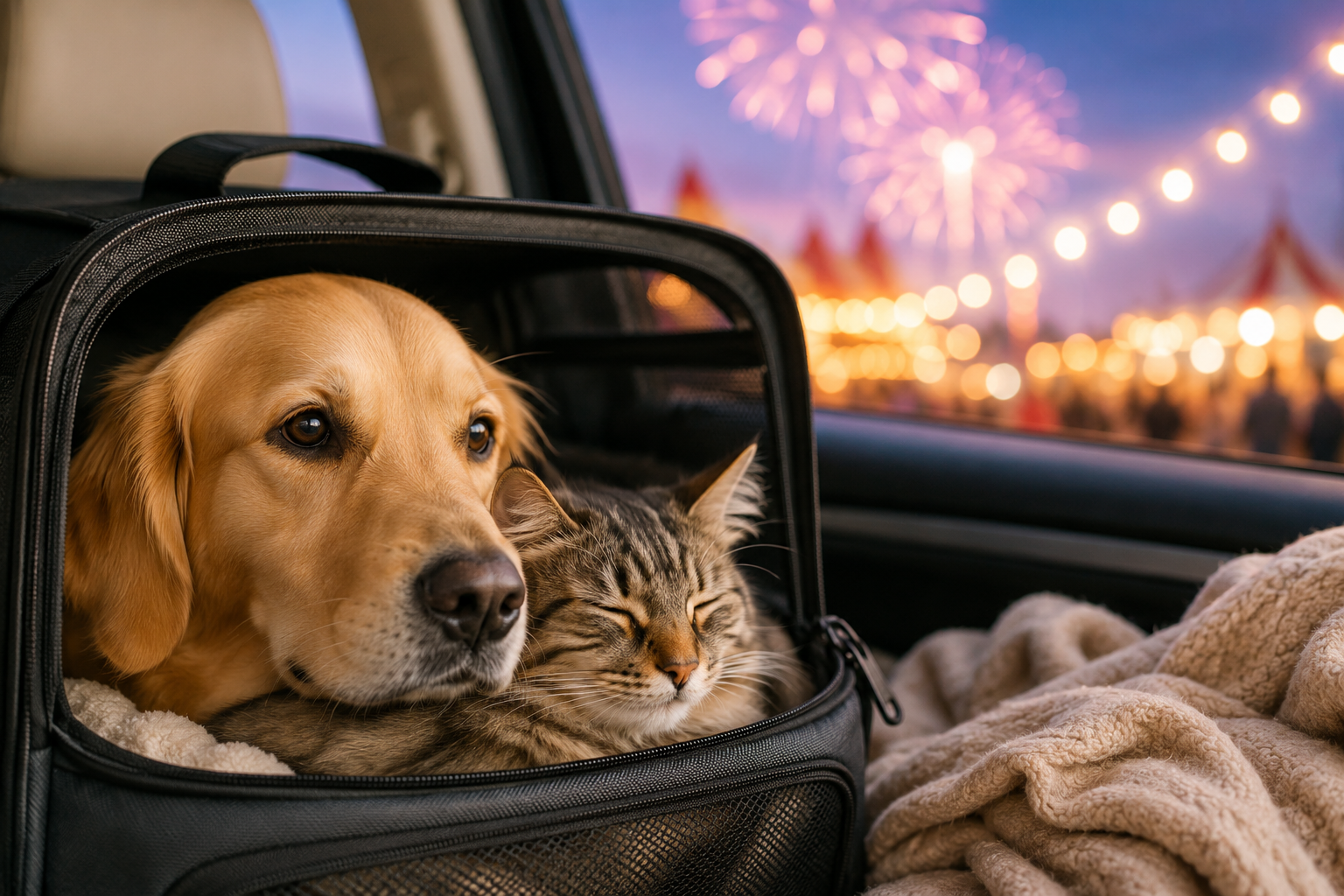
Pets are sensitive companions who can easily become anxious during sudden environmental changes. Loud noises during festivals, crowded gatherings, fireworks, and even long-distance travel can create stress and fear in animals. While humans may enjoy celebrations and vacations, pets often struggle to understand what is happening around them. Anxiety in pets can lead to excessive barking, trembling, hiding, loss of appetite, aggression, or even health problems if not managed properly.
As responsible pet owners, it is important to recognize the signs of anxiety and take preventive measures to keep our furry friends calm and comfortable. With proper planning, care, and attention, travel and festive occasions can become less stressful for pets.
Understanding Anxiety in Pets
Pets, especially dogs and cats, are creatures of habit. They feel safest in familiar surroundings and routines. Sudden loud sounds, unfamiliar people, crowded places, or long hours in vehicles can make them feel insecure.
Common signs of anxiety in pets include:
- Excessive barking or meowing
- Trembling or shaking
- Hiding under furniture
- Restlessness or pacing
- Loss of appetite
- Aggressive behavior
- Panting or drooling excessively
Recognizing these signs early helps owners provide comfort before the anxiety becomes severe.
Tips to Reduce Anxiety During Travel
1. Prepare Your Pet Before the Journey
If your pet is not used to traveling, start with short trips before planning a long journey. This helps them gradually become comfortable with movement and unfamiliar surroundings.
Carry your pet’s favorite blanket, toys, or bedding during travel. Familiar scents provide emotional comfort and help reduce stress.
2. Use a Comfortable Carrier
A safe and well-ventilated carrier gives pets a sense of security. Ensure the carrier is spacious enough for them to sit, stand, and turn around comfortably. Soft padding inside the carrier can make the journey more relaxing.
3. Maintain Feeding Schedules
Avoid feeding heavy meals immediately before travel, as this may cause discomfort or motion sickness. Offer light food and ensure your pet stays hydrated throughout the journey.
4. Take Breaks During Long Trips
For road travel, take regular breaks so your pet can stretch, walk, and relieve themselves. Fresh air and movement can significantly reduce travel-related stress.
5. Stay Calm Yourself
Pets can sense human emotions. If owners appear stressed or impatient, pets may become more anxious. Speaking softly and reassuring your pet during the journey can help them feel safe.
Managing Pet Anxiety During Festivals
1. Create a Safe Space at Home
During festivals with fireworks or loud music, create a quiet and comfortable room where your pet can stay peacefully. Close windows and curtains to reduce outside noise and visual disturbances.
Adding soft bedding, toys, and calming music can help pets relax.
2. Avoid Leaving Pets Alone
Pets often feel more frightened when left alone during noisy celebrations. Stay close to them whenever possible and comfort them with gentle interaction.
3. Distract Them with Activities
Interactive toys, treats, or play sessions can divert your pet’s attention from loud noises outside. Engaging activities help reduce fear and nervousness.
4. Use Calming Products
Pet-safe calming sprays, anxiety wraps, or pheromone diffusers may help soothe anxious pets. Consult a veterinarian before using any medication or calming supplements.
5. Keep Identification Updated
Festivals can increase the chances of pets running away due to fear. Ensure your pet wears an ID tag with updated contact information. Microchipping is also a helpful safety measure.
Importance of Veterinary Guidance
If your pet experiences severe anxiety frequently, professional guidance may be necessary. Veterinarians can recommend behavioral training, calming therapies, or safe medications if needed.
Never give human medicines to pets without medical advice, as some medications can be dangerous for animals.
Building Long-Term Confidence in Pets
Reducing anxiety is not only about handling one event but also about building confidence over time. Positive reinforcement training, regular exercise, social interaction, and maintaining routines can help pets feel more secure in different situations.
Gradual exposure to travel environments and controlled exposure to festival sounds can also improve their tolerance levels.
Conclusion
Travel and festivals can be overwhelming for pets, but with patience and preparation, owners can help reduce their anxiety significantly. Creating a safe environment, maintaining routines, and offering reassurance are simple yet effective ways to keep pets calm and comfortable.
Our pets depend on us for their emotional well-being. By understanding their fears and responding with care, we can ensure they feel safe even during stressful situations. A calm and happy pet not only enjoys a healthier life but also strengthens the special bond shared with its owner.
FAQs
1. Why do pets get anxious during festivals?
Pets are sensitive to loud noises, flashing lights, and crowded environments. Fireworks and loud music can create fear and confusion in animals.
2. How can I calm my dog during fireworks?
Create a quiet safe space indoors, close windows, play calming music, and stay near your dog to comfort them.
3. Are calming treats safe for pets?
Some calming treats are safe, but it is always best to consult a veterinarian before giving any supplements or medications.
4. How can I reduce my pet’s travel anxiety?
Use a comfortable carrier, carry familiar items, take short practice trips, and maintain a calm environment during travel.
5. When should I consult a veterinarian for pet anxiety?
If your pet shows severe fear, aggression, loss of appetite, or continuous anxiety symptoms, seek professional veterinary advice.