

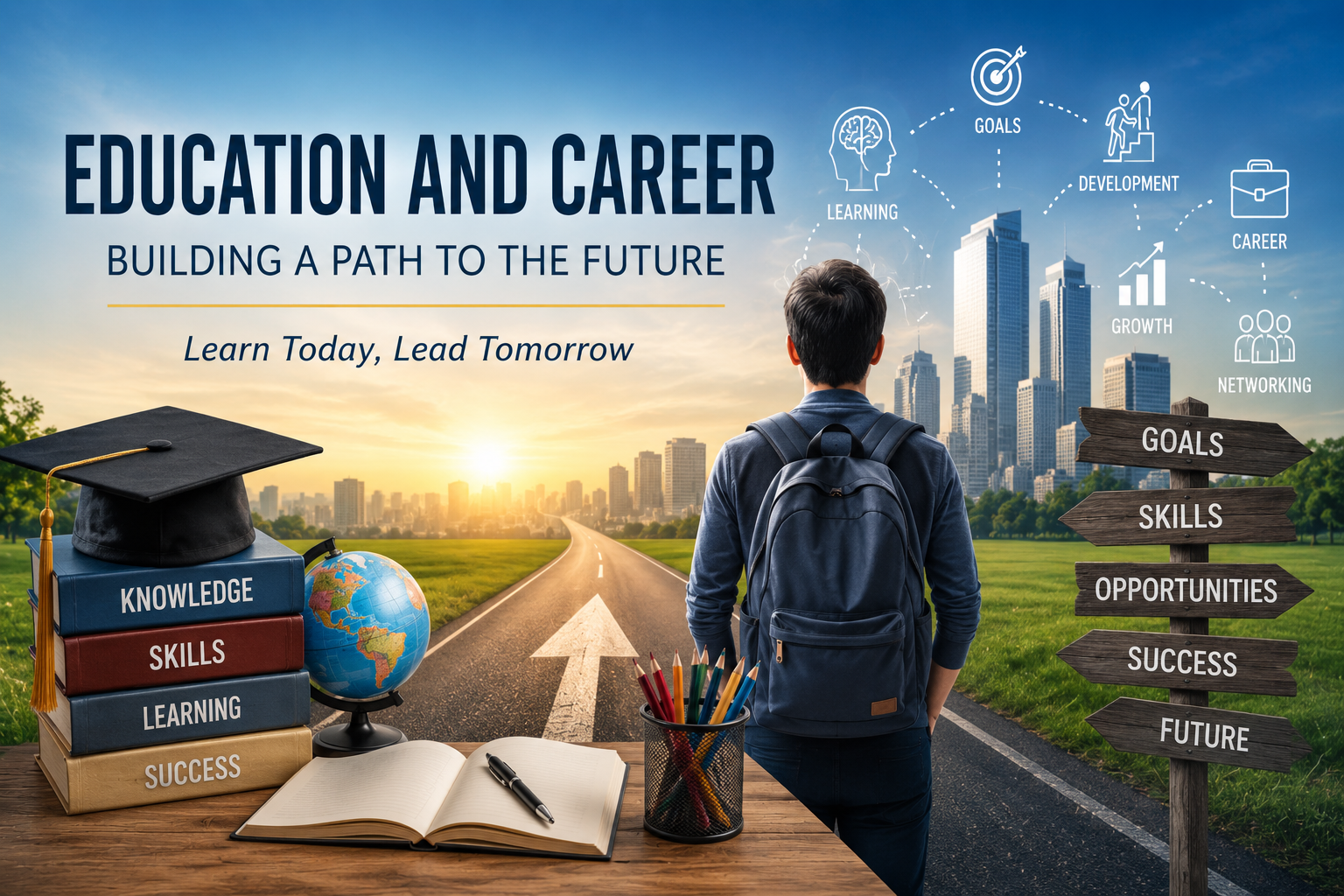
Education and Career: Building a Path to the Future
Education and career are closely connected. Education provides the knowledge and skills needed to build a successful career, while a career gives purpose to education by allowing individuals to apply what they have learned in the real world. As the world continues to evolve rapidly, education and career planning have become more important than ever. New industries are emerging, technology is transforming workplaces, and students must continuously develop new skills to stay competitive.
When I think about education, I do not simply think about attending school or passing examinations. Education teaches people how to think critically, solve problems, and understand the world around them. It helps individuals discover their strengths, interests, and values. Similarly, a career is not only about earning money; it is about making meaningful contributions, helping others, and achieving personal growth. Together, education and career form the foundation of a successful and fulfilling life.
The Link Between Education and Career
Education is often the first step toward building a rewarding career. It provides the basic knowledge and training required for different professions while helping individuals identify their talents and interests. Whether someone dreams of becoming a teacher, engineer, doctor, artist, or entrepreneur, education plays a crucial role in preparing them for their chosen field.
A strong educational background can open doors to a wide range of opportunities. Employers seek individuals who can communicate effectively, think critically, solve problems, and adapt to changing situations. These valuable skills are developed through education and practical learning experiences.
However, education is not limited to obtaining a degree. Modern employers value practical skills, experience, and a willingness to learn. This is why education and career development remain closely connected throughout life.
Changes in Modern Careers
The world of work has changed significantly over the past few decades. In the past, many people selected a profession and remained in the same role throughout their careers. Today, career paths are far more flexible and dynamic.
Technological advancements, globalization, and the internet have created entirely new industries and career opportunities. Fields such as artificial intelligence, digital marketing, cybersecurity, software development, and data analytics are growing rapidly. Remote work has also become increasingly common, allowing professionals to work for organizations located anywhere in the world.
These developments mean that learning does not stop after graduation. Professionals must continue updating their knowledge and skills throughout their careers. Lifelong learning has become essential for long-term success.
Importance of Skill-Based Education
One of the most significant developments in modern education is the increasing emphasis on practical skills. While academic knowledge remains important, employers also seek candidates who can apply their learning effectively in real-world situations.
Skill-based education focuses on developing abilities such as communication, teamwork, leadership, critical thinking, creativity, and problem-solving. These skills are valuable across different industries and help individuals adapt to changing work environments.
Personally, I believe skill-based learning helps bridge the gap between education and employment. When students participate in internships, workshops, projects, and training programs, they gain practical experience and confidence. These experiences prepare them for workplace challenges and make them more career-ready.
As industries continue to evolve, educational institutions are increasingly incorporating practical learning opportunities into their programs to ensure students graduate with both knowledge and skills.
Challenges Faced by Students
Despite the importance of education and career planning, many students face significant challenges. One common difficulty is deciding which career path to pursue. With so many options available, choosing the right direction can feel overwhelming.
Students also experience pressure to perform well academically. Concerns about examinations, competition, grades, and family expectations can create stress and uncertainty. Financial limitations may further restrict access to quality education and career opportunities.
The rapidly changing job market presents another challenge. Skills that are highly valued today may become less relevant in the future. This uncertainty requires students to remain flexible and committed to continuous learning.
To overcome these challenges, students need support from parents, teachers, mentors, and career counselors. Proper guidance can help individuals identify suitable career paths, set realistic goals, and make informed decisions about their future.
How to Plan a Good Career
Successful career planning begins with self-awareness. Individuals should take time to understand their interests, strengths, values, and long-term goals. This understanding helps them choose a career that aligns with their abilities and aspirations.
Research is equally important. Students should learn about different professions, educational requirements, salary expectations, and future growth opportunities. Speaking with professionals, attending career workshops, and seeking mentorship can provide valuable insights.
Setting clear goals and creating a structured plan can help individuals stay focused. Building relevant skills, gaining practical experience, and staying informed about industry trends are all essential parts of career development.
Most importantly, patience and dedication are crucial. Career success rarely happens overnight. It requires consistent effort, continuous learning, and the willingness to learn from both successes and setbacks.
The Importance of Lifelong Learning
In today’s fast-changing world, learning should not end after formal education. Lifelong learning enables individuals to remain competitive, adaptable, and prepared for new opportunities.
Online courses, certifications, professional training programs, workshops, and self-learning resources allow people to update their knowledge and develop new skills throughout their careers. Continuous learning helps individuals stay current with industry developments and increases their chances of professional growth.
Those who embrace lifelong learning are often better prepared to seize opportunities and navigate changes in the workplace.
Conclusion
Education and career are deeply interconnected and play a vital role in shaping an individual’s future. Education provides knowledge, skills, and opportunities for growth, while a career allows people to apply those abilities in meaningful ways.
As industries continue to evolve and new opportunities emerge, the importance of skill development, career planning, and lifelong learning becomes even greater. Although students may face challenges along the way, determination, proper guidance, and continuous effort can help them achieve their goals.
Ultimately, education is not just about securing employment, and a career is not solely about earning an income. Together, they help individuals build a meaningful, successful, and fulfilling life. By investing in education and thoughtfully planning their careers, students can create a strong pathway toward a brighter and more rewarding future.