

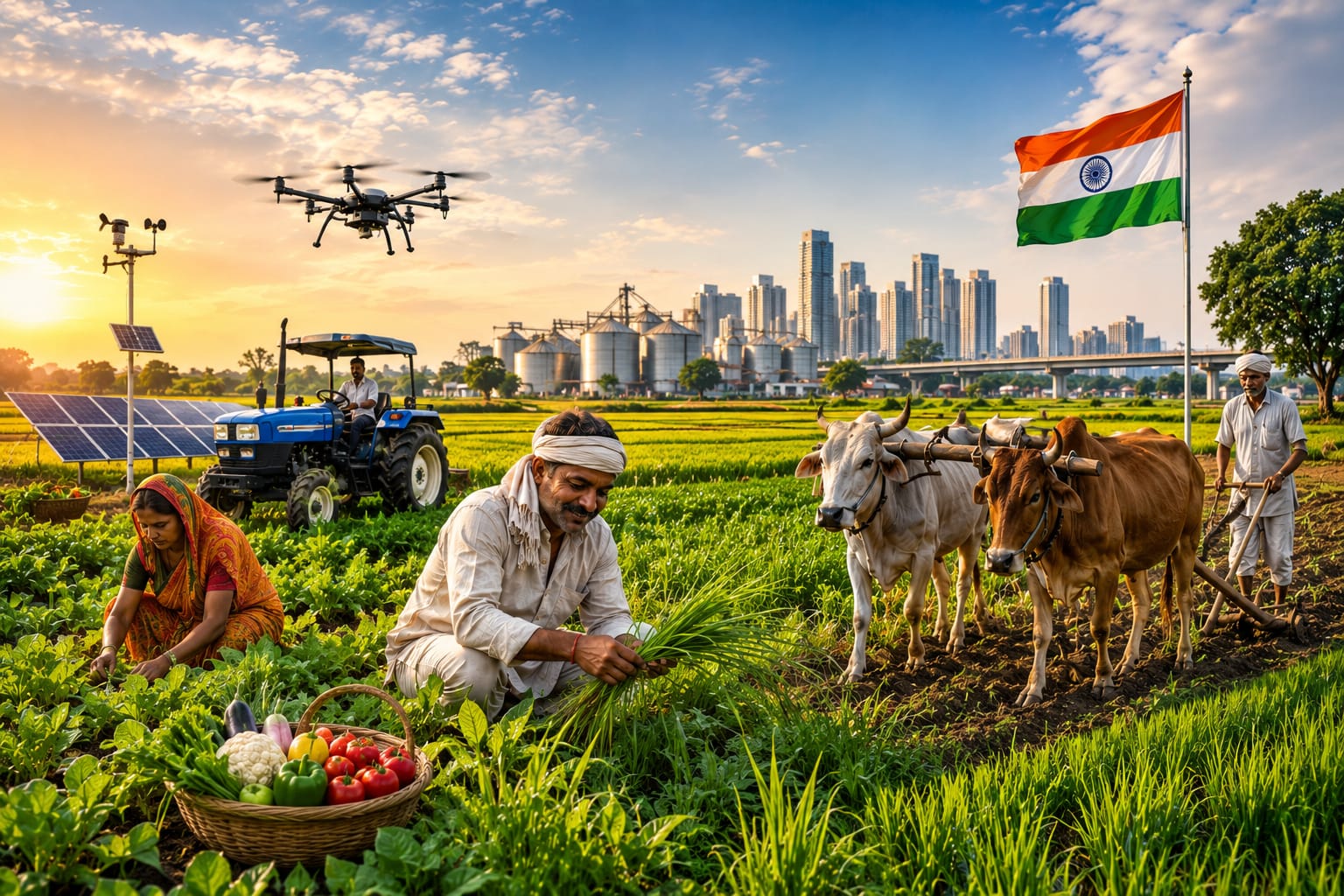
Agriculture has been the backbone of the economy for a very long time. It is not a way to grow food but it is also a way of life for millions of people in India. India is one of the producers of crops like rice, wheat, sugarcane, cotton and pulses in the world. Even though India is getting more industrialized and technologically but advanced agriculture is still very important for the countries development. This raises a question: should agriculture keep going in India? Some people think India should focus more on industry and services to grow economically while others believe agriculture is necessary for food, jobs and the development of areas. Looking at both sides of the argument helps us understand why agriculture is so important.
Importance of Agriculture in India
Agriculture is a significant part of the Indian economy. It helps millions of farmers and farm workers make a living. A lot of people in India depends on farming for money and jobs.
Agriculture also provides materials to industries like textiles, food processing, sugar and dairy production. So agriculture does not just produce food. It also helps industry and economic growth.
Also agriculture helps keep communities stable. It supports economies and helps reduce poverty in many parts of the country.
Contribution to Food Security
One of the reasons for keeping agriculture in India is that it helps ensure people have enough food. Food is something everyone needs to survive and agriculture is the way we produce food.
India has a population and it needs a steady supply of food. Crops like rice, wheat, pulses, fruits and vegetables give people the nutrients they need. Without agriculture India would have to import a lot of food which could be expensive and risky during global shortages or economic crises.
The Green Revolution in the 1960s and 1970s showed how important agriculture is for producing food. Increased crop production helped India reduce its dependence on imported food and strengthened its food security.
Agriculture and Employment
Agriculture is one of the sources of jobs in India. Millions of people work as farmers, laborers, transporters, traders and workers in industries.
In areas agriculture is often the main way people make a living. If agriculture were to decrease many families could lose their jobs and struggle financially. So agriculture plays a role in supporting family incomes and keeping rural economies going.
Also agriculture creates jobs in areas like food processing, storage, transportation and marketing.
Contribution to the Economy and Rural Development
Even though agricultures contribution to Indian economy has decreased compared to sectors it is still very important. Agricultural exports earn foreign exchange and contribute to national income.
Agriculture also promotes development. Better farming practices increase incomes create business opportunities and stimulate investment in infrastructure like roads, irrigation systems and storage facilities. As a result agricultural growth often leads to economic development in rural areas.
Arguments Against Continuing Agriculture
Some people argue that India should reduce its dependence on agriculture and focus more on manufacturing, technology and services. They say agriculture often generates incomes compared to other sectors and is vulnerable to weather market fluctuations and natural disasters.
Others argue that using much water, fertilizers and pesticides can harm the environment. Issues like soil degradation, groundwater depletion and climate change have raised concerns about the long-term sustainability of farming practices.
Also small landholdings and limited access to technology can reduce productivity and profitability for many farmers.
Challenges Faced by Agriculture
Despite its importance agriculture faces challenges in India.
1. Climate Change
Unpredictable rainfall, droughts, floods and rising temperatures affect crop production. Increase risks for farmers.
2. Landholdings
Many farmers own small plots of land making it hard to achieve economies of scale and invest in modern equipment.
3. Limited Access to Technology
Some farmers do not have access to machinery, quality seeds and modern farming techniques that could improve productivity.
4. Market and Price Fluctuations
Agricultural income often depends on market prices, which can vary significantly and create uncertainty.
5. Inadequate Infrastructure
Insufficient storage facilities, transportation networks and irrigation systems can lead to -harvest losses and reduced efficiency.
Measures to Improve and Modernize Agriculture
To ensure agriculture succeeds in the term several improvements are necessary.
Adoption of Modern Technology
Using machinery, precision farming and digital tools can increase productivity and reduce costs.
Better Irrigation Systems
Efficient irrigation methods like drip irrigation and sprinkler systems can improve water management and crop yields.
Farmer Education and Training
Providing farmers with knowledge about agricultural practices can help them increase productivity and sustainability.
Improved Market Access
Strengthening supply chains and providing access to markets can help farmers get fair prices for their produce.
Sustainable Farming Practices
Promoting friendly farming methods can help protect natural resources while maintaining agricultural productivity.
My Opinion
In my opinion agriculture should definitely continue in India because it is essential for life and livelihoods. Agriculture provides the food that people need to survive and supports millions of families across the country. It contributes to growth generates employment and plays a key role in rural development.
I believe that agriculture is not an economic activity but it is also a fundamental part of Indias social and cultural identity. While modernization and industrial development are important they should complement agriculture than replace it. Strengthening and improving the sector is crucial for ensuring food security reducing poverty and supporting sustainable development.
Agriculture remains one of the important sectors in India despite the growth of industry and services. It ensures food security provides employment supports development and contributes to economic stability. Although challenges like climate change, low productivity and market uncertainties exist these issues can be addressed through modernization, technology, improved infrastructure and sustainable farming practices. While there are arguments for reducing dependence on agriculture its importance, to survival and national development cannot be overlooked. Therefore agriculture should continue in India. Be strengthened to meet the needs of future generations while supporting the countries overall progress.