

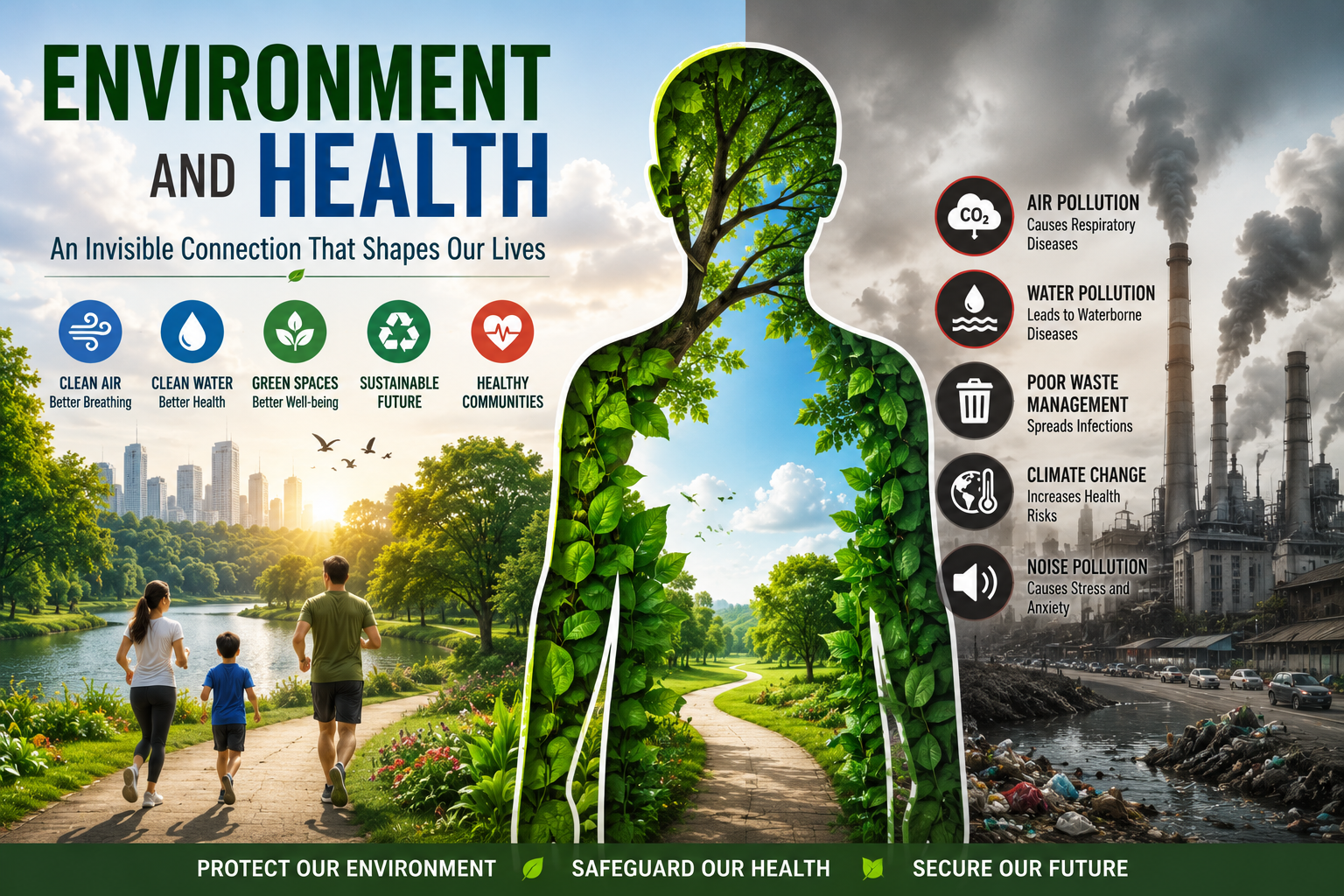
Environment and Health: An Invisible Connection That Shapes Our Lives
The environment and human health are deeply connected in ways that many people often overlook. Every day, we breathe air, drink water, eat food, and interact with the world around us. The quality of these basic necessities directly affects our physical and mental well-being. A clean and healthy environment supports a better quality of life, while a polluted and damaged environment can lead to a wide range of health problems.
Growing up, I often heard the phrase, “Health is Wealth.” As I became more aware of environmental issues, I realized how closely our health depends on the condition of our surroundings. Whether it is the air we breathe, the cleanliness of our neighborhoods, or the availability of green spaces, the environment influences our lives every day. Protecting the environment is not only about preserving nature; it is also about safeguarding our own health and the well-being of future generations.
How the Environment Affects Health
The environment affects human health in numerous ways. Access to clean air, safe drinking water, proper sanitation, and healthy living conditions are all essential for maintaining good health. When these factors are compromised, the risk of illness increases significantly.
Air pollution is one of the most serious environmental health concerns today. Vehicles, factories, construction activities, and the burning of waste release harmful pollutants into the atmosphere. Continuous exposure to polluted air can cause respiratory diseases such as asthma, bronchitis, and other lung-related conditions. In many urban areas, poor air quality has become a major public health issue.
Water pollution is another significant concern. Contaminated water can spread diseases such as cholera, typhoid, and other waterborne infections. Access to clean and safe drinking water is essential for maintaining good health and preventing disease outbreaks. Poor waste management and inadequate sanitation systems further contribute to health risks in many communities.
The environment also affects mental health. Living in overcrowded, noisy, or polluted surroundings can increase stress, anxiety, and emotional fatigue. In contrast, spending time in natural environments such as parks, gardens, and forests can promote relaxation, reduce stress, and improve overall mental well-being.
Benefits of a Healthy Environment
A healthy environment provides numerous benefits for both individuals and communities. Clean air reduces the risk of respiratory illnesses and improves overall physical health. Safe water supplies protect people from disease and support healthy living.
Green spaces such as parks, gardens, and recreational areas encourage physical activity and social interaction. They provide opportunities for walking, exercising, and spending quality time outdoors.
Personally, I often feel refreshed and energized when I spend time in natural surroundings. Whether it is taking a walk in a park, sitting beneath a tree, or enjoying a peaceful garden, nature has a calming effect on the mind. These experiences demonstrate that environmental health influences not only our bodies but also our emotional well-being.
Healthy environments also strengthen communities. Clean neighborhoods encourage civic pride, social interaction, and community engagement. When people live in healthier surroundings, they are often more productive, active, and capable of contributing positively to society.
Major Environmental Threats Today
Several environmental challenges currently threaten human health on a global scale. One of the most pressing concerns is climate change. Rising global temperatures are contributing to extreme weather events such as heatwaves, floods, droughts, and storms. These events can damage infrastructure, disrupt food supplies, and increase the spread of diseases.
Air pollution continues to be a major concern in many parts of the world. Rapid urbanization and industrial growth have increased the concentration of harmful pollutants in the atmosphere, affecting millions of people every year.
Water pollution remains another serious challenge. Industrial waste, agricultural chemicals, and untreated sewage can contaminate rivers, lakes, and groundwater sources. This contamination affects both human populations and ecosystems.
Deforestation also poses significant environmental and health risks. Trees play a crucial role in maintaining air quality, regulating temperatures, and supporting biodiversity. Large-scale deforestation contributes to climate change and disrupts natural ecosystems.
Plastic pollution has emerged as a growing global problem. Plastic waste harms wildlife, pollutes natural habitats, and can enter the food chain through microplastics. Scientists continue to study the long-term health impacts of plastic exposure on humans, but concerns are increasing worldwide.
The Role of Government and Society
Governments play a vital role in protecting both environmental quality and public health. Effective environmental policies, pollution control regulations, and sustainable development initiatives can significantly reduce environmental risks.
Investing in renewable energy sources, improving public transportation systems, and enforcing environmental regulations can help reduce pollution levels. Governments must also ensure access to clean water, proper sanitation, and waste management services for all citizens.
Public awareness and education are equally important. Schools, community organizations, and environmental campaigns can help people understand the connection between environmental protection and human health. When individuals are informed, they are more likely to adopt environmentally responsible behaviors.
Society as a whole must participate in environmental conservation efforts. Communities, businesses, and individuals all share responsibility for creating a healthier and more sustainable future.
Simple Actions for a Healthier Environment
Every individual can contribute to environmental protection through small daily actions. Reducing waste, recycling materials, conserving water, using public transportation, and planting trees are simple steps that can make a meaningful difference.
Avoiding single-use plastics, saving energy at home, and supporting environmentally responsible businesses can also help reduce environmental impact. When millions of people adopt these habits, the collective effect can be significant.
Protecting the environment does not always require large-scale changes. Small, consistent actions can create positive outcomes for both human health and the planet.
Conclusion
The connection between environment and health is undeniable. The quality of the world around us directly influences how we live, feel, and function. Clean air, safe water, green spaces, and healthy ecosystems contribute to better physical and mental well-being, while pollution, climate change, and environmental degradation create serious health challenges.
Protecting the environment is not solely a responsibility for governments or environmental organizations—it is a responsibility shared by everyone. By making conscious choices and supporting sustainable practices, we can help create a healthier future for ourselves and future generations.
Ultimately, caring for the environment means caring for human health. A cleaner, greener, and more sustainable world benefits not only nature but also every person who depends on it.