
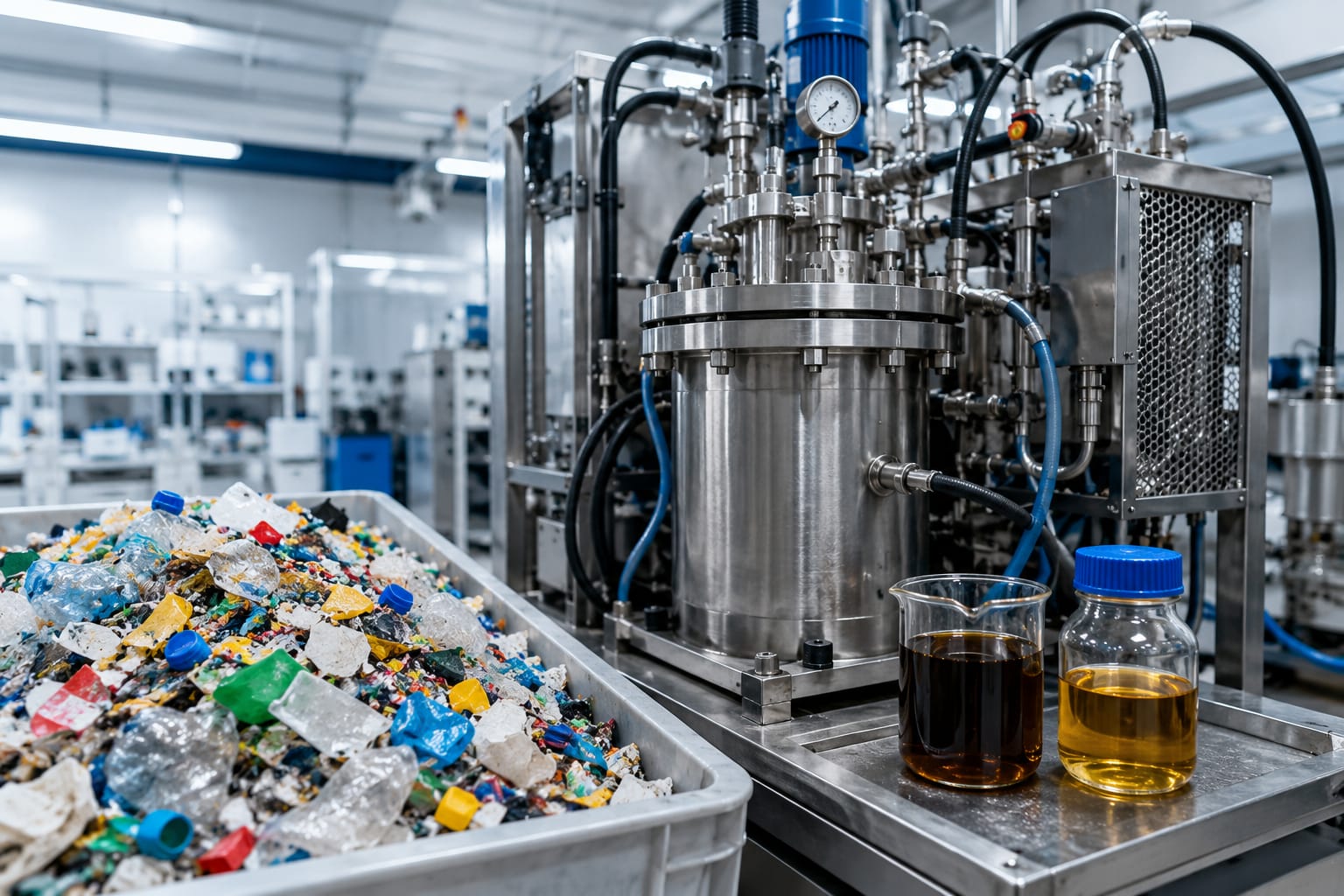
AMSTERDAM, June 10 — Researchers at the University of Amsterdam have developed a mobile reactor capable of converting mixed plastic waste into virgin-quality oil in less than 30 minutes, offering a potential breakthrough in global recycling efforts.
The 25-litre pilot reactor uses a process known as solvothermal liquefaction, which enables it to process unsorted plastic waste and transform it into high-quality oil suitable for producing new plastics and chemicals. Unlike many conventional recycling methods, the technology can handle mixed plastic streams that are often difficult to recycle.
Scientists say the innovation could help address one of the world’s most pressing environmental challenges: the growing volume of plastic waste and persistently low recycling rates. Large quantities of discarded plastics currently end up in landfills, incinerators, or the natural environment.
The reactor is scheduled for its first real-world field trial in Spain later this year, where researchers will evaluate its performance outside laboratory conditions.
Experts believe the technology could support circular economy goals by turning waste into a reusable resource and reducing reliance on fossil-fuel-derived raw materials. If successfully scaled, the system could improve recycling efficiency and help countries manage plastic waste more sustainably.
The development highlights growing efforts to find advanced solutions for tackling the global plastic pollution crisis.