


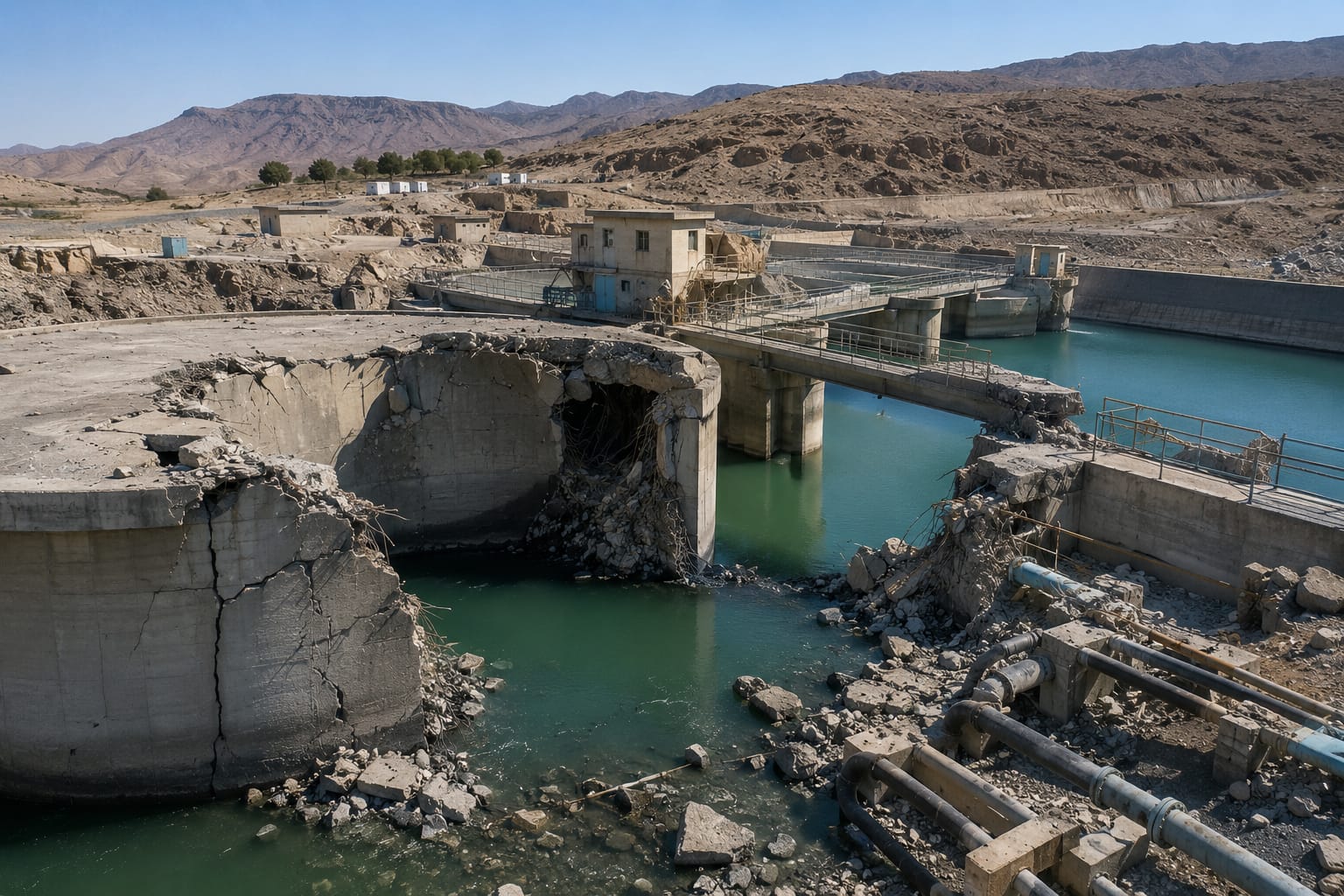
Tensions between the United States and Iran have intensified following reports that two major water reservoirs in Iran’s southern Sirik region were damaged during US military strikes, disrupting water supplies for approximately 20,000 residents. The incident has raised concerns about the impact of military operations on civilian infrastructure and essential public services.
According to Iranian officials, the strikes damaged key water facilities serving communities in Sirik, leading to interruptions in water distribution across the area. Authorities stated that emergency teams were deployed to assess the damage and begin restoration efforts. Local officials said thousands of households were affected by the disruption, prompting the delivery of temporary water supplies to impacted communities.
The reported strikes came after the United States claimed that Iran had been involved in the downing of a US Army Apache helicopter off the coast of Oman. US military officials stated that the operation targeted what they described as military-related facilities and assets. However, Washington has not publicly confirmed that water infrastructure was intentionally targeted during the strikes.
Humanitarian organizations and international observers have expressed concern over reports of damage to facilities that provide essential services to civilians. Experts in international humanitarian law have emphasized the importance of protecting civilian infrastructure during armed conflicts and ensuring that military actions minimize harm to non-combatants.
Analysts note that incidents involving water, energy, and healthcare infrastructure often draw international scrutiny because of their direct impact on civilian populations. Calls for independent assessments and transparency regarding the extent of the damage have increased following the reports.
Iranian authorities have announced efforts to restore water services as quickly as possible, while diplomatic discussions concerning the broader regional situation continue. International stakeholders have urged restraint and emphasized the need to prevent further escalation.
As investigations into the incident continue, the reported damage to water infrastructure highlights the humanitarian challenges associated with modern conflicts and the potential consequences for regional stability and civilian welfare.