

Introduction
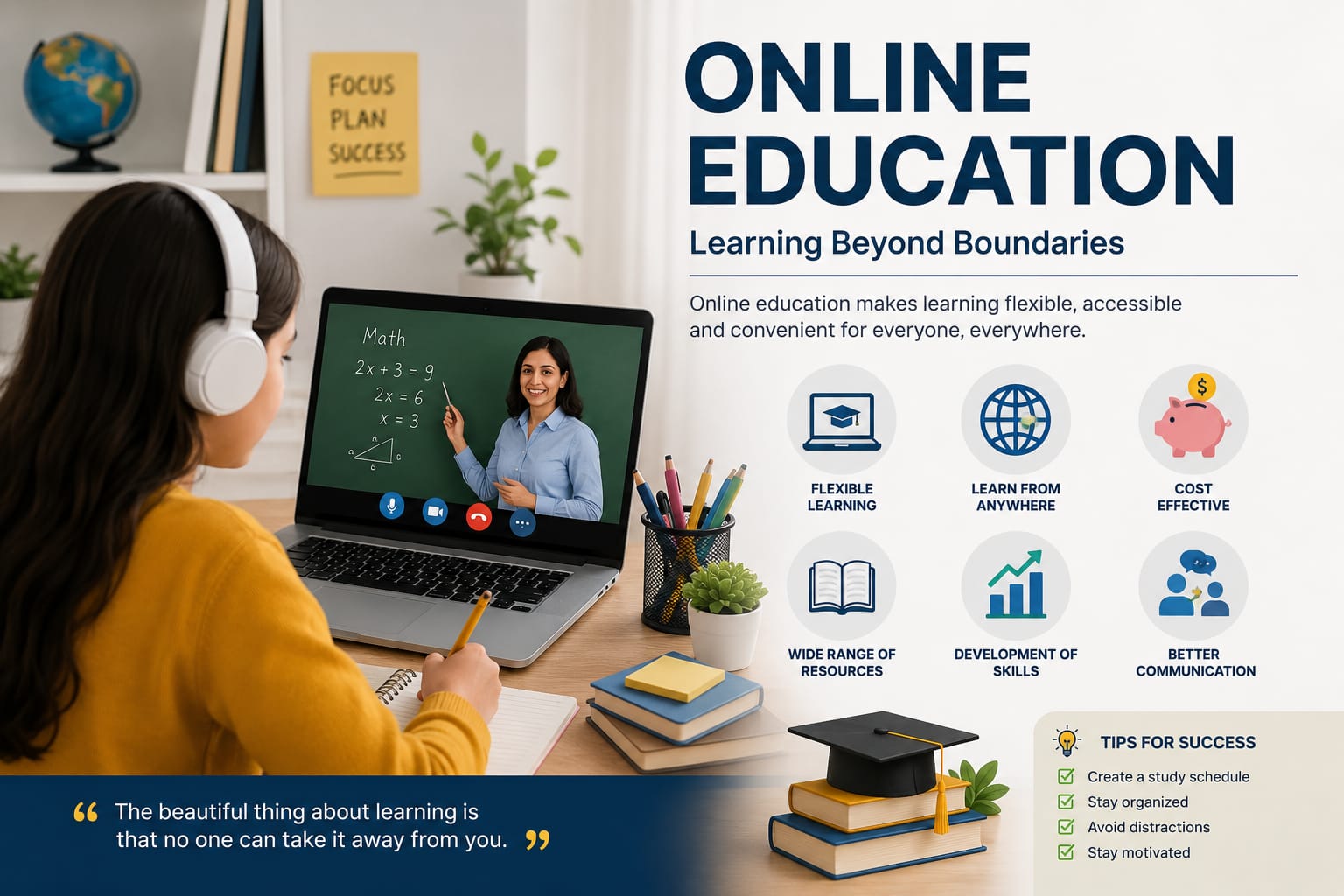
Online education has become an important part of modern learning. With the help of the internet and digital technology, students can attend classes, watch lectures, submit assignments, and communicate with teachers from anywhere in the world. Online education gained significant popularity during the COVID-19 pandemic, when schools and colleges were closed. Today, it continues to play a vital role in education by providing flexible and accessible learning opportunities.
What is Online Education?
Online education is a method of learning that takes place through the internet. Instead of attending classes in a traditional classroom, students use computers, tablets, or smartphones to access educational materials and participate in virtual classes. Online learning platforms, video conferencing tools, and educational websites help students gain knowledge and develop skills from their homes.
Positive Impacts of Online Education
Flexibility and Convenience
One of the biggest advantages of online education is flexibility. Students can learn at their own pace and schedule their studies according to their needs. This is especially helpful for students who have other responsibilities, such as part-time jobs or family commitments.
Easy Access to Learning Resources
Online education provides access to a wide range of learning materials, including e-books, videos, presentations, and online libraries. Students can revisit recorded lectures whenever they need clarification, which improves understanding and learning outcomes.
Cost-Effective Learning
Online education can reduce expenses related to transportation, accommodation, and printed study materials. Many online courses and educational resources are available free of cost, making education more affordable for students.
Development of Digital Skills
Through online learning, students become familiar with technology and digital tools. They learn how to use computers, online platforms, video conferencing applications, and research tools, which are valuable skills in today’s digital world.
Learning from Anywhere
Online education removes geographical barriers. Students living in remote areas can access quality education from reputed institutions and teachers without having to relocate. This increases educational opportunities for many learners.
Personalized Learning Experience
Many online learning platforms allow students to learn according to their abilities and interests. Students can spend more time on difficult topics and move quickly through subjects they already understand, creating a personalized learning experience.
Negative Impacts of Online Education
Lack of Face-to-Face Interaction
One major drawback of online education is the limited interaction between students and teachers. Traditional classrooms provide opportunities for discussions, teamwork, and social development, which can be difficult to achieve in an online environment.
Distractions at Home
Students often face distractions while studying from home, such as television, mobile phones, social media, or household activities. These distractions can affect concentration and reduce learning effectiveness.
Dependence on Technology
Online education relies heavily on technology and internet connectivity. Technical issues such as poor internet connections, power failures, or device malfunctions can interrupt learning and create difficulties for students.
Health Concerns
Spending long hours in front of screens can lead to eye strain, headaches, neck pain, and reduced physical activity. Excessive screen time may also affect students’ mental well-being and sleep patterns.
Limited Practical Learning
Certain subjects require laboratory work, practical training, or hands-on experience. Online education may not fully provide these opportunities, making it challenging for students to gain practical knowledge in some fields.
Self-Discipline Requirements
Online learning requires strong self-motivation and time-management skills. Some students may struggle to stay focused, complete assignments on time, or maintain a regular study schedule without direct supervision.