

Introduction
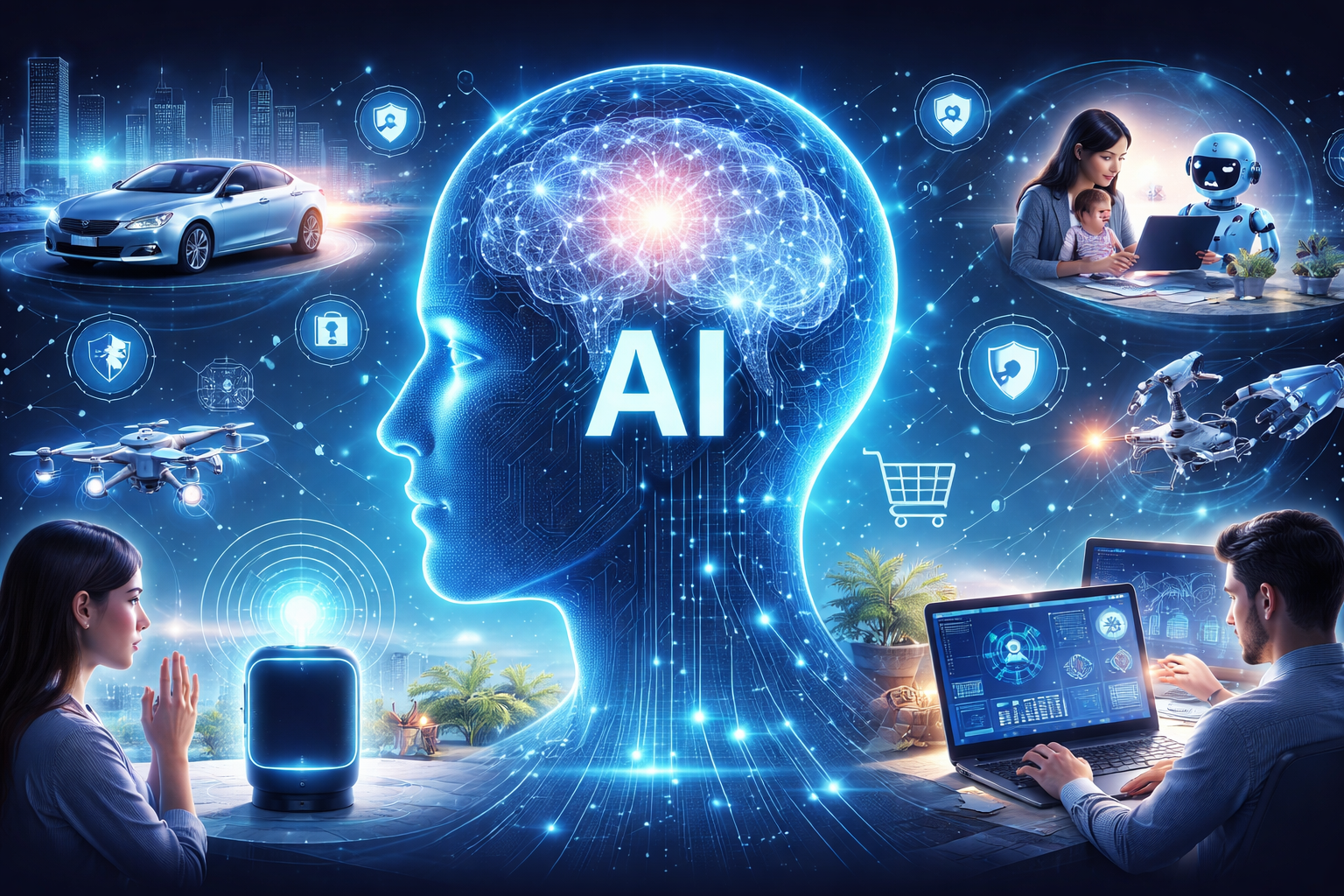
When I first heard the term “Artificial Intelligence,” I thought it was something only scientists and tech experts needed to worry about. It sounded complicated — something out of a Hollywood movie. But over time, I realized that AI is not just a big, scary technology sitting in a lab somewhere. It is already a part of my daily life. And chances are, it is a part of yours too.
From the phone in my pocket to the apps I use every day, AI is quietly working in the background — making things faster, easier, and smarter. In this article, I want to share how AI shows up in our everyday lives in ways that most of us do not even notice.
“What Exactly Is Artificial Intelligence?”. Before I dive in, let me explain what AI actually means in simple terms.
Artificial Intelligence is basically the ability of a computer or machine to think, learn, and make decisions — kind of like how humans do. It is not magic. It is just a very smart program that learns from data and gets better over time.
For example, when you watch a video on YouTube and the next video it suggests is exactly what you wanted to watch — that is AI. It learned your habits and made a smart guess. Simple as that.
AI in My Morning Routine
Let me walk you through a typical morning. I wake up, and the first thing I do is check my phone. My phone unlocks using my face — that is facial recognition, powered by AI.
I open my news app and it already shows me stories about topics I care about. I did not set that up manually. The app learned what I like over time and filtered the news for me.
Then I ask Google Assistant, “What is the weather today?” It answers me instantly. I did not type anything. I just spoke, and it understood me. That is AI understanding human language — something that would have seemed like a superpower just a few decades ago.
All of this happens before I even have my morning tea.
AI in Shopping and Entertainment
I love shopping online. And I have noticed something interesting — every time I visit an online store, it seems to know exactly what I am looking for. If I searched for running shoes yesterday, today the homepage is full of sports products. That is AI tracking my preferences and showing me what it thinks I will buy.
The same thing happens with entertainment. When I open Netflix or YouTube, the recommendations feel personal. That is because they are. AI studies what I watch, how long I watch it, and what I skip — and then it builds a picture of my taste. The more I use these platforms, the better the suggestions become.
It feels a little like having a friend who knows exactly what kind of movies you enjoy.
AI in Healthcare
This is the area where I feel AI is doing the most important work.
Doctors today use AI tools to detect diseases earlier than ever before. AI can look at an X-ray or scan and spot something that even a trained doctor might miss. It can analyze thousands of patient records in seconds to find patterns that help with diagnosis and treatment.
Even at home, we have access to AI-powered health tools. Smartwatches track our heart rate, sleep quality, and steps. They can even detect irregular heartbeats and send alerts. I personally use a fitness band, and it reminds me to move when I have been sitting too long. Small thing — but it actually helps.
AI is not replacing doctors. It is giving them better tools so they can take better care of us.
AI in Education
As a learner, I have benefited a lot from AI-powered education tools. Apps like Duolingo use AI to teach languages. They track your progress, find out where you are making mistakes, and adjust the lessons accordingly. It feels like having a personal tutor available 24/7.
Even search engines like Google use AI to understand what I am actually looking for — not just the exact words I type. If I search “best food for cold,” it understands I might be asking about health remedies, not restaurants.
For students, AI is making learning more personalized and more accessible than ever.
The Concerns I Think About
I will be honest — AI also makes me think about some serious things.
Privacy is a big one. If AI knows what I watch, what I buy, and where I go, who else has access to that data? That question still concerns me.
Job losses are another worry. As AI automates more tasks, some jobs may disappear. People in fields like data entry, customer service, and even some medical roles are already feeling this shift. I believe we need to prepare for this change rather than ignore it.
And then there is bias. AI is trained on human data, and humans make mistakes. If the data is unfair, the AI can be unfair too — which can cause real problems in areas like hiring or law enforcement.
These are not reasons to be afraid of AI. But they are good reasons to talk about it openly and make sure it is used responsibly.
Conclusion
AI is not something happening far away in some tech company’s office. It is happening in our homes, on our phones, and in our hospitals — right now. It is helping us save time, stay healthy, learn faster, and enjoy better entertainment.
The more I learn about AI, the more I realize it is just a tool. Like any tool, its value depends on how we use it. Used wisely, AI can make our daily lives significantly better. The key is to stay informed, stay curious, and make sure we are always the ones in control.
Because at the end of the day, AI is built for us — not the other way around.