

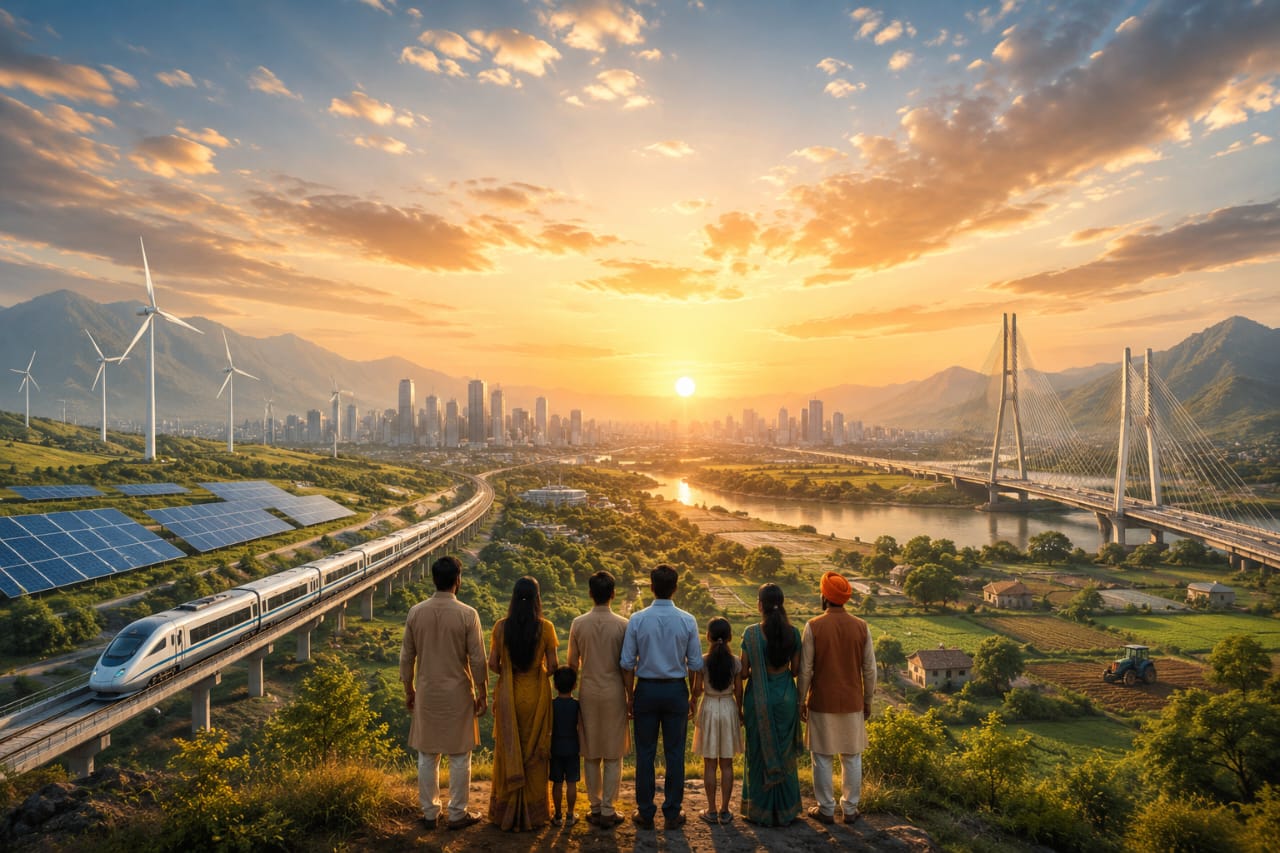
Viksit Bharat 2047: India’s Journey Towards a Developed Nation
Introduction
Viksit Bharat 2047 is India’s vision of becoming a developed nation by 2047, marking 100 years of independence. This ambitious goal focuses on economic growth, technological advancement, social inclusion, environmental sustainability, and improving the quality of life for every citizen. With its growing economy, young population, technological capabilities, and entrepreneurial spirit, India has the potential to become a global leader in innovation and development.
Achieving Viksit Bharat 2047 requires collective efforts from the government, industries, educational institutions, and citizens. The vision aims to create an India that is economically strong, socially inclusive, digitally advanced, and environmentally responsible.
Vision of Viksit Bharat 2047
The vision of Viksit Bharat 2047 focuses on building a prosperous and self-reliant India. It aims to strengthen infrastructure, improve education and healthcare, encourage innovation, and provide equal opportunities for all sections of society.
The goal is not only economic progress but also ensuring that the benefits of development reach every citizen. Inclusive growth, sustainable practices, and technological empowerment are important pillars of this vision.
Economic Growth: Foundation of a Developed India
A strong economy is the foundation of Viksit Bharat 2047. India is among the fastest-growing economies in the world and continues to expand through entrepreneurship, manufacturing, and digital transformation.
Government initiatives such as Make in India, Startup India, and Digital India have encouraged innovation, investment, and job creation. Growth in industries, foreign investment, and support for small and medium enterprises can create employment opportunities and improve living standards.
Infrastructure Development for National Progress
Modern infrastructure plays a crucial role in achieving Viksit Bharat 2047. India has witnessed significant development in highways, railways, airports, ports, and digital connectivity.
Projects such as Bharatmala, Sagarmala, and metro expansion are improving transportation networks and strengthening urban and rural connectivity. Better infrastructure promotes trade, reduces transportation costs, and supports economic development.
Technology and Innovation: Driving India’s Future
Technology is one of the most important pillars of Viksit Bharat 2047. India has become a global hub for information technology, digital services, and innovation.
Digital platforms such as UPI, Aadhaar, and Digital Public Infrastructure have transformed financial services and improved accessibility. Investment in artificial intelligence, space technology, research, and startups will help India compete globally and create new opportunities.
Education and Skill Development
Quality education and skill development are essential for building a developed nation. India’s young population is a valuable resource, and providing them with proper education and training can accelerate growth.
The National Education Policy (NEP) focuses on improving learning methods, promoting skill-based education, and preparing students for future careers. Skilled youth will contribute to innovation, productivity, and nation-building.
Healthcare and Social Welfare
Healthcare development is another important aspect of Viksit Bharat 2047. A healthy population is necessary for sustainable economic progress.
Initiatives such as Ayushman Bharat have improved healthcare accessibility for millions of people. Strengthening medical infrastructure, increasing healthcare professionals, and promoting preventive healthcare will support a healthier society.
Sustainable Development and Environmental Protection
Economic growth must go hand in hand with environmental protection. Viksit Bharat 2047 focuses on sustainable development through renewable energy, green technology, water conservation, and sustainable agriculture.
India’s progress in solar and wind energy reflects its commitment towards clean energy solutions. Protecting natural resources will ensure development benefits future generations.
Empowering Rural India
Rural development is a key part of Viksit Bharat 2047. Improving agriculture, education, healthcare, infrastructure, and digital connectivity in villages can reduce regional inequalities.
Support for farmers, rural entrepreneurs, and self-help groups can create economic opportunities and improve the quality of life in rural areas. Balanced development between urban and rural regions is necessary for inclusive growth.
Challenges in Achieving Viksit Bharat 2047
Although India has made significant progress, several challenges remain, including unemployment, income inequality, population growth, environmental concerns, and unequal access to education and healthcare.
Overcoming these challenges requires effective governance, strong policies, technological innovation, and active participation from citizens. Collaboration between government, businesses, and society will be essential.