


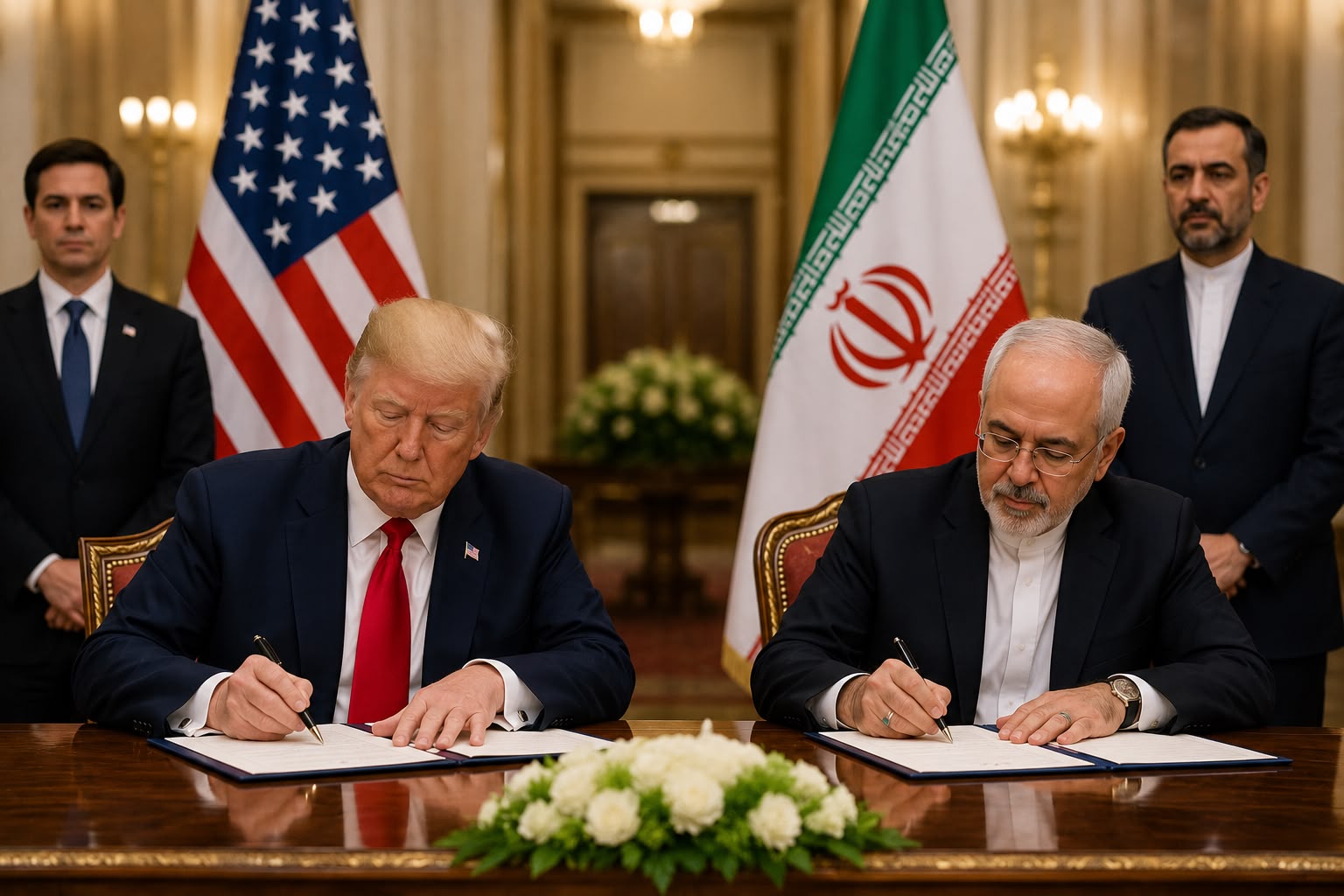
US President Donald Trump has signed a significant and long-anticipated agreement with Iran, marking a notable development in US-Iran relations and broader diplomatic efforts in the Middle East. The announcement comes amid heightened global attention on regional stability, energy security, and long-standing geopolitical tensions.
The agreement, described as part of a broader diplomatic push, is aimed at reducing hostilities, improving communication channels, and addressing key security and economic concerns between Washington and Tehran. While full details of the accord have not been publicly disclosed, it is understood to include measures related to de-escalation frameworks, regional security coordination, and mechanisms for continued diplomatic engagement.
The signing follows years of strained relations between the United States and Iran, characterised by sanctions, military standoffs, and intermittent breakdowns in diplomatic dialogue. Tensions have frequently spilled into wider regional dynamics, affecting shipping routes, energy infrastructure, and security conditions across the Gulf region.
In particular, the Strait of Hormuz—a critical global chokepoint for oil and liquefied natural gas shipments—has often been at the centre of geopolitical friction. Any easing of tensions in the region is closely watched by global markets due to its potential impact on energy supply stability and pricing.
International reactions to the agreement have been cautiously optimistic. Several allied nations and global observers have welcomed the development as a potential step toward stabilising a volatile region, while also emphasising the need for strict implementation and verification mechanisms to ensure compliance from all parties involved. Financial markets have reportedly responded with mild optimism, particularly in energy sectors sensitive to Middle East disruptions.
Officials from both sides have highlighted the importance of sustained dialogue, though differing interpretations of the agreement’s scope remain a point of uncertainty. While US representatives have framed the deal as a step toward long-term regional stability, Iranian officials are expected to present their own perspective on the terms and expected outcomes.
Analysts note that the success of the agreement will depend heavily on implementation and trust-building measures, particularly in areas involving sanctions relief, security guarantees, and maritime safety. They also caution that past diplomatic efforts between the two countries have faced setbacks, making long-term stability dependent on sustained political commitment.
The agreement is also expected to have broader implications for global energy markets and maritime security, particularly if it contributes to reduced tensions in critical shipping corridors. Any improvement in predictability across Gulf trade routes could help stabilise supply chains and reduce risk premiums in global oil and gas markets.
While the signing represents a significant diplomatic milestone, experts stress that the situation remains fluid. Continued engagement, verification, and cooperation will be essential in determining whether the agreement can translate into lasting stability in the region.