

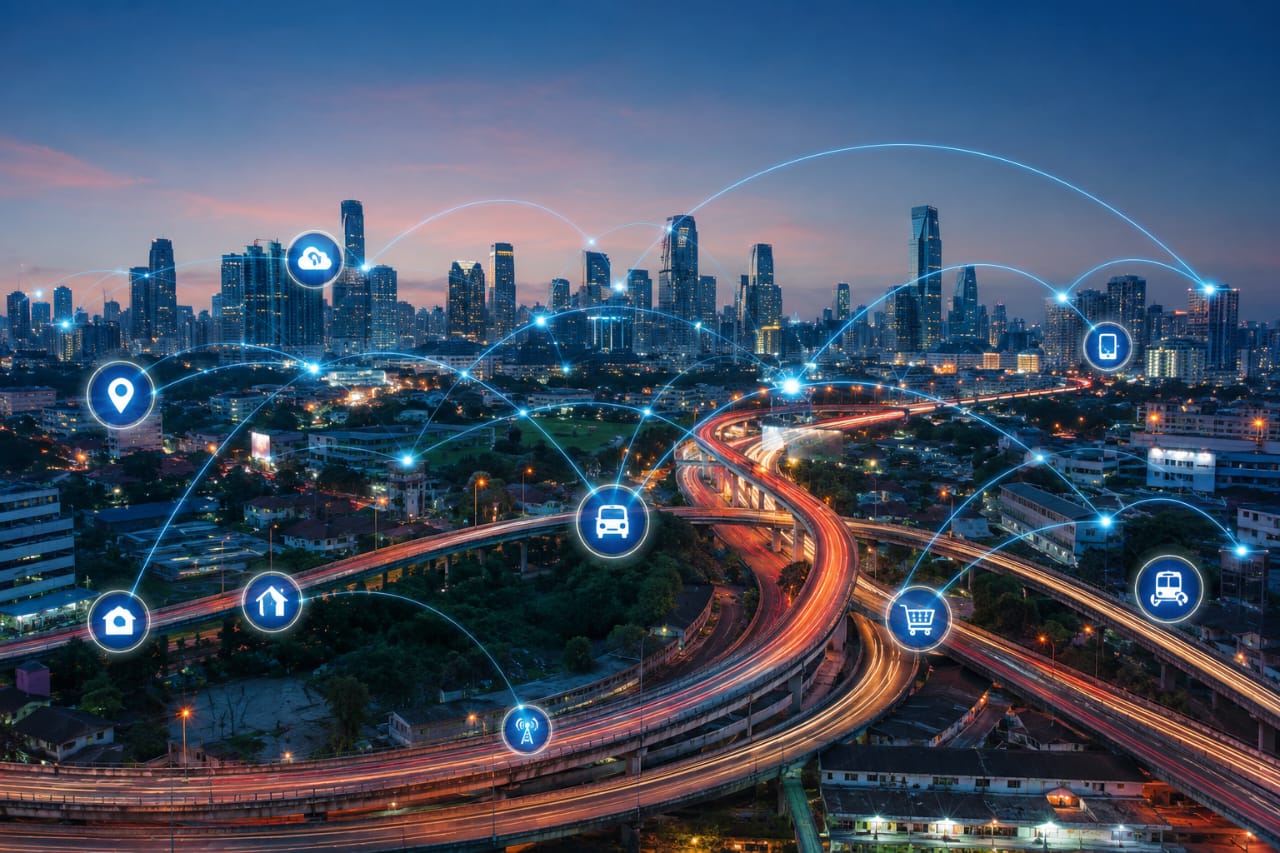
5G and Its Imact on Smart Cities
Introduction
Cities around the world are growing rapidly. As a result, they face challenges related to transportation, energy use, public safety, healthcare, and environmental protection. To address these issues, governments are investing in smart city projects. Smart cities use advanced technologies and data-driven solutions to improve urban life. At the center of this transformation is 5G technology, the fifth generation of wireless communication.
Unlike previous mobile networks, 5G offers ultra-fast speeds and extremely low latency. It can also connect millions of devices at the same time. Therefore, it provides the digital foundation needed for smart cities to operate efficiently. Moreover, it helps city authorities deliver better services and improve residents’ quality of life.
Understanding 5G Technology
5G is the latest generation of mobile network technology. It delivers faster speeds and quicker response times than 4G. While 4G expanded internet access, 5G takes connectivity to a new level. It enables real-time communication between devices, machines, and systems.
The main features of 5G include:
High-speed data transmission
Ultra-low latency
Massive device connectivity
Improved reliability
Greater energy efficiency
Because of these advantages, 5G plays a crucial role in supporting smart city applications.
Smart Transportation and Traffic Management
Transportation is one of the areas that will benefit most from 5G. Today, traffic congestion remains a major problem in many cities. It reduces productivity, increases fuel consumption, and contributes to air pollution.
With 5G-enabled sensors, cameras, and connected vehicles, authorities can monitor traffic in real time. As a result, they can manage traffic more effectively. Smart traffic systems can adjust signals automatically and improve traffic flow. Consequently, commuters experience fewer delays.
Furthermore, autonomous vehicles rely on fast and reliable communication. 5G allows vehicles to exchange information instantly with each other and with road infrastructure. This capability improves road safety and reduces the risk of accidents.
Enhancing Public Safety
Public safety remains a top priority for every city. Fortunately, 5G can strengthen emergency response systems and support law enforcement agencies.
For example, AI-powered surveillance systems can analyze video feeds in real time. They can quickly identify suspicious activities and potential threats. Moreover, emergency services can receive alerts instantly and access critical information during crises.
Additionally, connected sensors can monitor bridges, tunnels, and public buildings. These sensors help detect structural issues early and prevent major incidents.
Conclusion
5G technology has the potential to transform urban life. It can make cities smarter, safer, and more sustainable. From transportation and healthcare to energy management and environmental monitoring, its impact will be far-reaching.
Moreover, 5G will support future innovations that improve public services and economic growth. Although challenges such as cybersecurity and infrastructure costs remain, the benefits are significant. Therefore, 5G is expected to become the backbone of the smart cities of tomorrow.