

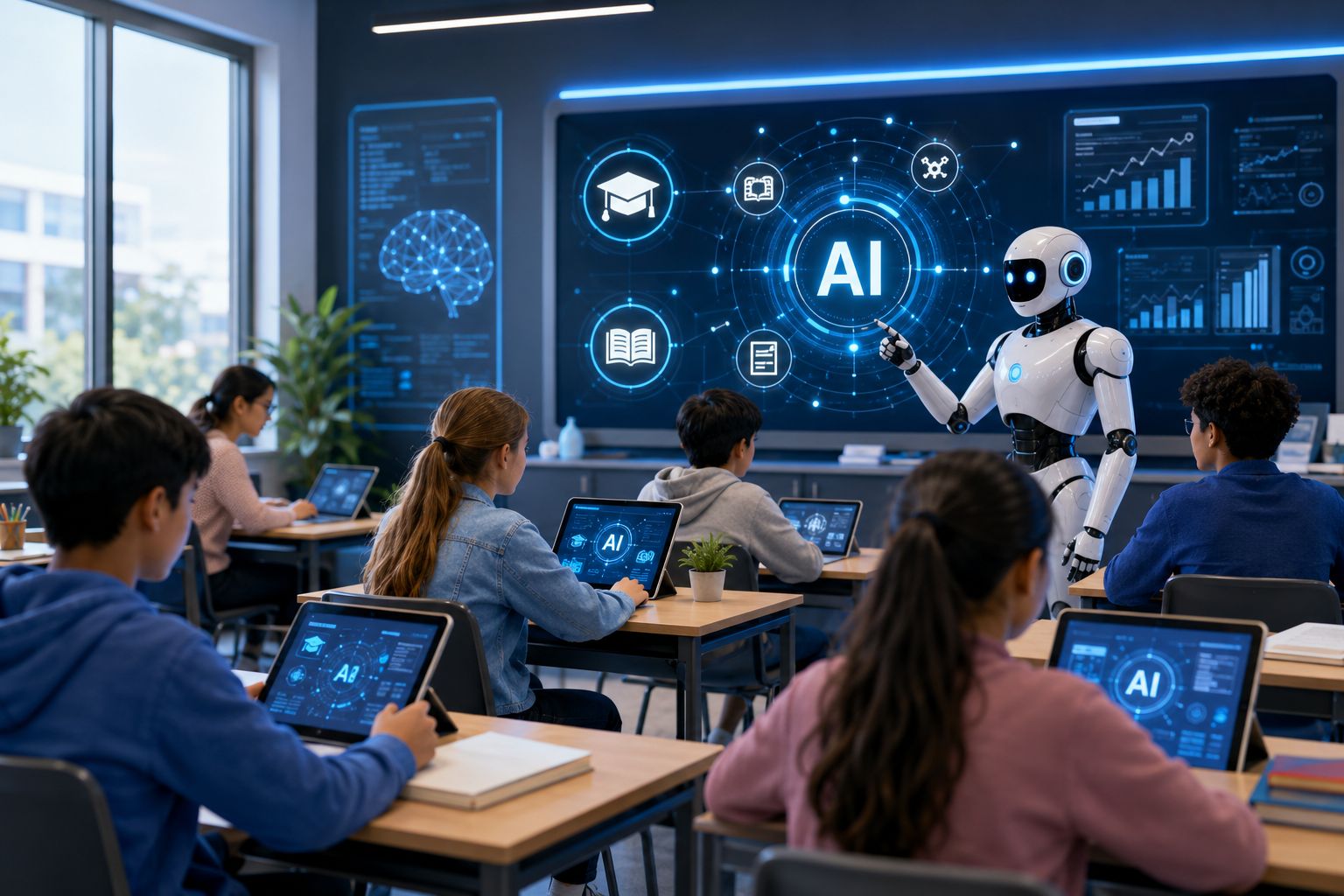
Artificial Intelligence (AI) is rapidly changing the world, and education is one of the sectors experiencing its greatest impact. AI refers to computer systems that can perform tasks that usually require human intelligence, such as learning, reasoning, problem-solving, and decision-making. Today, AI is transforming traditional teaching methods and creating new opportunities for students, teachers, and educational institutions. As technology continues to advance, AI is becoming an essential part of modern education.
One of the most important benefits of AI in education is personalized learning. Every student learns at a different pace and has unique strengths and weaknesses. Traditional classrooms often follow a common teaching approach for all students, making it difficult to meet individual needs. AI-powered learning platforms analyze student performance and provide customized lessons according to their learning abilities. This helps students understand concepts more effectively and improve their academic performance.
Online education has grown significantly in recent years, and AI has played a major role in its success. AI-based educational platforms provide personalized recommendations, interactive lessons, and instant feedback. Students can access learning materials anytime and anywhere, making education more flexible and convenient. These platforms also help learners identify areas where they need improvement and suggest resources to strengthen their understanding.
Virtual tutors and AI chatbots are becoming increasingly popular among students. These intelligent systems can answer questions, explain difficult concepts, and provide guidance at any time of the day. Unlike traditional tutoring, AI tutors are available 24 hours a day and can assist multiple students simultaneously. This accessibility makes learning easier and more efficient, especially for students who need additional support outside the classroom.
Teachers also benefit greatly from the use of Artificial Intelligence. Many administrative tasks such as grading assignments, recording attendance, and preparing performance reports require significant time and effort. AI can automate these repetitive tasks, allowing teachers to focus more on teaching and mentoring students. By reducing workload, AI helps educators improve the quality of instruction and spend more time addressing students’ needs.
Assessment and evaluation methods have also improved with the help of AI. Traditional examinations mainly focus on memorization and written responses. AI-powered assessment tools can evaluate a student’s understanding, analytical thinking, creativity, and problem-solving skills. Automated grading systems provide immediate feedback, enabling students to learn from their mistakes and improve continuously. Faster evaluation processes also save valuable time for both teachers and students.
Smart classrooms are another example of how AI is transforming education. These classrooms use digital technologies such as interactive whiteboards, learning management systems, and AI-powered software to create engaging learning experiences. AI can monitor student participation and learning progress, helping teachers adjust their teaching methods accordingly. Interactive lessons and multimedia content make learning more enjoyable and effective.
Language learning has been revolutionized by AI technology. Modern language-learning applications use speech recognition and natural language processing to improve students’ speaking, listening, reading, and writing skills. AI can detect pronunciation errors and provide instant corrections. Personalized exercises and interactive conversations help learners gain confidence and achieve fluency more quickly.