

Introduction
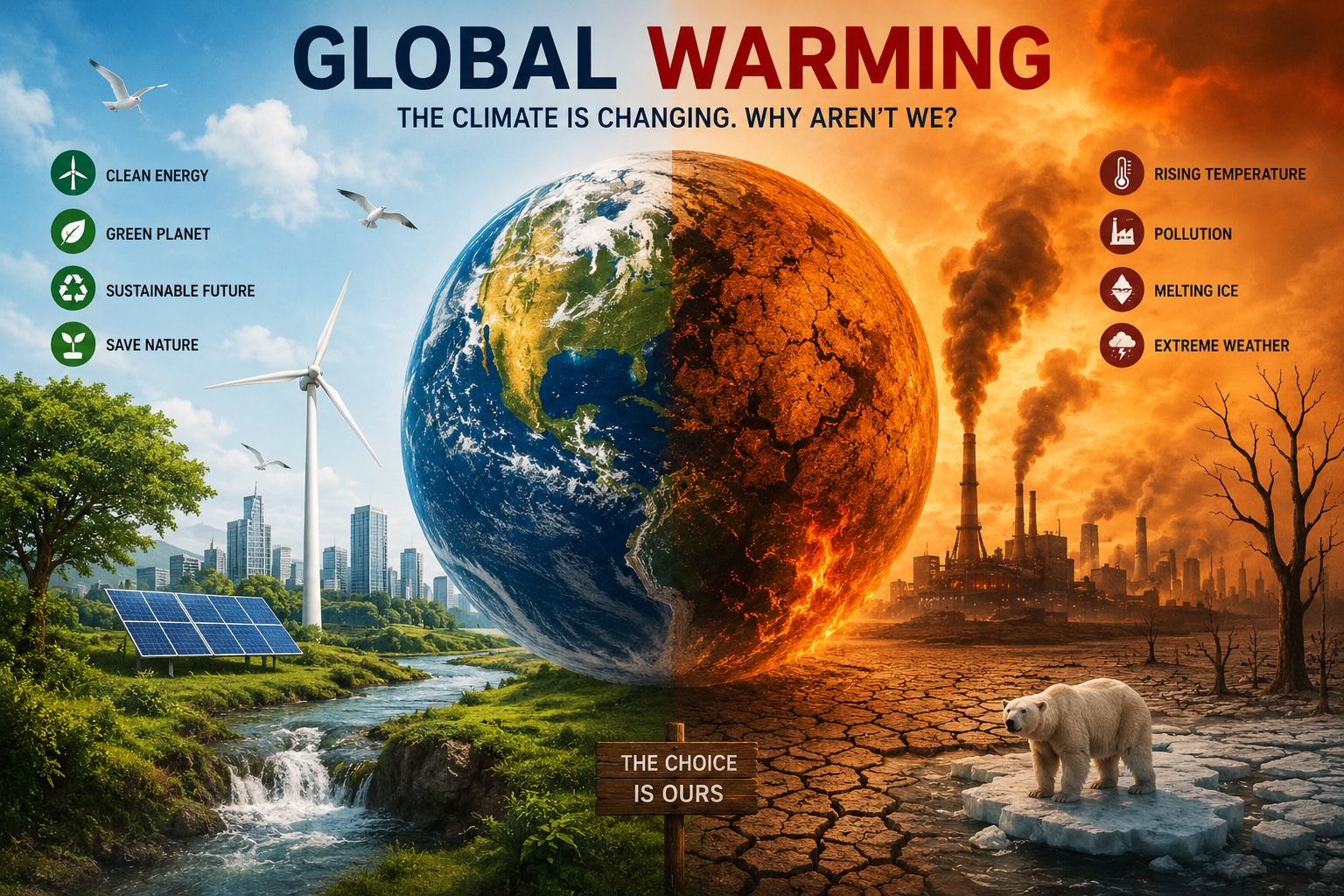
One of the most severe environmental issues that plagues the world these days is global warming. It means the continuous rise in the mean temperature of the earth caused by the overproduction of the greenhouse gases in the atmosphere. Gases interact with the sun’s rays and keep them from going back into space, which leads the planet to warm over time. Global warming is primarily caused by human actions like burning fossil fuels, deforestation, industrialization and pollution. Global warming can have severe impacts on nature, wildlife and human life if not managed.
How do you think that global warming occurs?
The primary driver of global warming is the rise in greenhouse gas levels like carbon dioxide, methane and nitrous oxide. These gases build up around the earth and retain the heat. This is referred to as the greenhouse effect. Coal, petrol, diesel and natural gas combustion for power generation, transport and industry gives off high levels of carbon dioxide. Deforestation also helps contribute to global warming as trees remove carbon dioxide from the atmosphere. Deforestation reduces the amount of carbon dioxide that is scrubbed from the atmosphere. Methane is another potent greenhouse gas emitted by agriculture and livestock. The wastes released from industries and domestic waste materials also give out harmful gases which also play a role in increasing the temperature.
Global Warming Impacts
Global warming has many detrimental impacts on the Earth. A significant impact is melting glaciers and polar ice caps. With the melting of ice, sea levels rise, leading to floods in coastal regions and putting millions of people at risk of losing their homes. Climate change is another impact. Climate is becoming erratic. Some parts of the country are very hot while others are very rainy, flood prone or drought prone. Increasing and intensifying heatwaves, particularly for children and older persons.
Global warming is also bad for wildlife. Due to rising temperatures and climate change, many animals lose their natural habitat. Polar bears, penguins and marine animals are in danger. There is also an impact on agriculture. Because of the rise in temperatures and irregular rain, production of crop may fall short, leading to a rise in prices.
Impact on Human Health
Global warming has a direct impact on human health. Increased temperatures can cause heat stroke, heat exhaustion, and other heat-related illnesses. Industrial emissions of air pollution contribute to worsening respiratory conditions like asthma.
The outbreak of diseases is also a worry. Climate change supports mosquitoes and other insects to live in broader geographical areas, thus spreading diseases like malaria and dengue fever.
Global warming can also bring about natural disasters like floods and storms, resulting in injuries, deaths and mental strain. The poorest communities are most likely to be impacted, as they have limited resources available to bounce back.
The global warming and the environment
Global warming has a devastating effect on the environment. Increased heat and dryness are causing forest fires to occur more often. Climatic variations and long dry spells are also impacting water resources. The oceans are warming too, with impacts to ocean life and coral reefs. Coral bleaching is worsening and affecting the marine environment. This affects fish populations and those that rely on fishing for their livelihood.
The loss of biodiversity is also a major problem. If plants and animals are unable to cope with the changes in temperatures, they can become extinct, disrupting the balance of the ecosystems.
What can be done to minimize the effects of global warming?
Individuals, businesses and governments all need to take action to combat global warming. A crucial step is to curtail the consumption of fossil fuels and shift towards alternative energy sources like solar, wind, and hydro power. Clean energy is less polluting and also helps to lower GHGs.
Enhancing the numbers of trees is another solution. Trees are absorbing carbon dioxide and reducing the temperature of the environment. Forest conservation and prevention of deforestation is a necessity.
Other measures for reducing energy use include turning off lights when they are not needed and using energy-efficient equipment and equipment that is shared, looked after, or powered by other modes of transport as appropriate. Pollution is also decreased through recycling and proper waste management. Using environmentally friendly products and minimizing the use of plastic can help to protect the environment.
Role of Government and Society
Governments are a key factor in combating global warming. They can develop environmental legislation, foster renewable energy and sustainable development. It also needs to be noted that international cooperation is essential as global warming impacts on all countries.
Schools and communities can raise awareness on the environment. When people are educated on climate change, they know their responsibility to the nature.
Youth are also playing a crucial role. Students can help create a healthier planet by being eco friendly and creating awareness.
Conclusion
Climate change poses a threat to the Earth and the future generations. It has impacts already evident in the world’s rising temperatures, glacier melt, extreme weather and environmental damage. The problem is primarily due to human activities, but humans can solve it too. Global warming can be mitigated by decreasing pollution, saving energy, planting trees, and promoting clean technologies. Safeguarding Earth requires the collective effort of all people and urgent action is required to make our future safe and sustainable.