

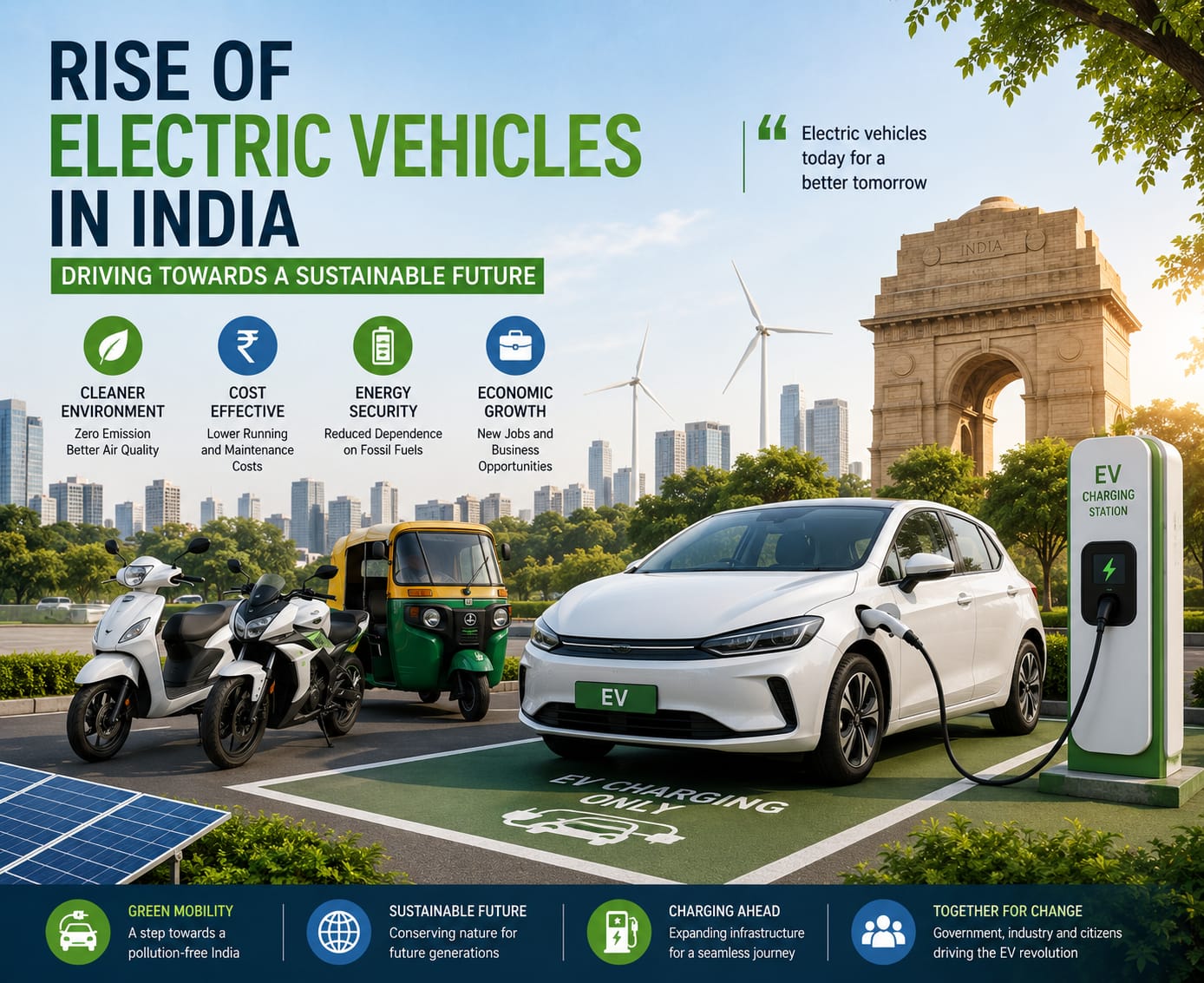
Rise of Electric Vehicles in India: Driving Towards a Sustainable Future
Introduction
Electric Vehicles (EVs) are becoming an important part of India’s transportation system. With increasing concerns about air pollution, climate change, and rising fuel prices, people are looking for cleaner and more affordable alternatives to traditional petrol and diesel vehicles. Electric vehicles run on rechargeable batteries and produce little to no direct emissions, making them an environmentally friendly option. In recent years, India has witnessed significant growth in the adoption of electric cars, scooters, buses, and three-wheelers. This shift towards electric mobility is helping the country move towards a greener and more sustainable future.
Environmental Benefits of Electric Vehicles
One of the biggest advantages of electric vehicles is their positive impact on the environment. Traditional vehicles release harmful gases such as carbon dioxide, nitrogen oxides, and particulate matter, which contribute to air pollution and global warming. Electric vehicles produce zero tailpipe emissions, reducing the amount of pollution released into the atmosphere.
Major Indian cities often face severe air quality problems due to traffic congestion and industrial activities. The adoption of electric vehicles can help improve air quality and reduce health risks associated with pollution. By decreasing dependence on fossil fuels, EVs also support global efforts to combat climate change and promote sustainable development.
Government Initiatives Promoting EV Adoption
The Indian government has introduced several policies and programs to encourage the use of electric vehicles. One of the most significant initiatives is the Faster Adoption and Manufacturing of Electric Vehicles (FAME) scheme. This program provides financial incentives to consumers purchasing EVs and supports the development of charging infrastructure.
Many state governments have also launched their own EV policies, offering benefits such as road tax exemptions, registration fee waivers, and subsidies. These measures make electric vehicles more affordable and attractive to consumers. The government’s commitment to promoting electric mobility demonstrates its dedication to creating a cleaner and more sustainable transportation system.
Technological Advancements in Electric Vehicles
Rapid technological advancements have played a major role in the growth of electric vehicles. Modern EVs are equipped with advanced battery systems that offer longer driving ranges and improved efficiency. Battery technology continues to evolve, making electric vehicles more reliable and practical for daily use.
Manufacturers are investing heavily in research and development to enhance vehicle performance, reduce charging times, and improve safety features. Many electric vehicles now include smart connectivity options, navigation systems, and mobile applications that allow users to monitor battery levels and locate nearby charging stations. These innovations are increasing consumer confidence and encouraging wider adoption of electric mobility.
Expansion of Charging Infrastructure
The availability of charging infrastructure is essential for the success of electric vehicles. One of the primary concerns among potential EV buyers is the accessibility of charging stations. To address this issue, governments and private companies are expanding charging networks across cities, highways, shopping centers, and residential areas.
Fast-charging stations are becoming more common, allowing vehicles to recharge in a shorter amount of time. As charging infrastructure continues to improve, consumers are becoming more comfortable with the idea of owning an electric vehicle. The expansion of charging facilities is expected to play a crucial role in accelerating EV adoption throughout the country.
Economic Advantages of Electric Vehicles
Electric vehicles offer several economic benefits to consumers. Although the initial purchase cost of an EV may be higher than that of a conventional vehicle, operating costs are generally lower. Electricity is often less expensive than petrol or diesel, resulting in significant fuel savings over time.
Additionally, electric vehicles have fewer moving parts compared to internal combustion engine vehicles, which reduces maintenance requirements. Owners can save money on oil changes, engine repairs, and other maintenance expenses. These long-term cost advantages make electric vehicles an attractive option for individuals and businesses alike.
Employment and Economic Growth Opportunities
The growth of the electric vehicle industry is creating new employment opportunities and contributing to economic development. The manufacturing of EVs, batteries, charging equipment, and related technologies requires skilled workers across various sectors. As investment in electric mobility increases, new jobs are being created in engineering, production, installation, maintenance, and research.
Startups and established companies are also developing innovative solutions related to battery technology, charging services, and vehicle management systems. The expansion of the EV ecosystem has the potential to strengthen India’s economy while supporting sustainable industrial growth.
Challenges Facing the EV Industry
Despite the many advantages of electric vehicles, several challenges remain. High battery costs continue to affect vehicle prices, making some EV models less affordable for consumers. The availability of charging infrastructure in rural and remote areas is still limited, which can discourage adoption outside major cities.
Battery production and recycling also present environmental and resource-related concerns. Manufacturers and policymakers must work together to develop sustainable solutions for battery disposal and recycling. Addressing these challenges will be essential for ensuring the long-term success of electric mobility in India.
Future of Electric Mobility in India
The future of electric vehicles in India looks promising. Continued technological innovation, supportive government policies, and increasing environmental awareness are expected to drive further growth in EV adoption. As battery prices decrease and charging infrastructure expands, electric vehicles will become more accessible to a larger segment of the population.
Experts predict that EVs will play a major role in reducing pollution, improving energy security, and supporting India’s sustainability goals. The integration of renewable energy sources with charging infrastructure could further enhance the environmental benefits of electric mobility.
Conclusion
The rise of electric vehicles in India represents a significant step toward a cleaner, greener, and more sustainable future. Through technological advancements, government support, expanding infrastructure, and growing consumer awareness, electric mobility is transforming the transportation sector. While challenges remain, the benefits of electric vehicles far outweigh the obstacles. As India continues to embrace innovation and sustainability, electric vehicles are expected to become a central part of the nation’s transportation system, contributing to environmental protection, economic growth, and a better quality of life for future generations.