

Why is Cyber Security such an urgent issue in today’s Digital Age?Why Cyber Security is an urgent topic in today’s Digital Age?
The digital age has revolutionized the way people communicate, learn, work and do business. Information is more readily available than ever before by way of the internet, smartphones, cloud computing and social media. The advantages of these technological developments are convenience and efficiency, but there’s also a risk involved with cyber threats. With increased reliance on digital technologies by individuals and organizations, cybersecurity has become an increasingly important issue. Cybersecurity is the practice of defense against cyber attacks, unauthorized access, theft, damage, and cybersecurity. With today’s globalized society, having a robust cybersecurity and privacy strategy is crucial for guaranteeing privacy, security and trust in digital environments.
Understanding Cybersecurity
Cybersecurity is the set of technologies, processes and practices used to safeguard digital systems and information against cyber threats. Its main purpose is to protect sensitive information, stop unauthorized access and maintain the confidentiality, integrity, and availability of information. Businesses and governments are not the only ones concerned about cyber security, individuals who are using the internet for communicating, banking, shopping and social networking are equally concerned.
Cybersecurity includes a number of different segments: network security, application security, information security, cloud security, and endpoint security. These measures form a complete defense against the cybercriminal and malicious activities.
Importance of Cybersecurity
In today’s digital era, cybersecurity has become more crucial than ever. Organizations have massive quantities of valuable data that’s often sensitive, such as customer records, financial information, and intellectual property. Impact of a cyberattack can result in financial losses, reputation damage and legal ramification.
In the personal domain, cybersecurity involves safeguarding personal data like passwords, banking details, and personal records. If the security measures are not implemented, cybercriminals can take advantage of vulnerabilities and use sensitive information in a fraudulent way.
Protection of essential infrastructure like the health care system, transportation, power grids, and government services. Successful hacking of these systems could threaten public safety and impact critical services.
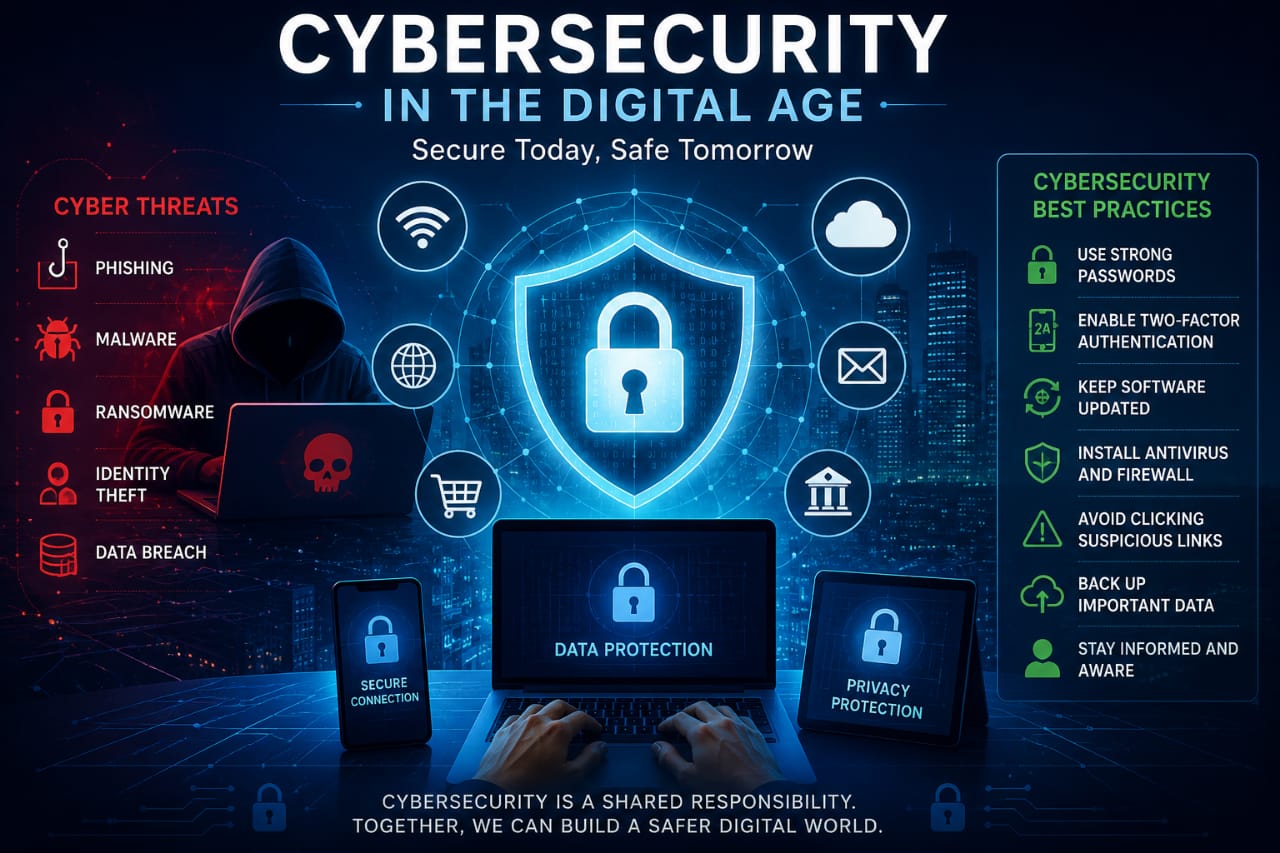
Common Cyber Threats Malware
The term Malware is used to describe malicious software that can be used to damage computer systems or to access them without permission. Viruses, worms, spyware and Trojan horses are among the most common types of malware. Malware can damage files, steal information and disrupt system operations.
Phishing Attacks
Phishing is among the most prevalent cyber-attacks. Fraudulent e-mail, text messages or websites that look like legitimate attempts to obtain information like a username, password or credit card number.
Ransomware
Ransomware is a class of malicious software which encrypts the victim’s information and then requires a ransom to be paid for access to be restored. Many organizations have suffered significant financial losses due to ransomware attacks.
Identity Theft
Identity theft is the act of stealing personal information and using it to make unauthorized transactions or commit fraud. That can lead to financial and emotional pain for the victims.
Data Breaches
Data breaches are when unauthorized parties gain access to confidential information. These can lead to the disclosure of personal records, financial information, and company secrets, with grave repercussions for organizations and individuals.
Best Practices for Cybersecurity
To mitigate cyber risks, it is recommended that individuals and organizations implement good cyber security practices:
Set and use secure and distinctive passwords for all accounts. Use Two-Factor Authentication (2FA) where possible. Maintain software, operating systems and applications. Use an effective anti-virus and firewall. Don’t open strange links or attachments. Regularly back up important files and data. Train employees and users to be aware of cybersecurity. Keep an eye on systems that have unusual activities and security issues.
These preventive measures are very effective in decreasing chances of successful cyberattacks.
The digital age brings with it challenges.
Advances in technology come with new cybersecurity challenges. Cloud computing, artificial intelligence (AI), Internet of Things (IoT) and remote working environments have greatly increased the attack surface for cybercriminals. The more devices that are plugged into the internet, the more vulnerabilities.
Also, cybercriminals are constantly finding new ways to launch attacks that can circumvent the conventional defense methods. This is why an organization has to invest in cutting-edge security technologies and adapt its defense tactics to face the challenges of the changing threats.
The Future of Cybersecurity
New technologies and evolving threats will impact the future of cybersecurity. AI and machine learning are being increasingly leveraged to identify and neutralize cyber threats on the fly. These technologies have the ability to process vast amounts of data, detect suspicious behavior and bolster security.
International governments are implementing tougher data protection measures and cyber security laws to protect citizens and businesses. It is also noted that organisations are turning to cybersecurity training and awareness to enhance human security postures in the face of cyber threats.
With the ongoing digital transformation, Cyber Security professionals will be more instrumental in securing information systems and ensuring digital trust.
Conclusion
Security is now an essential element in today’s digital world. The threat from cyber issues will not diminish as technology advances and society becomes more interconnected. In the digital age, safeguarding confidential data, securing digital systems, and raising cybersecurity awareness are crucial for both individuals and institutions, including businesses and governments. With robust security measures in place and awareness of new threats, we can build a safer, more secure digital future. Cybersecurity is not only a necessity of the modern world, it is a shared responsibility and concerns everyone.