

Introduction
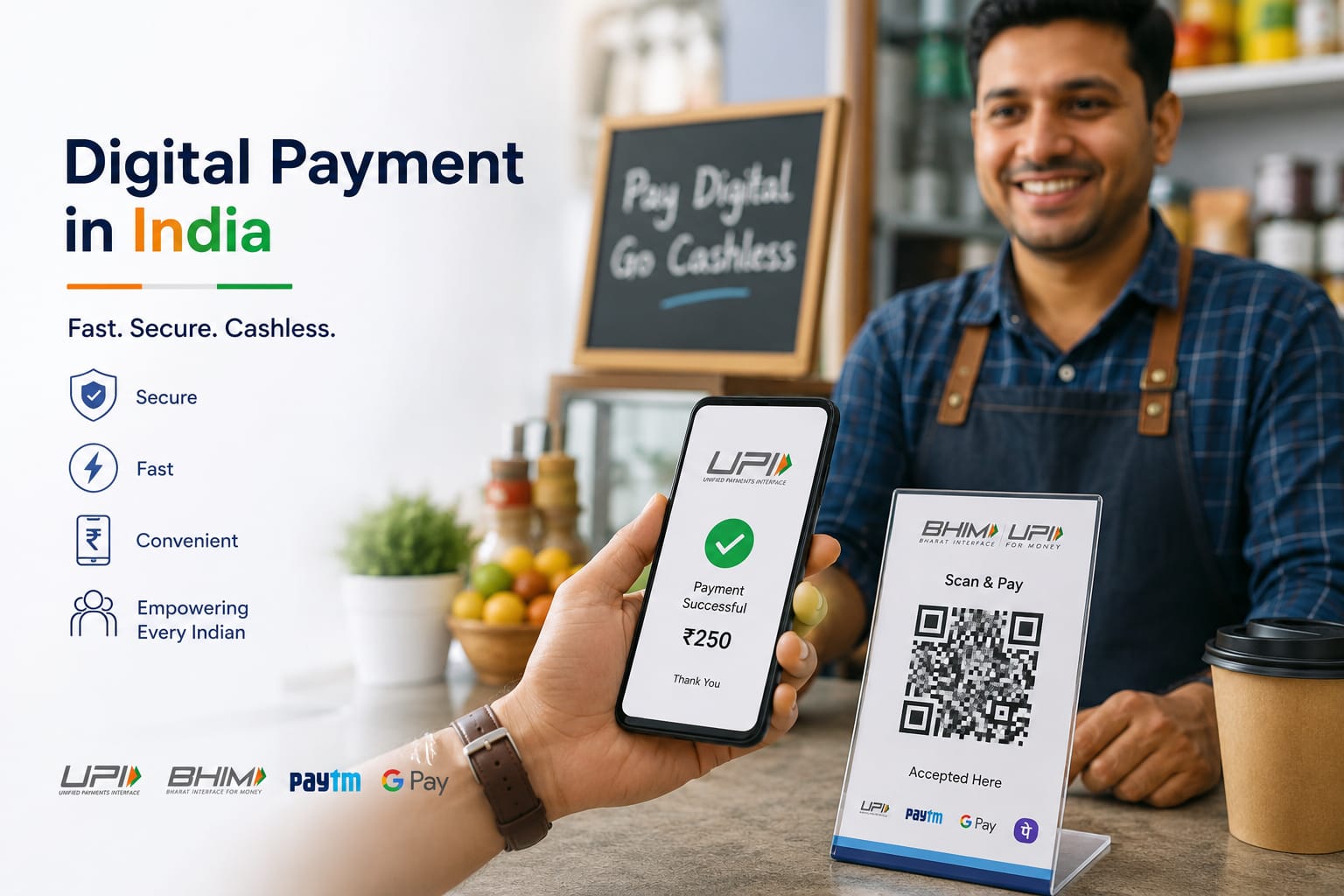
Digital payments are becoming a very important part of daily life in India. Earlier, most people used cash for shopping, paying bills, and other transactions. Today, many people use mobile phones and the internet to make payments easily and quickly. We can pay for shopping, electricity bills, mobile recharges, movie tickets, and many other services without carrying cash. This method of paying money online is called digital payment.
Digital payments became even more popular during the COVID-19 pandemic. People wanted to avoid physical contact and stay safe, so they started using online payment methods. As a result, digital payments grew rapidly across the country.
Growth of Digital Payments in India
India has seen a huge increase in digital payments in recent years. Smartphones, affordable internet services, and government initiatives have helped people adopt online transactions. During the COVID-19 pandemic, people preferred online payments because they were safer than handling cash. Today, digital payments are accepted almost everywhere, from large shopping malls to small tea stalls and local shops.
Different Types of Digital Payments
1. UPI (Unified Payments Interface)
UPI allows people to send and receive money directly from bank accounts using mobile apps. It is one of the fastest and most popular digital payment systems in India.
2. Mobile Wallets
Mobile wallets store money digitally and can be used for shopping, bill payments, ticket booking, and mobile recharges.
3. Internet Banking
Internet banking enables users to transfer money, check account balances, and pay bills through websites and mobile applications.
4. Debit and Credit Cards
Debit and credit cards are widely used for both online and offline purchases.
Benefits of Digital Payments
- Easy to Use – Payments can be made anytime and anywhere.
- Saves Time – Transactions take only a few seconds.
- Safe and Contactless – Reduced physical contact during COVID-19.
- Keeps Records – Every transaction is automatically recorded.
- Reduces the Need for Cash – Less risk of theft or loss.
- Helps Rural Areas – Easier access to banking services.
Challenges of Digital Payments
- Lack of digital knowledge
- Internet connectivity problems
- Cyber fraud and online scams
- Technical issues and server failures
Steps to Make Digital Payments Safer
- Never share OTPs, passwords, or PINs.
- Use strong passwords.
- Verify payment details before sending money.
- Download apps only from trusted sources.
- Avoid public Wi-Fi for banking transactions.
- Update apps regularly for better security.
Future of Digital Payments in India
The future of digital payments in India looks very bright. New technologies, better security systems, and increasing smartphone usage will make digital transactions faster, safer, and more convenient. Digital payments are expected to become a normal part of life for almost every Indian.
Conclusion
Digital payments have changed the way people handle money in India. They are fast, easy, and convenient. Their importance increased greatly during the COVID-19 pandemic when people needed a safe and contactless way to make payments. Although there are some challenges such as internet problems and cyber fraud, the benefits of digital payments are much greater. With growing awareness, better technology, and government support, digital payments will continue to grow and play an important role in India’s future development.