

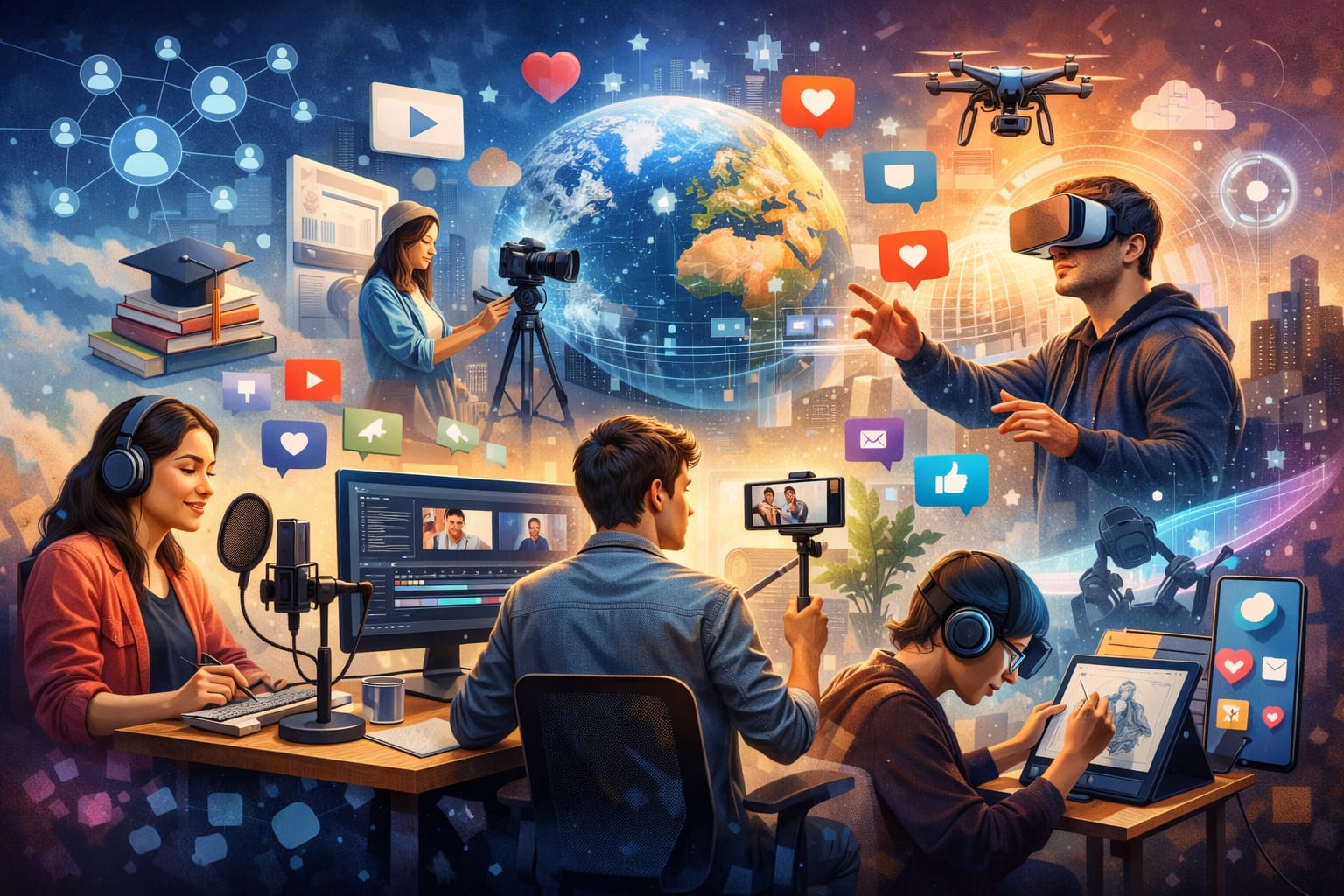
With all the technology in today’s era, technology has become a part of everyday life. Almost all people spend their time communicating, learning smartphone, computer, and the web. In consequence, a new lifestyle and relationship have grown, that can be called digital culture.
Digital culture is a culture given birth to by digital technology and the internet. Creating content is a component of digital culture. In today’s day and age, people are not just consumers, they are content producers. Content can take the form of a video, blog, podcast, social media post, or online tutorial—no matter the form, it’s a great way to disseminate concepts and connect.
Digital culture and digital content production has changed the way of communication and self-expression. They have created new avenues for education, creativity, and even a career.
What do you mean by Digital Culture?
Digital culture refers to the culture that develops due to the utilization of digital devices and online platforms. This encompasses online communication, information sharing and interaction amongst individuals.
Information was primarily obtained by newspaper, TV and radio in the past. In today’s world, the social media offers access to information and dissemination of it at a second’s notice. We can connect and interact with friends, family members and strangers worldwide with just a few clicks.
Communicating in digital culture is quicker and easier. It has also enabled people to participate in discussions, express their opinions, and create online communities based on shared interests.
But Digital culture is not just about technology. It also affects the way we live, relate to others, and conduct ourselves in our lives. Many people have their mobile phones as their first and last item of business today.
Understanding Content Creation
Content creation is the process of creating and publishing content, whether it be information, ideas, or entertainment, using digital means. Content can be done in a variety of ways from videos, articles, photos, reels, podcasts, blogs, and social media posts.
But today, anyone with a mobile phone and Internet connection can be a content creator. Students share study tips, teachers upload educational videos, artists share art, and businesses share their products and services online.
People can share their knowledge and ideas with more people through content creation. It provides them a voice and empowers them to positively influence others.
With platforms such as YouTube, Instagram, Facebook, and blogging websites, creating content has become easier than ever.
Benefits of Content Creation
There are numerous advantages to content development which are offered to individuals and society.
Education is one good thing. Students learn new skills and concepts through the educational content. Anyone with an Internet connection can access online tutorials, lectures and study materials.
Content creation also promotes creativity. Individuals can develop their own videos, stories, artwork and other digital work. This aids in their self-confidence and enhances communication skills.
Career opportunities is also an important advantage. There are plenty of people who’ve accomplished successful careers with content creation. They earn money from advertisements, sponsorships and brand collaborations. Content creation has also created new job opportunities which are not available a few years ago.
Digital content is equally beneficial for businesses. Content marketing helps companies connect with the customer, to advertise their products and to create a good relationship with the consumers.
Moreover, the creation of content and awareness is a way to raise awareness about social issues, including education, health, environmental protection and mental health.
Challenges of Digital Culture and Content Creation
While there are many benefits to digital culture, there are also several drawbacks.
There is a big problem with misinformation. Misinformation and rumors that can circulate rapidly on social media can leave people confused and impact their views.
One of the other issues is cyberbullying. Content creators are known to be subjected to criticism, hateful comments and even online harassment. Such experiences could have a harmful impact on their mental health and self-confidence.
There are also privacy concerns. A lot of people post information about themselves online, but they don’t realize how dangerous it can be. This can result in identity theft, fraud or misuse of personal data.
Add to that the pressure for content creators to be active and create content at all times. This stress may result in stress, anxiety and burnout. It can sometimes cause them negative emotional effects to gain more followers and likes.
Too much screen time can be addictive and lessen in-person communication. Excessive use of technology can have negative consequences on physical health, academic achievement, and relationships.
The Future of Digital Culture and Content Creation
Digital culture and content are a very bright prospect. The landscape of content creation and consumption is changing with the rise of emerging technologies like Artificial Intelligence (AI), Virtual Reality (VR), and Augmented Reality (AR).
AI can aid creators in editing videos, creating graphics and generating ideas more efficiently. VR can create immersive experiences, making digital content more engaging to users.
The Internet continues to grow, and more and more people are going to be involved in digital culture and be content creators. This will foster learning, innovation and entrepreneurship opportunities. But a responsible use of technology will continue to be crucial.
The content creators should create accurate, meaningful and ethical content to benefit society.
Conclusion
The digital culture and digital production of content have been a huge change in the modern society. They include a host of changes in people’s communication, learning, working and self-expression. Content creation is an area for learning, creativity, career development and awareness-raising about social issues.
Meanwhile, issues of misinformation, cyberbullying, privacy and excessive screen time need to be confronted. Digital technologies can be used responsibly and creatively in order to make a positive contribution to society.
Digital culture is re-defining the future and content is one of its most potent weapons in its arsenal.