

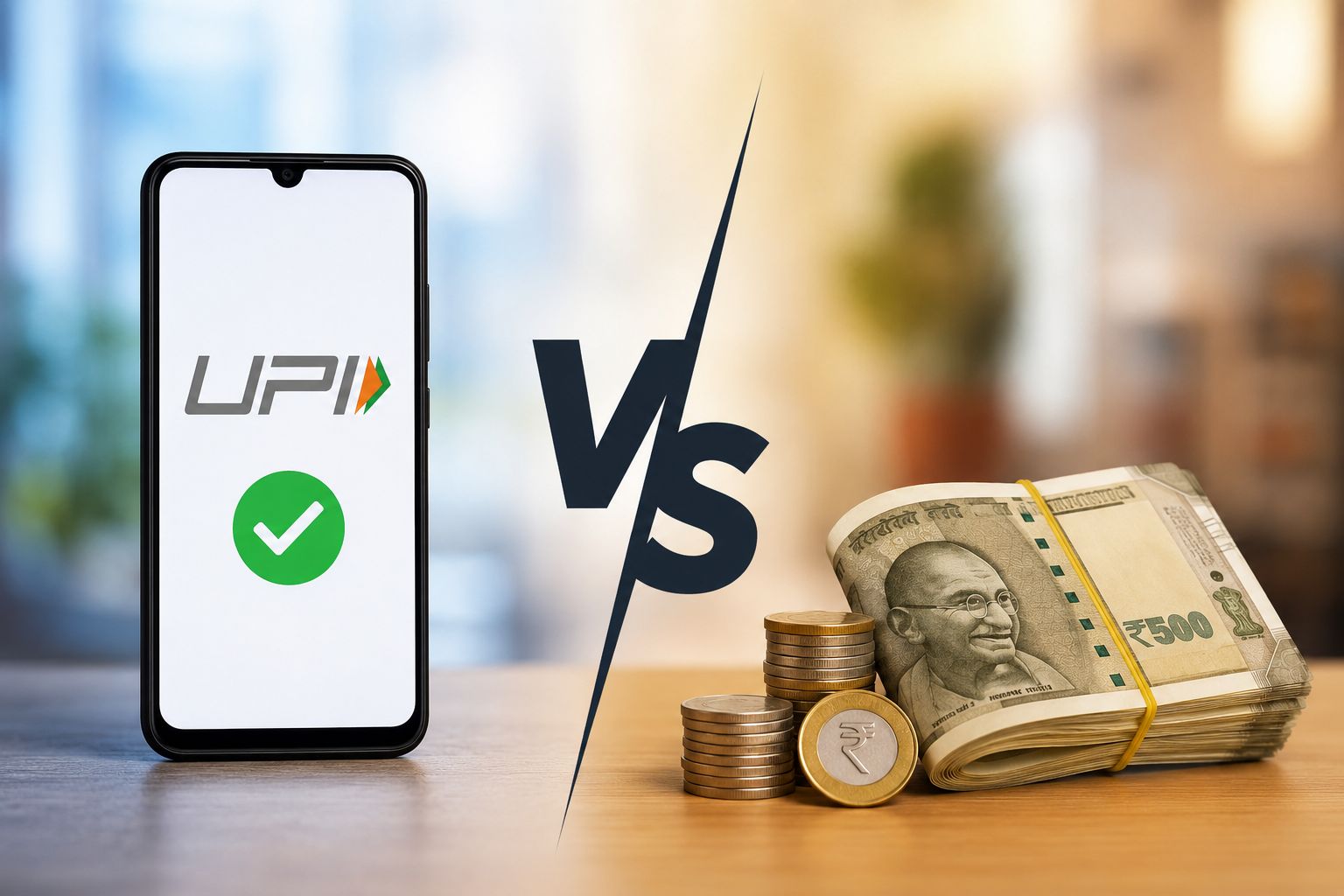
UPI vs Cash: Is India Going 100% Digital?
India is undergoing a major transformation in the digital space. Over the past few years, digital payment systems have become an essential part of daily life. From buying groceries and paying electricity bills to booking train tickets, people can now make instant payments using their smartphones instead of relying on cash or cheques. One of the biggest reasons behind this change is the growth of the Unified Payments Interface (UPI).
UPI has revolutionized the way people manage their finances. It allows users to transfer money from one bank account to another within seconds. With the rapid growth of digital payments, an important question arises: Is India moving toward a 100% digital economy, or will cash continue to play a significant role? This question is not just about payment methods; it also involves convenience, accessibility, security, and the future of India’s economy.
What is UPI?
UPI (Unified Payments Interface) is a digital payment system launched by the National Payments Corporation of India (NPCI). It enables users to send and receive money instantly through mobile applications such as Google Pay, PhonePe, Paytm, and BHIM. Using UPI, people can make payments by scanning QR codes, entering a mobile number, or using a UPI ID.
UPI is quick, simple, and available 24/7. Since its introduction, it has gained immense popularity because it eliminates the need to carry cash and makes transactions easier for both customers and businesses.
Advantages of UPI
Convenience is one of the greatest benefits of UPI. Anyone can make payments anytime and anywhere using a smartphone. There is no need to visit a bank or carry a wallet full of cash. UPI transactions are also extremely fast, with money being transferred instantly, making it useful for everyday purchases and emergency payments.
Another major advantage is transparency. Digital transactions create easily traceable records, which help reduce fraud, tax evasion, and black-money transactions. UPI also promotes financial inclusion. Businesses of all sizes, including small shops and street vendors, can accept digital payments, allowing them to become part of the formal financial system.
Furthermore, UPI helps the government and financial institutions save costs by reducing the need to print, transport, and manage physical currency.
Importance of Cash
Although digital payments are growing rapidly, cash continues to play an important role in India’s payment system. Many people, especially in rural areas, prefer cash because it is simple and easy to use. Not everyone has access to a smartphone or a reliable internet connection. For such individuals, cash remains the safest and most convenient payment method.
Cash is accepted almost everywhere and does not require electricity, internet access, or technical knowledge. During network failures, server issues, or app-related problems, cash serves as a dependable backup option.
Another reason some people prefer cash is privacy. Unlike digital transactions, cash payments do not leave a digital record. Many individuals also find cash quicker and more comfortable for small-value transactions.
Challenges in Achieving a Fully Digital India
India has made remarkable progress toward digital payments, but becoming completely cashless is not easy. One of the biggest challenges is the digital divide. Millions of people still lack access to smartphones, internet connectivity, or digital literacy. Elderly individuals and people living in remote areas may find digital payment systems difficult to use.
Cybersecurity is another major concern. As digital transactions increase, the risks of online fraud, hacking, phishing, and data theft also rise. Users must remain cautious and aware while using digital platforms.
Technical issues can also create difficulties. Internet outages, server failures, and app malfunctions may interrupt transactions. In such situations, cash remains a reliable alternative.
Additionally, some people simply prefer handling physical money because it helps them manage and track their spending more effectively.
Is India Really Becoming 100% Digital?
India is certainly moving toward a more cashless society, but achieving a completely digital economy may take considerable time. The adoption of UPI has grown rapidly, and digital payments have become a part of everyday life. Government initiatives such as Digital India, improved internet connectivity, and increasing smartphone usage have further accelerated this trend.
However, India is a diverse country with significant differences in economic, educational, and geographical conditions. While urban areas are quickly embracing digital payments, many rural regions still depend heavily on cash.
Therefore, India is more likely to become a “less-cash” economy rather than a completely cashless one. People will continue using UPI for its convenience and speed while also keeping cash available for situations where digital payments are not practical.
Conclusion
To sum up, UPI has become one of the most significant innovations in India’s payment system, paving the way for a digital future. With its convenience, speed, transparency, and support for financial inclusion, UPI has emerged as one of the world’s most successful digital payment systems.
However, cash remains important because it is widely accessible, reliable, and universally accepted. The journey toward a fully cashless India faces challenges such as limited digital access, cybersecurity concerns, and technical issues, making a complete transition unlikely in the near future.
Therefore, a combination of both UPI and cash is likely to shape India’s future payment ecosystem. Digital payments will continue to grow rapidly, but cash will remain relevant for many years. The goal is not necessarily to eliminate cash but to provide people with safe, convenient, and flexible payment options that best suit their needs.