


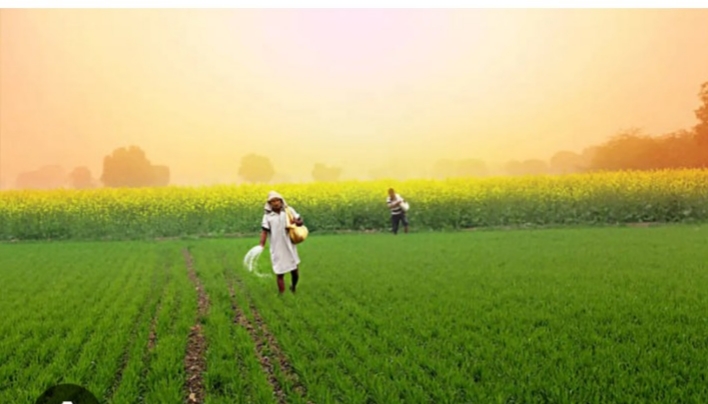
Haryana Agriculture News Update (June 2026): Farmers Turn to Smart Cropping as Monsoon Uncertainty Looms
Haryana’s agriculture sector is witnessing a major shift in planning and preparedness as the monsoon season begins with uncertain rainfall patterns. In today’s update, the focus remains on farmer resilience, crop diversification, and government-backed initiatives aimed at protecting agricultural output across the state.
>>>>>A key development is the state’s strong advisory encouraging farmers to adopt short-duration and low-water crops such as millets, pulses, and oilseeds due to unpredictable monsoon behavior. Meteorological reports indicate weak and uneven rainfall patterns across northern India, which could directly affect kharif sowing in Haryana. Agriculture experts have suggested that farmers prioritize water-efficient farming methods and avoid water-intensive crops where irrigation support is limited.
Reuters
At the same time, the Haryana government is actively expanding its natural farming and smart agriculture programs, promoting chemical-free cultivation practices across thousands of acres. Under ongoing initiatives, the state is supporting training centers, organic farming clusters, and soil-health improvement programs to reduce dependency on fertilizers and improve long-term productivity.
Another important highlight is the government’s push toward agricultural infrastructure strengthening, including better irrigation systems, water conservation structures, and upgraded farm technology. With erratic rainfall becoming more frequent, Haryana is focusing on improving farm-level resilience through check dams, pond renovation, and efficient water storage systems.
Meanwhile, farmer welfare schemes continue to provide financial relief. Recently, lakhs of farmers in Haryana received direct benefit transfers under central schemes, ensuring timely monetary support during the crucial sowing season.
The Times of India
>>>>>In addition, agricultural research institutions in the state are actively guiding farmers on climate-adaptive farming techniques, including soil testing, seed selection, and pest management strategies tailored to changing weather conditions.
Overall, Haryana’s agriculture sector is entering a critical phase where technology, climate awareness, and government support are becoming essential tools for sustaining productivity.