

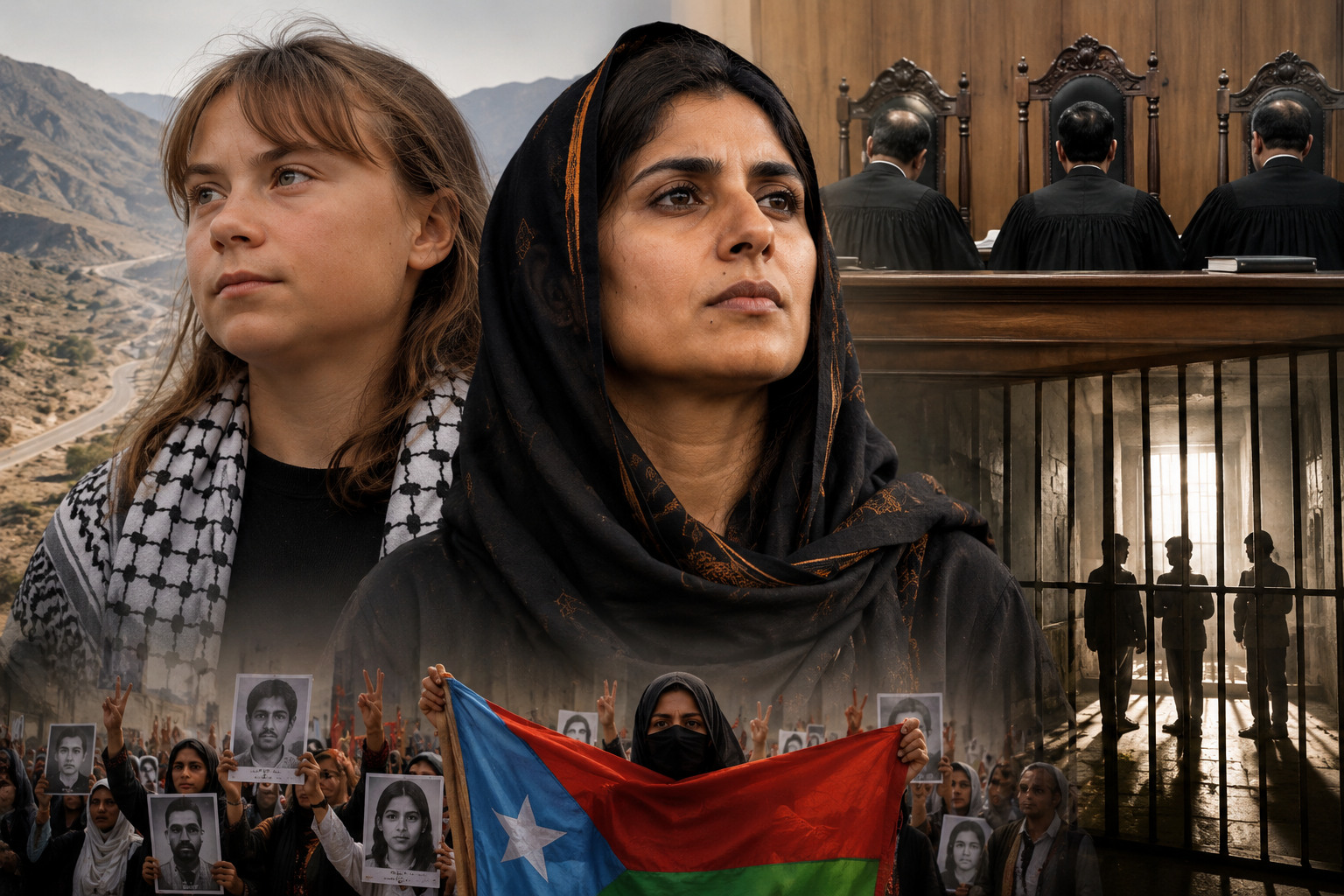
The sentencing of Baloch rights activist Mahrang Baloch and two of her associates to life imprisonment by a Pakistani court has sparked significant international attention, with environmental activist Greta Thunberg emerging as one of the most prominent voices calling for their release. In a strongly worded statement, Thunberg declared that “you cannot imprison the truth,” arguing that the detention of activists would not silence demands for justice and human rights.
Mahrang Baloch has become one of the most recognized advocates for Baloch rights in Pakistan. She has campaigned on issues including enforced disappearances, political representation, and alleged human rights violations in Balochistan, a region that has long witnessed tensions between separatist groups, civil society activists, and state authorities. The court’s decision has generated intense debate, with prosecutors maintaining that the verdict was based on legal evidence and judicial procedures, while defense lawyers have challenged the ruling and argued that it unfairly targets peaceful activism.
Greta Thunberg’s intervention has amplified global scrutiny of the case. Human rights organizations and activists have expressed concern that the sentence could discourage dissent and weaken protections for civil liberties. Many legal experts and advocacy groups have called for transparency and due process, while supporters of the ruling insist that courts must be allowed to operate independently and that national security considerations cannot be ignored.
The case has also renewed discussion about the balance between state security and individual freedoms in Pakistan. Analysts suggest that the verdict could deepen tensions between authorities and civil society groups, particularly in Balochistan, where questions of governance, representation, and human rights remain highly sensitive.
International observers are closely monitoring developments, with some arguing that growing global attention could influence future diplomatic and human rights discussions. Whether viewed as a matter of justice or security, the case has become a focal point in broader debates about political activism, freedom of expression, and the role of governments in responding to dissent. Greta Thunberg’s comments have ensured that these discussions are likely to continue on the international stage.