

Introduction
Ecommerce or Electronic Commerce involves transactions of products and services via the Internet. The world is evolving rapidly and digitalization and technology have become the central themes of business these days, and e-commerce is a noteworthy aspect of it. The function of online shopping platforms has revolutionized the buying and selling of products and how they engage with consumers. The rise of e-commerce has opened up a host of new business opportunities and has been a big challenge for the traditional stores.
Growth of E-Commerce
The last ten years have seen e-commerce grow at a tremendous pace, aided by the proliferating internet connection, people embracing smartphones, safe digital payment methods, and changing consumer preferences. In today’s world, one can buy products and services at any time and from anywhere without having to go to stores.
The internet has many benefits such as a broad selection of products, comparison, reviews, appealing discounts, and doorstep delivery services. The advantages of online shopping have become a growing phenomenon among consumers around the globe. Moreover, the COVID-19 pandemic hastened the trend of online shopping, as consumers sought alternative ways to meet their demand for shopping.
The impact on traditional businesses. The effect on traditional businesses.
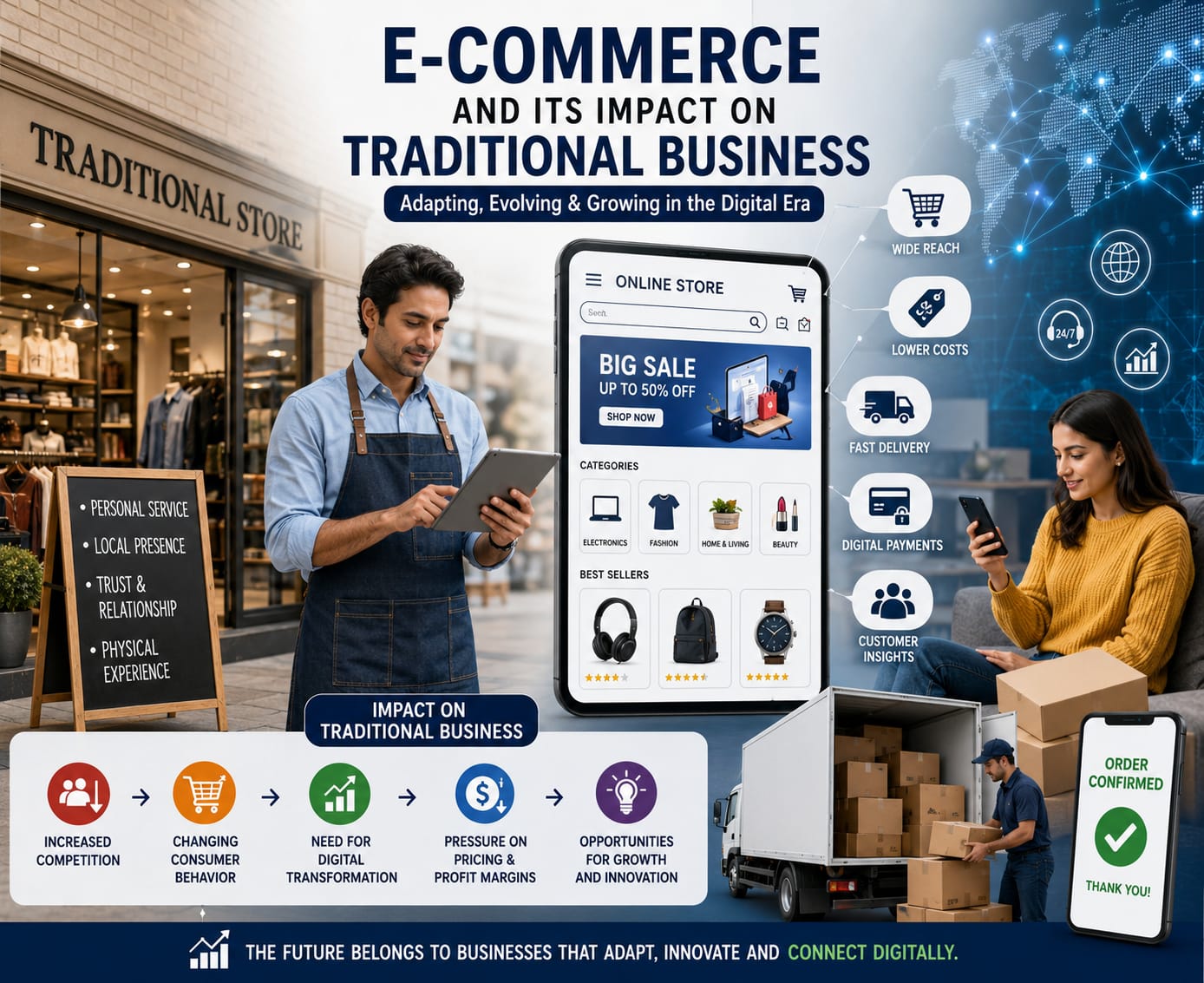
Ecommerce has had an impact on traditional businesses in a few ways.
1. Increased Competition
Online retailers are taking a huge bite out of traditional businesses. Ecommerce businesses often offer competitive prices, discounts, and larger inventories. This could lead to difficulties in drawing and keeping customers for small outlets and local shops.
2. Consumer behaviour change.
The way consumers behave has transformed greatly since the advent of e-commerce. The Online Shopping is very convenient, flexible and time saving for customers. Therefore, it is essential for traditional businesses to seek to enhance their customer journeys, deliver tailored services, and cater to evolving customer needs.
3. Wider Market Reach
One of the major benefits of ecommerce is its ability to target customers who aren’t located in the same geographic area. Traditional businesses can create an online presence and sell products to customers in different cities, states, and countries. This new customer base can present opportunities for business expansion and revenue.
4. Cost Reduction
Online businesses typically have lower overheads, as they don’t need as much space or the same level of resources to be put to use. For traditional businesses, online selling channels can also help in managing business operations and cut down on administrative costs while adding digital technologies to enhance the benefits they derive.
5. Digital Transformation is required.
In the era of ecommerce, digital transformation is a must now in order to keep businesses alive. A lot of traditional businesses are investing in their websites, mobile apps, social media marketing, digital payment systems, and customer relationship management. By implementing such technologies, companies can stay competitive and relevant in today’s digital age.
The benefits of ecommerce to traditional businesses. Benefits of ecommerce to traditional businesses.
The e-commerce industry has various advantages can help propel the development of conventional business. This allows companies to better connect with more customers and expand visibility and revenue on their platforms. Businesses can use online communication channels to offer quicker and better customer support, in addition to enhancing customer interaction.
In addition, ecommerce platforms enable businesses to gather valuable data concerning their customers and understand their purchasing behavior. This data can be utilized to help create strategic marketing campaigns, better product lines, and customer satisfaction. New opportunities for businesses are emerging with digital marketing tools like social media ads, email marketing, and search engine optimization.
The problems faced by traditional businesses.
While e-commerce offers numerous benefits, it also brings several difficulties for traditional companies. Online retailers can impact sales and profits due to increased competition. In the digital business world, cybersecurity risks, data privacy issues, and online fraud are increasingly becoming concerns.
Logistics and delivery management can also be complicated, especially for small businesses that don’t have enough resources. Moreover, there’s a need for investment in technology, staff training, and digital marketing to get a site online and keep it there. These costs and technical requirements could be a challenge for many small business owners.
The future of e-commerce and traditional business is a combination of both. The future of e-commerce and traditional business is both.
There is a future in both online and offline, and that is likely to be a mix of the two. Instead of replacing traditional businesses, e-commerce is spurring businesses to have hybrid business models that combine physical stores and digital platforms.
Companies that are able to merge the in-store experience with online convenience will be more likely to deliver to client expectations. The future of e-commerce and traditional retail will likely see further impact from emerging technologies like artificial intelligence, data analytics, and customization.
Conclusion
The advent of e-commerce has revolutionized the business landscape by altering the course of product and service transactions. It has posed difficulties for the traditional sector, but it has also provided opportunities for new growth, innovation, and market opportunities. Adopting digital technologies and meeting evolving consumer preferences can enable traditional businesses to stay competitive and successful in today’s market. E-commerce isn’t a substitute for a brick-and-mortar business, but it does affect how business is done and the nature of the commercial environment it presents to customers.