


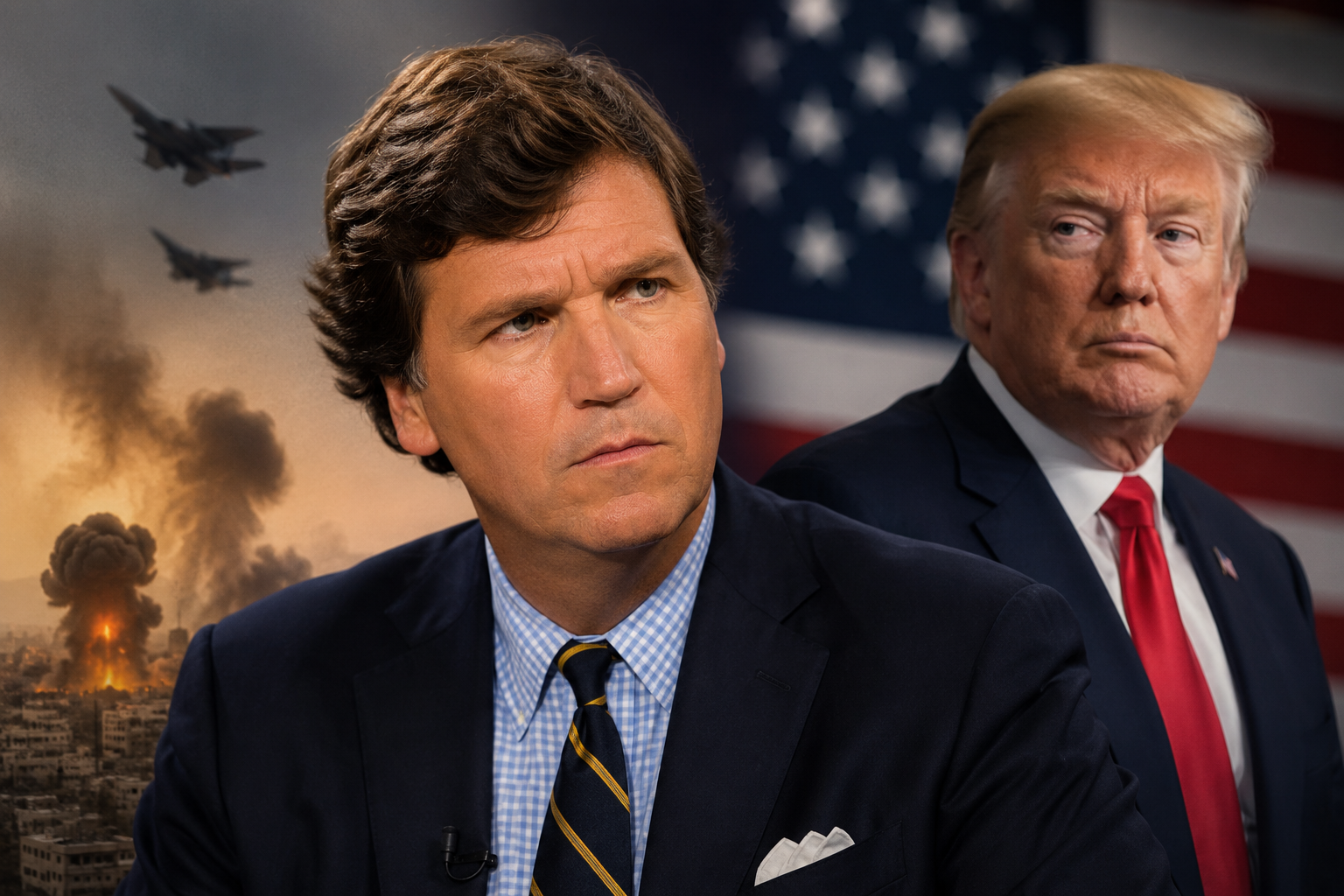
Like him or loathe him, Tucker Carlson remains one of the most influential figures in Donald Trump’s political universe. Over the past decade, he has evolved from a prime-time television host into a powerful voice within the MAGA movement, shaping debates on immigration, foreign policy, and the direction of American conservatism. His ability to connect with grassroots supporters has made him a key figure for understanding the mood and priorities of Trump’s political base.
Carlson’s recent criticism of Trump’s decision to launch military strikes against Iran has highlighted growing tensions within the America First coalition. He argued that military intervention in the Middle East runs counter to the non-interventionist principles that many Trump supporters embraced. Carlson warned that involvement in another foreign conflict could alienate voters who backed Trump because they believed he would avoid costly overseas wars and focus on domestic priorities.
The disagreement is notable because Trump and Carlson have often shared common ground on foreign policy. Over the years, Carlson has publicly questioned military interventions and promoted a more restrained approach to international affairs. Reports have suggested that Trump has, at times, valued Carlson’s views, even while rejecting some of his criticism and maintaining his own decision-making authority.
Supporters see Carlson as a voice for voters skeptical of Washington’s foreign policy establishment. They argue that he raises concerns that resonate with Americans who are weary of prolonged conflicts abroad. Critics, however, view him as a polarizing figure whose rhetoric can deepen divisions within conservative politics and amplify ideological disputes.
The Iran debate underscores a broader struggle within the Republican Party between traditional hawkish conservatives and a populist wing that favors a less interventionist foreign policy. Understanding Carlson’s perspective therefore offers insight into the debates shaping Trump’s movement. Whether admired or criticized, Carlson remains a significant barometer of the frustrations, priorities, and evolving identity of modern American conservatism.