

INTRODUCTION
The environment and society are closely connected and depend on each other for survival and development. The environment is all natural resources (air, water, land, forests, wildlife, climate) and society is the community of people, communities, institutions and cultures. Human life cannot survive without a healthy environment and the functioning of the society has a considerable influence on the environment. It is important to grasp this relationship in order to build the future we need.
The basic needs for life are provided by the environment. Good air is needed for breathing, fresh water for drinking and farming, and fertile land for farming. Forests yield timber, medicine and serve as a habitat for animals, while oceans and rivers offer the opportunity for fishing and transportation. These resources enable societies to develop, grow and enhance their standards of living and their economies. The health and development of humans would be greatly hampered if the environment were unhealthy.
Meanwhile, the society affects the environment by its actions. Human life improving in several ways due to industrialization, urbanization, agriculture, transportation and technology development. But, these activities are often demanding on natural resources. Environmental issues like climate change, biodiversity loss and ecosystem degradation have arisen as a result of the excessive consumption of fossil fuels, deforestation, pollution and waste production. With population growth, so do resource requests, which also poses added challenges for environmental sustainability.
Pollution is one of the most critical problems in the environment which is confronted by the society these days. Pollution from cars, factories and power plants has adverse effects on health and is a contributor to global warming. Pollution from industrial waste, plastics and chemicals have a negative impact on aquatic ecosystems and clean drinking water. Polluted soil reduces the productive capacity of the soil and impacts on food security. Not only are these issues detrimental to the environment, but they also have a negative impact on social and economic development.
The global warming, primarily due to greenhouse gas emissions, has led to extreme weather events, melting glaciers, rising sea levels, and altered precipitation patterns. Agriculture, health, livelihoods and infrastructure are all impacted by these changes. Environmental disasters are a particularly harmful effect on vulnerable communities, particularly in developing countries.
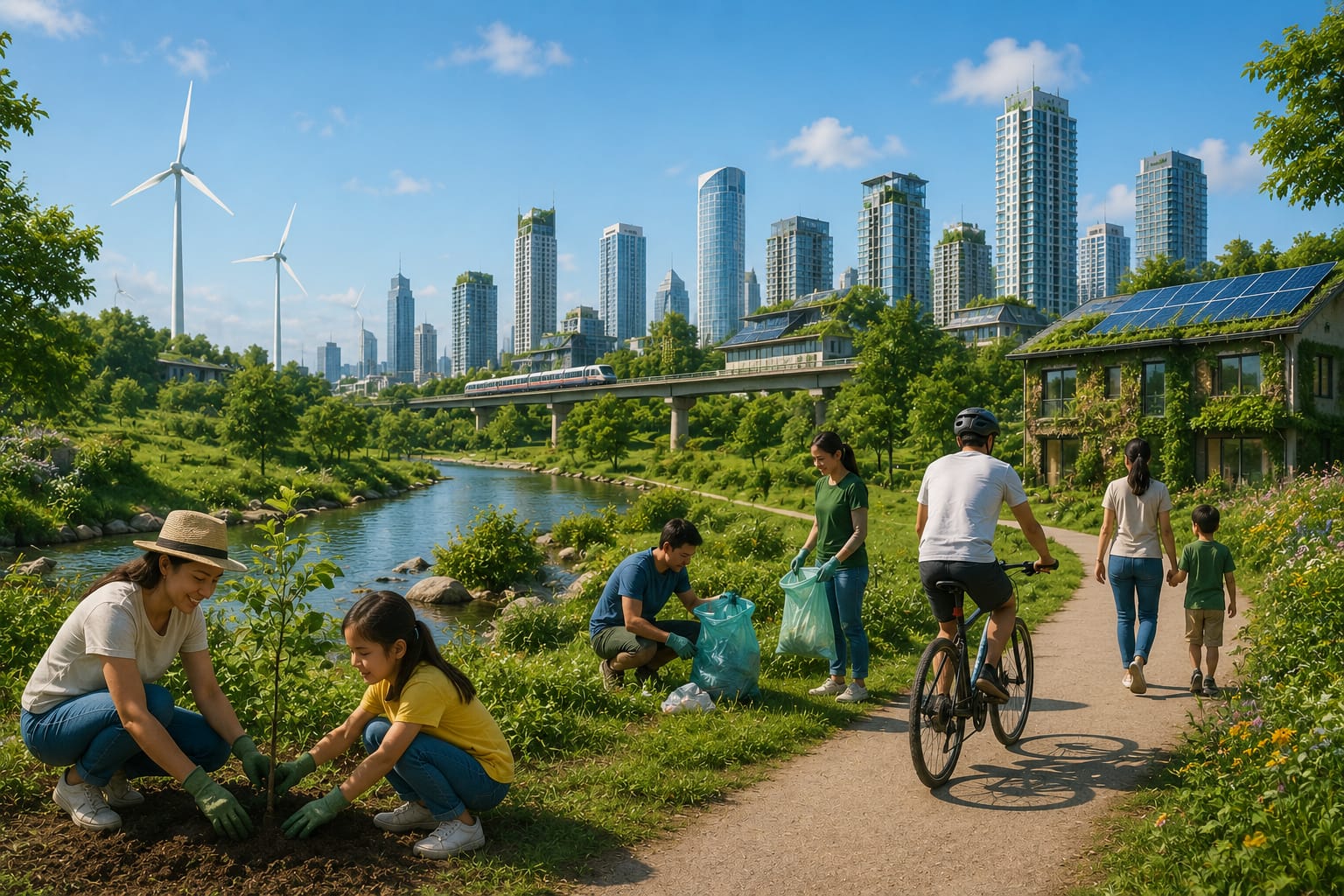
Environmental conservation is an important aspect of nature/society balance. Conservation is the preservation of nature and the sustainable use of natural resources. Governments, organisations and individuals can help by increasing renewable energy, decreasing pollution, saving water, planting trees and protecting wildlife habitats. Sustainable development is development which is able to keep addressing current needs without limiting future generations to meet their own needs. It supports the economic development and maintains environmental resources.
Building Education and Awareness is the key to better environment-society relation. Eco-friendly practices are more likely to be adopted by people who are aware of environmental issues. Schools, colleges, media and community programs can raise awareness on the issues of recycling, energy conservation, waste management and protection of biodiversity. Educating citizens about the environment can lead to policy change and sustainable activities in the community.
The use of technology in protecting the environment is gaining significance. The use of solar panels, wind turbines, electric vehicles, and energy-efficient appliances are just a few examples of innovations that help minimize the environmental effects of energy use. Incorporating modern waste disposal strategies and water treatment systems also help to create a cleaner and healthier community. Technologies do not necessarily cure all environmental problems, but they can help in the implementation of sustainable solutions if they are used responsibly.
conclusion
The communities have an important role to play in conservation of the environment. Tree plantation drives, clean-up campaigns, rain water harvesting and community gardens are some local initiatives that can make a difference. Group effort can be more effective than action by individuals working alone. Through collaboration societies can develop healthier environments and enhance the quality of life for all.