

Introduction
India is the world’s largest democracy, where elections are held regularly at different levels of government. Citizens elect representatives for the Lok Sabha, State Legislative Assemblies, Municipal Corporations, and Panchayats. At present, these elections are conducted separately according to the tenure of different governments. As a result, elections take place almost every year in one part of the country or another.
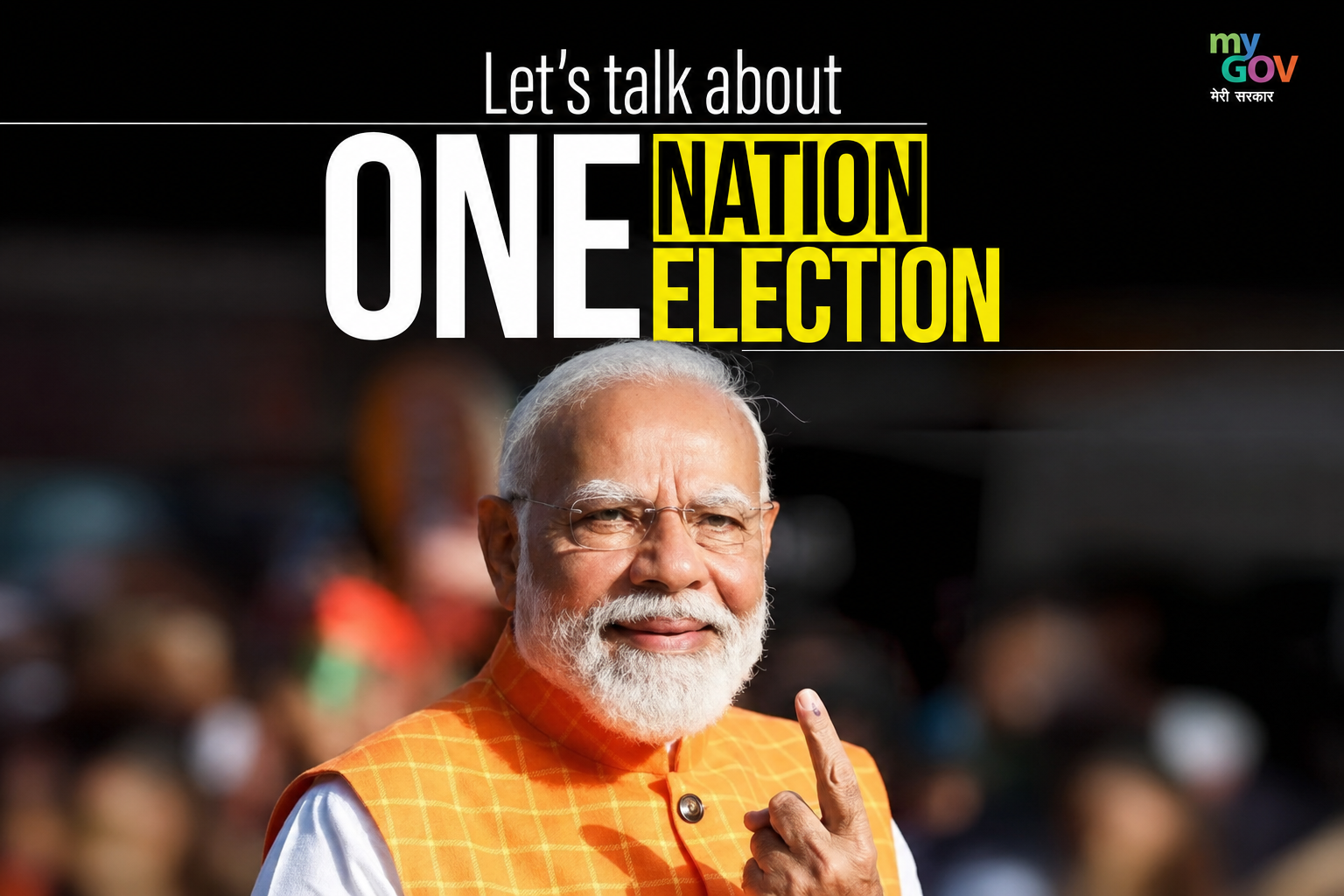
The concept of “One Nation, One Election” (ONOE) proposes holding elections to the Lok Sabha and all State Legislative Assemblies simultaneously. Under this system, voters across the country would cast their votes for both the Central and State Governments during the same election cycle, usually once every five years.
This proposal has sparked widespread debate among policymakers, political parties, constitutional experts, and citizens. Supporters believe it can reduce election expenses, improve governance, and minimize disruptions caused by frequent elections. Critics, however, argue that it may create constitutional, political, and practical challenges.
This article explores the meaning, history, objectives, benefits, challenges, possible solutions, and future prospects of the One Nation, One Election proposal.
What is One Nation, One Election?
One Nation, One Election refers to a system in which elections for the Lok Sabha and all State Legislative Assemblies are held simultaneously. Under this model, voters elect both Central and State representatives during the same election period.
In the future, local body elections such as Panchayat and Municipal Corporation elections may also be synchronized. However, the primary focus of the proposal is on Parliamentary and State Assembly elections.
The main objective is to establish a common electoral cycle that reduces the frequency of elections and allows governments to focus more on governance than continuous campaigning.
Historical Background
The idea of simultaneous elections is not new in India. After Independence, the first four general elections in 1952, 1957, 1962, and 1967 were held simultaneously for both the Lok Sabha and State Legislative Assemblies.
This system ended because several State Governments were dissolved before completing their five-year terms. The Lok Sabha was also dissolved early in 1970, leading to fresh elections in 1971. Since then, election schedules have become separate due to political instability, coalition governments, and premature dissolutions.
Today, elections are conducted throughout the year in different states, making India almost constantly engaged in the electoral process.
Objectives of One Nation, One Election
The proposal aims to achieve several important objectives:
- Reduce the cost of conducting elections.
- Improve administrative efficiency.
- Ensure uninterrupted governance.
- Reduce the burden on security forces.
- Increase voter participation.
- Encourage long-term policy implementation.
- Strengthen democratic institutions.
Benefits of One Nation, One Election
1. Reduction in Election Expenditure
Conducting elections in India requires enormous financial resources. The government spends thousands of crores on polling arrangements, security personnel, Electronic Voting Machines (EVMs), transportation, and election staff.
Political parties also spend heavily on election campaigns, advertisements, rallies, and publicity.
Holding simultaneous elections can significantly reduce these repeated expenses and make the electoral process more cost-effective.
2. Better Governance
The Model Code of Conduct (MCC) comes into effect whenever elections are announced. During this period, governments cannot announce new welfare schemes or major policy decisions.
Since elections occur frequently, governance often slows down.
Under the One Nation, One Election system, the Model Code of Conduct would be enforced only once every five years, allowing governments to focus consistently on development and public welfare.
3. Efficient Use of Administrative Machinery
Conducting elections requires the deployment of millions of government employees, including teachers, administrative officers, and election officials.
Security forces are also deployed across different states for long periods.
Simultaneous elections would reduce repeated deployment of personnel, allowing government employees to continue performing their regular duties with fewer interruptions.
4. Reduced Burden on Security Forces
India deploys a large number of police personnel and central armed forces during elections to maintain law and order.
Frequent elections require repeated movement of security forces across different states.
A synchronized election schedule would reduce these repeated deployments, improve security management, and lower operational costs.
5. Higher Voter Participation
Frequent elections sometimes lead to voter fatigue, causing citizens to lose interest in voting repeatedly.
Holding elections together could encourage higher voter turnout because citizens would vote for both the Central and State Governments during a single visit to the polling station.
Higher participation strengthens democracy by ensuring broader public representation.
6. Political Stability
A fixed election schedule provides stability and predictability in governance.
Governments can focus on implementing long-term development projects instead of preparing for frequent election campaigns.
Such stability can also improve investor confidence and support better economic planning.
7. Reduced Campaigning
Political parties spend considerable time and resources organizing rallies, roadshows, and public meetings.
Continuous campaigning often distracts leaders from governance.
With One Nation, One Election, campaign periods would become less frequent, enabling political leaders to devote more time to policymaking and public service.
Challenges of One Nation, One Election
Despite its many advantages, the proposal also faces several significant challenges.
1. Constitutional Amendments
Implementing One Nation, One Election would require amendments to several constitutional provisions relating to the tenure and dissolution of Parliament and State Legislative Assemblies.
Such amendments require broad political consensus and approval from Parliament as well as many State Legislatures.
This process is both complex and time-consuming.
2. Concerns Regarding Federalism
India follows a federal system in which the Central Government and State Governments function independently.
Some experts believe that simultaneous elections may weaken the autonomy of states and reduce the importance of regional issues.
State elections generally focus on local governance, while national elections emphasize broader national concerns. Holding both together may blur this distinction.
3. Premature Dissolution of Governments
One of the biggest practical challenges is dealing with situations in which a government loses its majority before completing its five-year term.
Important questions arise, such as:
- Should fresh elections be conducted immediately?
- Should the new government serve only the remaining term?
Finding practical and constitutional solutions to such situations is a major challenge.
4. Influence of National Issues
During simultaneous elections, national leaders and national issues may dominate public attention.
As a result, state-specific concerns such as education, healthcare, agriculture, and regional development may receive less attention.
Voters may focus more on national politics than on evaluating the performance of their respective State Governments.
5. Logistical Challenges
India has over 900 million eligible voters, making it one of the world’s largest electoral exercises.
Conducting simultaneous elections would require:
- Additional Electronic Voting Machines (EVMs)
- More Voter Verifiable Paper Audit Trail (VVPAT) machines
- Expanded polling infrastructure
- Extensive security arrangements
- A larger election workforce
Managing such a massive operation would require careful planning and substantial investment.
6. Political Opposition
Several political parties have expressed concerns regarding the proposal.
Regional parties fear that national political parties may gain an unfair advantage because national campaigns often receive greater media attention during simultaneous elections.
Building political consensus remains one of the biggest hurdles to implementing this reform.
Possible Solutions
Experts have suggested several measures to overcome these challenges:
- Introduce a constructive vote of no confidence.
- Allow mid-term governments to serve only the remaining duration of the fixed electoral cycle.
- Conduct elections in two phases if necessary.
- Strengthen coordination between the Election Commission, the Central Government, and the State Governments.
These measures could make simultaneous elections more practical while preserving democratic principles.
Impact on Democracy
One Nation, One Election has the potential to make India’s electoral process more efficient and cost-effective.
However, democracy is not measured solely by efficiency. It also depends on representation, accountability, transparency, and respect for federal principles.
Any reform should ensure that:
- Regional voices remain strong.
- State Governments retain their constitutional powers.
- Citizens continue to have meaningful electoral choices.
- Democratic values are fully protected.
Future Prospects
The idea of One Nation, One Election continues to be widely discussed in India. Various committees have examined its feasibility and recommended legal and administrative reforms.
If implemented successfully, the proposal could transform India’s electoral system by reducing costs, improving governance, and increasing administrative efficiency.
However, achieving this goal will require constitutional amendments, political consensus, public support, and careful planning.
Conclusion
One Nation, One Election is one of the most significant electoral reform proposals in India. It seeks to synchronize Lok Sabha and State Assembly elections to reduce expenditure, improve governance, enhance administrative efficiency, and promote political stability.
At the same time, the proposal raises important constitutional, political, and logistical challenges that must be addressed carefully. Its success depends on achieving a balance between administrative efficiency and democratic values.
Any decision regarding its implementation should be made after extensive consultation with political parties, constitutional experts, State Governments, and citizens. If introduced thoughtfully and with adequate safeguards, One Nation, One Election has the potential to strengthen India’s democratic system while ensuring effective governance and greater electoral efficiency.