

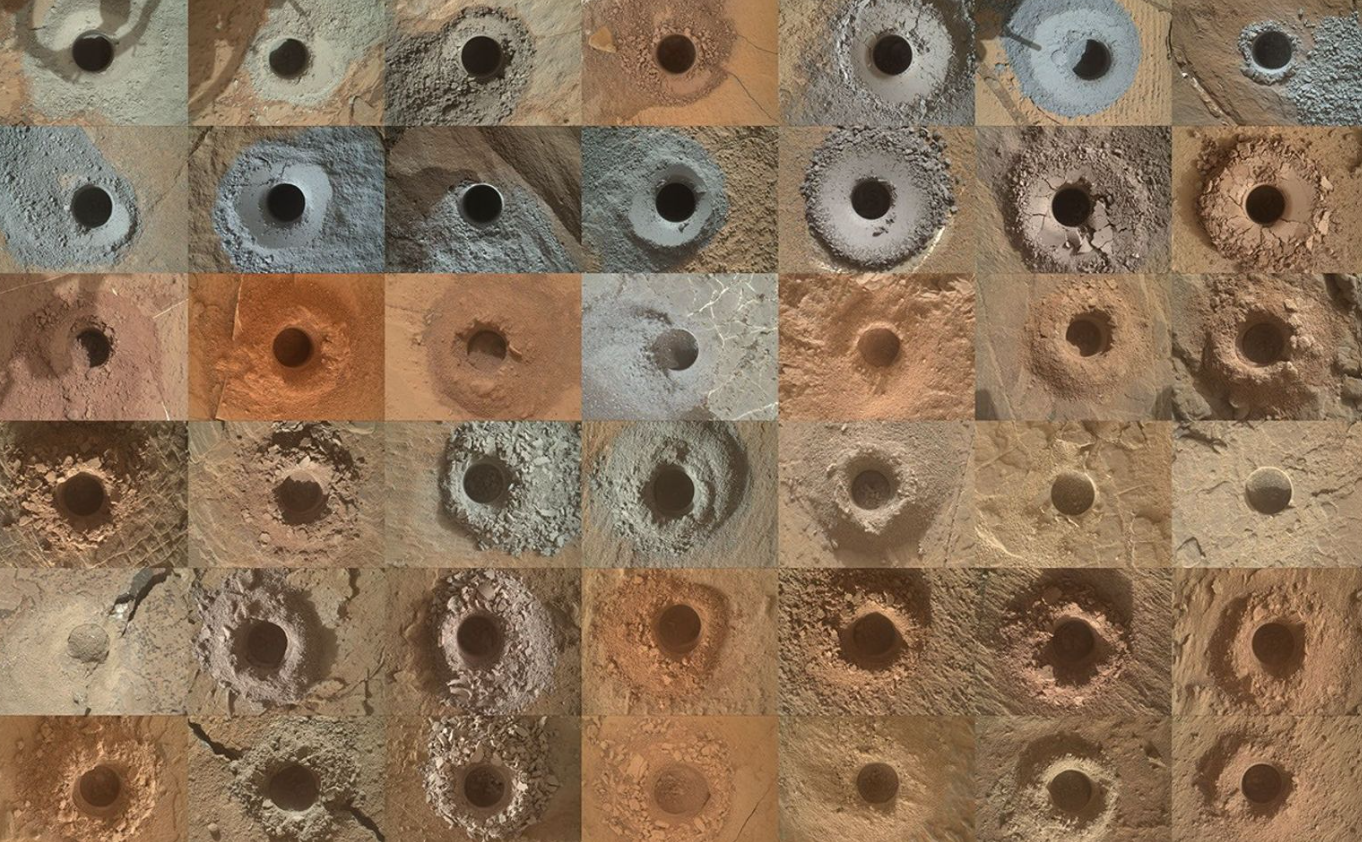
42 Drill Holes on Mars: NASA’s Scientific Exploration and the Search for Clues About the Red Planet’s Past
Introduction
Mars is a planet that people have been interested in for a time. Scientists want to know more about Mars because it’s similar to Earth. They want to understand what Mars was like in the past. If it could have supported life. One way scientists are learning about Mars is by drilling into the planets surface. The **42 drill holes on Mars** are a part of this effort. These holes have been made over years and have given scientists a lot of information about Mars.
The planet Mars has been studied for a time. Scientists are trying to learn more about its history, environment. If it could have supported life. The **42 drill holes on Mars** are very important for this research. They have helped scientists learn about the planets composition and what its environment was like in the past.
Mars is a planet that’s a lot like Earth. It has rocks and soil that can tell us about its past. Scientists are studying these rocks and soil to learn more about Mars. They want to know if Mars had water and if it could have supported life. The **42 drill holes on Mars** have given scientists a lot of information about the planets past.
—
# **Understanding Mars Exploration**
Mars is a planet that is often called the “Red Planet”. It is the planet from the Sun and has been studied by scientists for a long time. Scientists are interested in Mars because it has features that’re similar to Earth. They want to know more about Mars because it can help us understand how planets change over time.
There are reasons why scientists are interested in Mars.
* Mars had water on it a time ago.
* The planets surface has rocks that can tell us about its past.
* Mars might have had conditions that could have supported life.
* Studying Mars can help us understand how planets change over time.
Scientists have sent machines to Mars to collect data and do experiments. These machines are called rovers. They have been very helpful in learning more about Mars. The **42 drill holes on Mars** are a part of this research.
—
# **The Importance of Drill Holes on Mars**
The **42 drill holes on Mars** are an important part of scientific research. They have been made by machines that can drill into the planets surface. These holes are important because they give scientists information about the planets surface and underground materials.
Drilling into Mars is different from looking at the planets surface. When scientists drill they can get information about materials that have been protected from the conditions on Mars for a long time. Mars is a harsh environment.
* It has high and low temperatures.
* It has a lot of radiation.
* It has dust storms.
* It has a thin atmosphere.
Because of these conditions the surface of Mars can change over time. Drilling deeper into the planet gives scientists access to preserved samples. The **42 drill holes on Mars** have given scientists a lot of information about the planets past.
—
# **NASA’s Mars Rover and Drilling Mission**
NASA has sent machines to Mars to study the planet. One of these machines is called the **Perseverance** rover. This rover has been very important in collecting rock samples and studying the Jezero Crater region.
The **Perseverance** rover has tools that allow it to do its job.
* It can drill into rocks.
* It can collect samples.
* It can analyze minerals.
* It can study environmental conditions.
The **42 drill holes on Mars** were made by the **Perseverance** rover and other machines. These holes are in locations that were chosen by scientists because they are very important for understanding the planets geology.
—
# **Why Scientists Drill Into Mars Rocks**
Scientists drill into rocks for several reasons.
## **1. Searching for Signs of Ancient Life**
One of the reasons scientists are interested in Mars is to know if it ever supported life. They look for signs of life in the rocks and soil.
* They look for molecules that are made by living things.
* They look for patterns of chemicals that could be made by living things.
* They look for minerals that are made by water.
Although scientists have not found any proof of life on Mars they are still interested in the planet. They think that Mars might have had conditions that could have supported life a time ago.
—
## **2. Studying Ancient Water Activity**
Scientists think that Mars had water on it a time ago. They think it had rivers, lakes and maybe even oceans. The rocks on Mars can tell us about the water that was on the planet.
* They can tell us how the water interacted with the rocks.
* They can tell us how long the water was on Mars.
* They can tell us if the environment was good for life.
The samples from the **42 drill holes on Mars** have helped scientists learn more about the planets history.
—
## **3. Understanding Planetary Changes**
Mars is not the same as it was a time ago. Scientists think that the planet went through changes over billions of years. The research from the drilled samples can help explain what happened to Mars.
* It can help us understand why the planet lost its atmosphere.
* It can help us understand how the climate changed.
* It can help us understand how the geology of the planet changed.
—
# **Timeline of Mars Drilling Exploration**
## **Early Mars Missions**
The first missions to Mars were just to collect pictures and learn about the planets atmosphere and surface. These missions helped scientists understand the geography of Mars and identify areas that’re interesting for research.
## *Advanced Rover Missions**
Later missions to Mars included machines that could move around on the planet analyze rocks and do experiments. These missions were very important for learning more about Mars.
## **Creation of Drill Holes**
The recent missions to Mars have included machines that can drill into the planets surface. The **42 drill holes on Mars** are a result of these missions. They have given scientists a lot of information about the planets history.
—
# **Scientific Discoveries from Mars Samples**
The samples from the **42 drill holes on Mars** have helped scientists learn more about the planet.
## **Rock Composition**
The rocks on Mars are made up of minerals. These minerals can tell us about the planets formation and history.
## **Ancient Environmental Conditions**
The rocks on Mars can also tell us about the environment on the planet a time ago. Scientists can learn about the climate and the geology of the planet.
## **Chemical History of Mars**
The rocks on Mars have chemicals in them that can tell us about the planets history. These chemicals can help us understand how the planet changed over time.
—
# **Challenges of Drilling on Mars**
Drilling on Mars is very hard.
## **1. Distance From Earth**
Mars is far from Earth. This means that scientists cannot control the machines on Mars in time. They have to send commands to the machines and wait for them to do their job.
## **2. Extreme Environment**
Mars is a harsh environment.
* It has low temperatures.
* It has dust storms.
* It has a thin atmosphere.
* It has terrain.
The machines that drill on Mars have to be designed to survive these conditions.
## **3. Limited Resources**
The machines on Mars have limited power and equipment. This means that every drilling activity has to be planned carefully.
—
Technology Behind Mars Drilling
The machines that drill on Mars use advanced technology.
* They have tools that can drill into rocks.
* They have cameras and sensors that can collect data.
* They have laboratories that can analyze samples.
* They have systems that can communicate with Earth.
This technology allows scientists on Earth to study the samples from Mars. It also helps us develop technologies that can be used in the future.
—
Possibility of Bringing Mars Samples to Earth
One of the goals of Mars research is to bring samples from the planet to Earth. This would allow scientists to study the samples in detail and learn more about Mars.
The laboratories on Earth are more advanced than the machines on Mars. They can do detailed analysis of the samples and help us learn more about the planet.
Studying Mars samples on Earth could help us answer questions about the planets history, environment and if it could have supported life.
—
Impact on Future Space Exploration
The research on Mars is very important for space exploration. Scientists are studying Mars to learn more about how humans could survive on another planet.
* They want to know what resources are available on Mars.
* They want to know about the challenges on the planet.
* They want to know if it is possible for humans to live on Mars for a time.
The research on Mars is a step towards understanding if humans can travel to and live on other planets.
—
Importance of Space Research
The research on Mars is very interesting to the public. It represents humanitys curiosity about the universe.
* It helps us understand the origin of planets.
* It helps us understand Earths history.
* It helps us understand if there could be life on planets.
The research on Mars also helps us develop technologies and encourages scientific research.
Role of Media in Reporting Space Discoveries
The media plays an important role in reporting space discoveries. They should explain the facts clearly. Avoid exaggerating the information.
* They should highlight the evidence.
* They should present opinions.
The media should report space discoveries accurately to help the public understand and be interested in the research.
Future of Mars Exploration
The future of Mars research is very exciting. Scientists are planning to do detailed analysis of the samples from the planet.
* They are looking for signs of life.
* are preparing for missions to Mars.
* AND are developing technologies to help us explore the planet.
The **42 drill holes on Mars** are a part of this research. They have given scientists a lot of information about the planets history. Will continue to help us learn more about Mars.
Conclusion
The **42 drill holes on Mars** are an important achievement in planetary exploration. They have helped scientists learn more about the planets history and environment.
The research on Mars is not about studying another planet. It is about understanding the universe, Earths history and humanitys future. The continued research of Mars will be one of the important scientific journeys of our time.
Mars is a planet that’s very interesting to scientists. The **42 drill holes on Mars** have given us a lot of information about the planets past. Scientists will continue to study Mars and learn more about its history and environment. The research on Mars is very important for our understanding of the universe and our place, in it.