

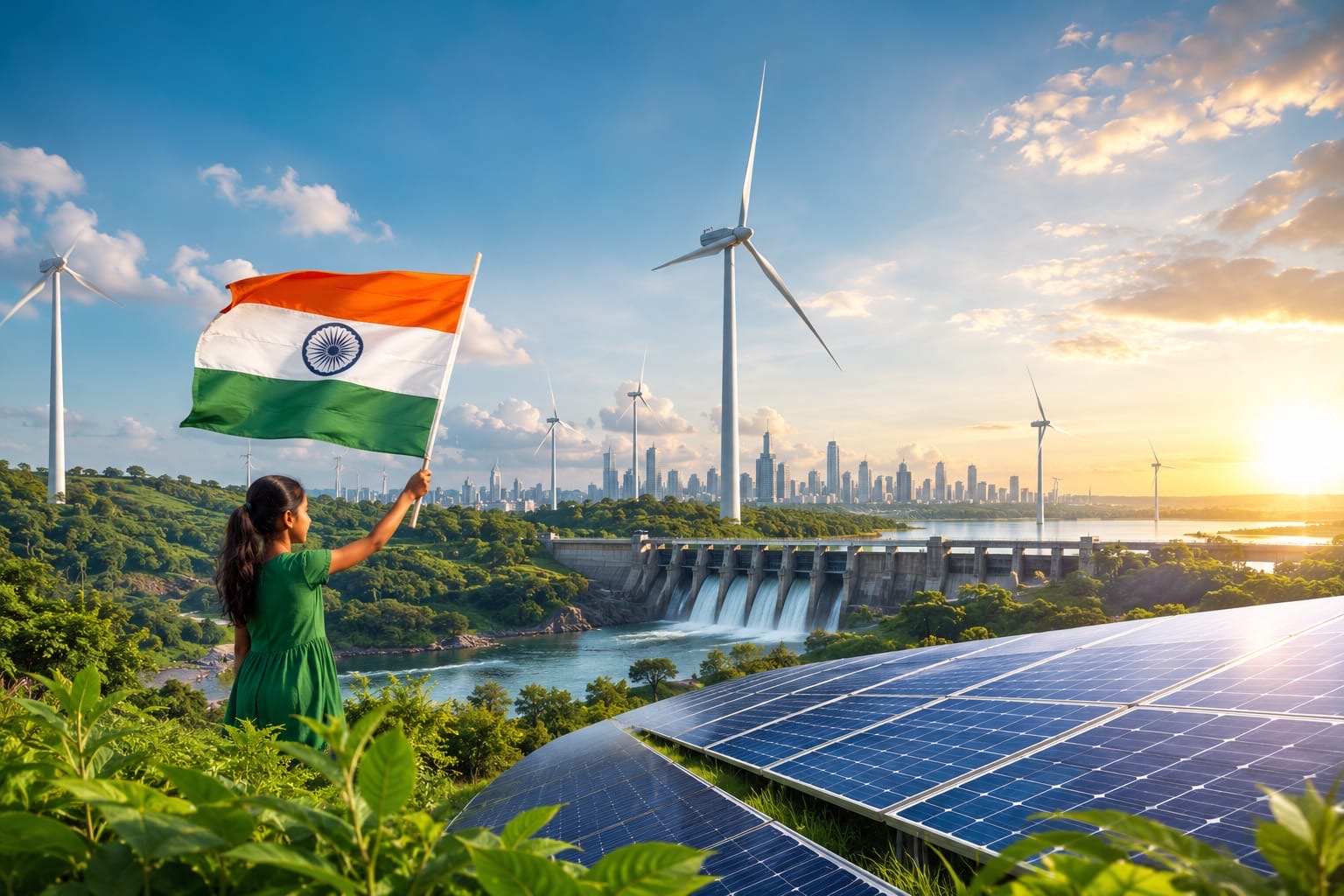
INTRODUCTION
The world is facing a challenge: how to meet increasing energy demands while protecting the environment. Climate change, rising temperatures and pollution have made it clear that countries must move toward more sustainable sources of energy. In this transition India is emerging as a major player in renewable energy. With goals, supportive policies and rapid technological advancements the country is working to reduce its dependence on fossil fuels and build a greener future.
India is the worlds largest energy consumer and its energy needs continue to grow as the economy expands. To ensure development the government has launched several initiatives focused on renewable energy, electric mobility and green technologies. These efforts are not helping to combat climate change but are also creating new opportunities for economic growth and employment. India’s energy needs are growing fast.
India’s Renewable Energy Goals
India has set one of the ambitious clean energy targets in the world. The country aims to achieve 500 gigawatts (GW) of -fossil fuel energy capacity by 2030. This target includes electricity generated from wind, hydroelectric and nuclear power sources. Renewable energy is key to India’s future.
The government has introduced policies and incentives to encourage investment in energy projects. These measures aim to attract both international investors while ensuring that clean energy becomes more affordable and accessible. By expanding energy infrastructure India hopes to reduce greenhouse gas emissions and strengthen its energy security. India wants to be a leader in energy.
Solar Energy: Leading the Transformation
Solar energy has become the backbone of Indias energy revolution. Thanks to sunlight throughout the year the country has immense potential for solar power generation. Large solar parks have been established in states such as Rajasthan, Gujarat and Karnataka where vast areas of land are used to generate electricity from sunlight. Solar energy is becoming very popular in India.
In addition to utility-scale projects rooftop solar systems are gaining popularity among households, schools and businesses. These systems allow consumers to generate their electricity and reduce their dependence on traditional power sources. Government subsidies and awareness campaigns have further encouraged the adoption of rooftop technology. Many people are installing panels on their rooftops.
The growth of energy has also contributed to lower electricity costs and reduced carbon emissions making it a win-win solution for both consumers and the environment. Solar energy is good for India’s environment.
Wind Energy and Other Renewable Sources
Alongside power wind energy plays a crucial role in Indias clean energy strategy. Coastal states such as Tamil Nadu, Gujarat, Maharashtra and Karnataka have become centers for wind power generation. Modern wind turbines are capable of producing amounts of electricity helping to diversify the countrys energy mix. Wind energy is also growing fast.
Hydroelectric power continues to be a source of renewable energy particularly in the Himalayan region and northeastern states. Small hydro projects are also being developed to provide electricity to communities. India is using renewable energy sources.
In years India has explored additional renewable sources such as biomass and waste-to-energy projects. These technologies help convert waste and municipal waste into useful energy addressing both energy and waste management challenges simultaneously. India is finding ways to generate clean energy.
Electric Vehicles and Sustainable Transportation
Transportation is one of the contributors to air pollution and carbon emissions. To address this issue India is actively promoting vehicles (EVs). Government initiatives such as purchase incentives, tax benefits and investments in charging infrastructure are encouraging consumers to adopt mobility. Electric vehicles are becoming popular.
Several Indian and international automobile manufacturers are expanding their EV offerings to meet growing demand. Electric buses are also being introduced in cities to provide cleaner public transportation options. Electric mobility is the future.
The transition to mobility is expected to reduce fuel imports improve air quality and support Indias broader climate goals. Electric vehicles will help India’s environment.
The Rise of Green Hydrogen
One of the exciting developments in Indias energy sector is the focus on green hydrogen. Green hydrogen is produced using energy and can serve as a clean alternative to fossil fuels in industries that are difficult to decarbonize. Green hydrogen is a game-changer.
The Government of India launched the National Green Hydrogen Mission to promote research, production and adoption of hydrogen technologies. Industries such as steel, cement, fertilizers and heavy transportation could greatly benefit from this fuel. Green hydrogen will help India’s industries.
Experts believe that green hydrogen has the potential to transform Indias sector while creating new opportunities for exports and international cooperation. Green hydrogen is an opportunity for India.
Economic and Social Benefits
The renewable energy sector offers economic benefits. Scale clean energy projects create employment opportunities in manufacturing, construction, installation, maintenance and research. Thousands of jobs have already been generated through solar and wind energy initiatives. Renewable energy is creating jobs.
Renewable energy also attracts investment. Promotes technological innovation. By becoming a hub for energy technologies India can strengthen its position in the global economy and reduce dependence on imported fossil fuels. India is becoming a leader in energy.
Furthermore renewable energy projects help improve access to electricity in remote areas contributing to social and economic development. Renewable energy is changing lives.
Challenges
Despite progress several challenges remain. Renewable energy projects require investment, land resources and infrastructure development. Energy storage technologies, such as batteries need further improvement to ensure a reliable power supply when sunlight or wind is unavailable. India still has challenges.
Grid modernization is another requirement. As energy generation increases the electricity grid must be upgraded to efficiently manage and distribute power. Policymakers, researchers, industries and local communities must work together to overcome these challenges.
CONCLUSION
Although challenges remain the progress achieved far highlights Indias potential to become a global leader in renewable energy. By continuing to invest in innovation and sustainable development India can secure its energy future. Contribute meaningfully to global environmental goals. India will be a leader, in energy.
The transition to clean energy is not an environmental necessity—it is an opportunity to build a more prosperous, resilient and sustainable nation. India’s future is clean and green.