

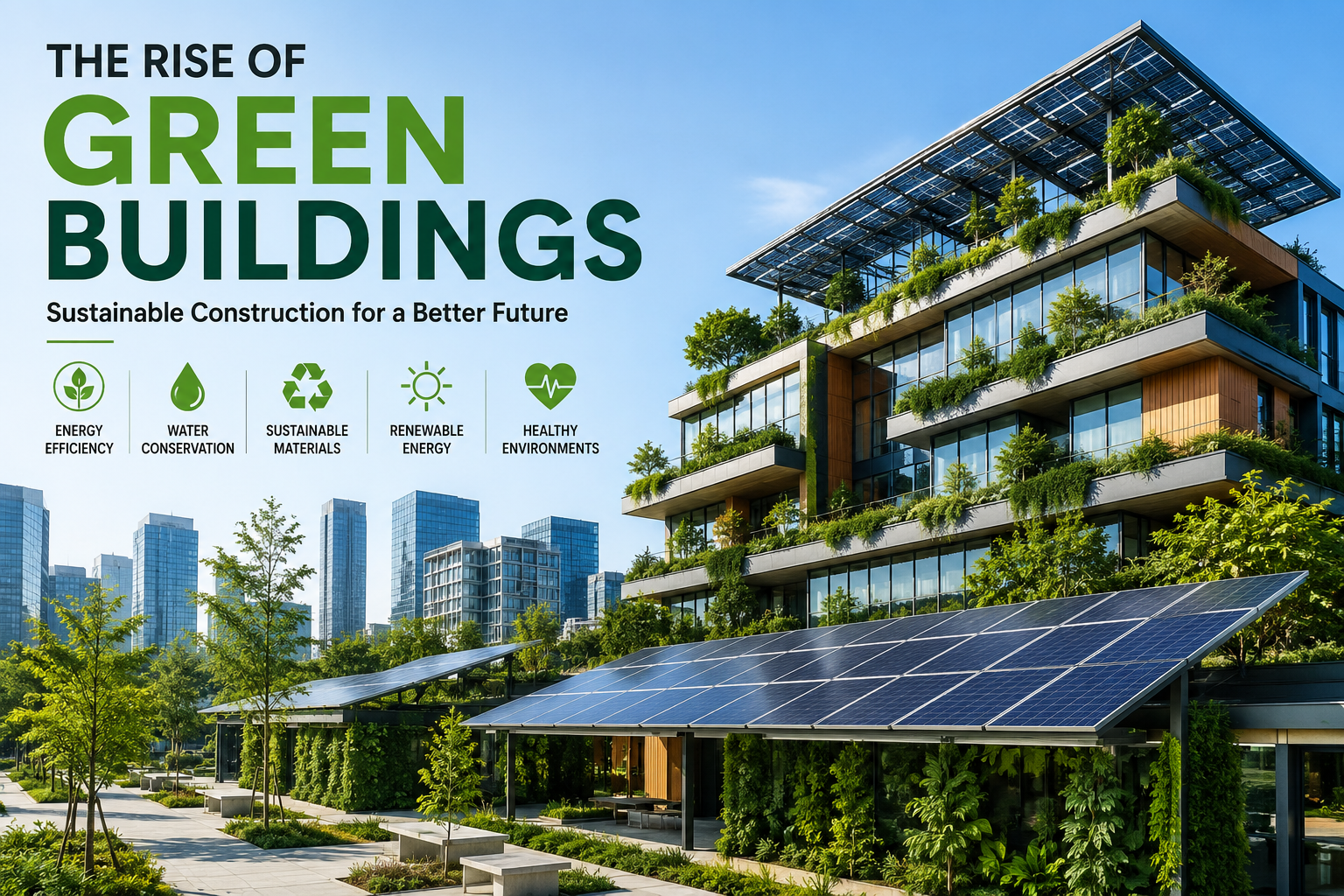
The global boom in building green is changing the future of construction. The world is building green and it’s changing the future of building.
A green building is a building designed, built and operated in a sustainable manner. While traditional buildings are concerned with minimize energy use, conserve water, enhance indoor air quality and reduce waste, green buildings are concerned with these issues.
Some of the many features incorporated into modern green buildings are solar panels, rainwater harvesting systems, energy efficient lighting, natural ventilation, insulated walls and smart building management systems. Together these technologies minimize environmental footprint and simultaneously cut costs.
Environmental Benefits
The great thing about green buildings is that they’re good for the environment. Traditional buildings make up a large percentage of energy use and GHGs in the world. Green buildings can contribute to solving these problems by consuming less energy and emit less emissions.
Energy-efficient windows, LED lighting, solar power systems and advanced window insulation all help to save electricity. Additionally, a number of projects employ recycled or locally sourced construction materials, cutting down on waste and transport emissions.
Green roofs and landscape areas increase the biodiversity in urban environments and help mitigate the heat island effect of an over-urbanized infrastructure of concrete and bituminous surfaces.
Economic Advantages
While the up-front costs of green buildings can be slightly higher, the cost savings can be substantial. Significant operational savings over time due to reduced electricity costs, water usage, and maintenance costs.
Sustainable buildings also enhance the value of businesses as well as their brand image. Green offices are becoming more popular with many organizations as they support their corporate sustainability initiatives and appeal to environmentally conscious customers and investors.
Buildings that are energy efficient are more financially secure, as they lessen reliance on traditional sources of energy as prices continue to increase.
Higher quality environmental conditions for people.
Wellness is part of a Green Building. Healthier indoor environments due to better ventilation systems, more natural daylight, non-toxic construction materials, and improved temperature control., and lower absenteeism due to illness. Likewise, people who live in sustainable houses, benefit from better indoor air quality and greater comfort.
These benefits to health have become paramount concerns for employers who want to maintain a productive work environment, as well as for families who want to have healthier lives.
Technologies that enable sustainable construction. Technologies that enable sustainable construction.
Technology has a significant influence in the present-day green construction. Smart sensors track the real-time usage of lighting, heating, cooling, and water to optimize usage. The Internet of Things (IoT) and Artificial Intelligence (AI) enable building systems to manage energy based on the presence in the building and the weather conditions.
Building Information Modeling (BIM) is another technology that helps architects and engineers to design highly efficient structures before construction starts, which helps with material minimization and project planning.
The adoption of renewable energy systems, battery storage solutions and EV charging infrastructure further contributes to the sustainability of modern buildings.
So how is the green construction fairing? What are the problems of green construction?
Although the construction of green buildings is being stepped up, there are still some difficulties to be faced. The initial construction costs may be greater than the traditional construction methods, but these costs will be recovered over time. Lack of knowledge, lack of qualified workforce, and lack of sustainability practices in certain areas are also limiting factors in adoption.
But with the price of technology falling and governments increasingly adopting policies that enhance their use, these obstacles are slowly being overcome.
The future of sustainable buildings. Building the future sustainable buildings.
Sustainability will continue to be a focus of the future for construction. Green infrastructure is also being integrated into urban planning by creating green public areas, sustainable transport infrastructure and climate-adapting design. S
Conclusion
The green buildings are the future of today’s construction as they are a blend of environmental responsibility, economic efficiency and human well-being. They are a key component of sustainable development due to their capacity to minimize energy use, save natural resources and produce healthier environments. The sustainable construction sector will continue to be one of the most significant solutions for the governments, businesses, and individuals to invest in resilient and sustainable communities for future generations.