

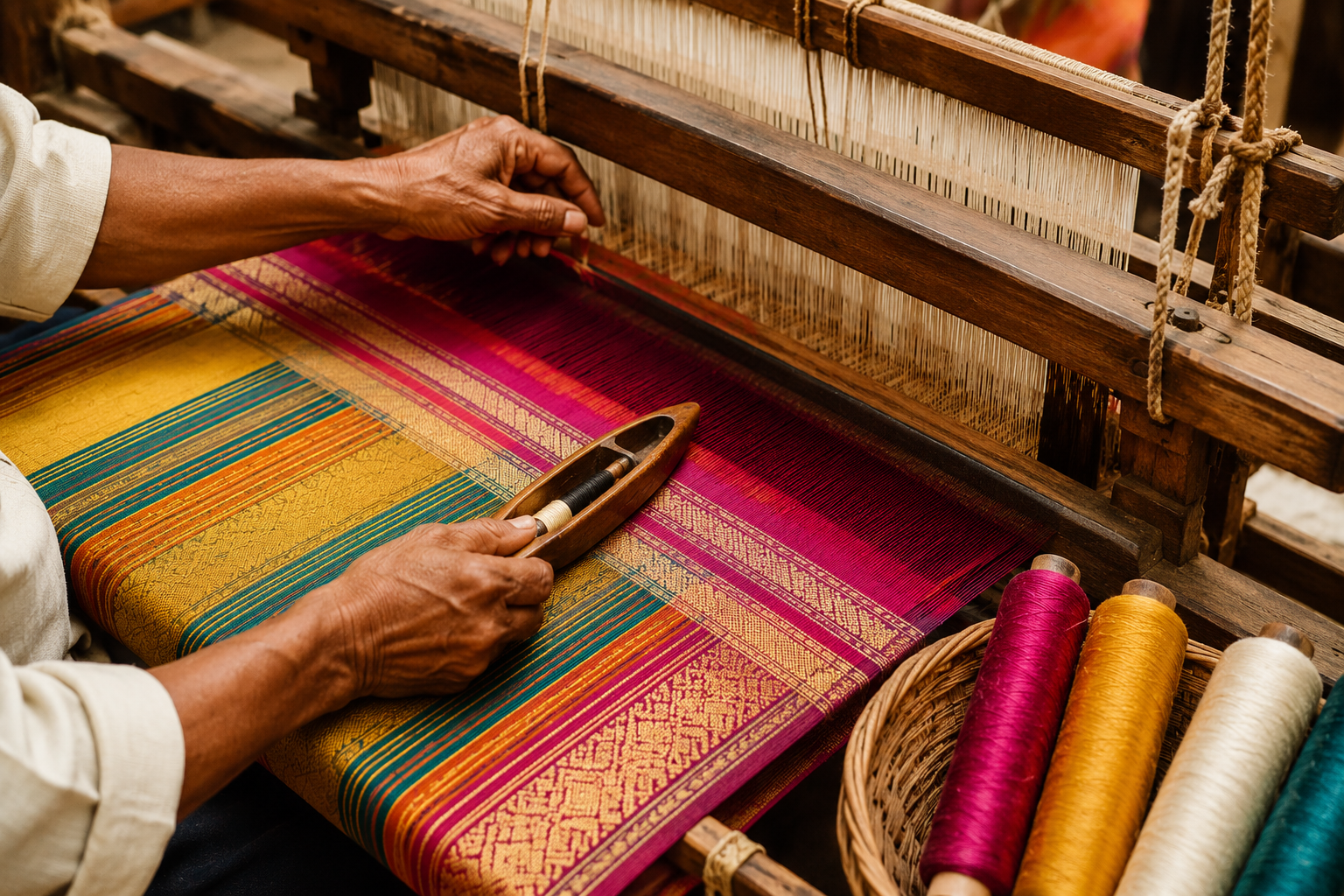
Honouring the Hands That Weave India’s Legacy
National Handloom Day is observed every year on 7 August to celebrate India’s vibrant handloom heritage and recognise the dedication of millions of weavers and artisans across the country. The day highlights the importance of preserving traditional weaving techniques while encouraging people to support handmade textiles. It also reminds us of the vital role the handloom sector plays in India’s cultural identity, rural economy, and sustainable fashion.
Why National Handloom Day Is Celebrated
The Government of India declared 7 August as National Handloom Day in 2015. The date commemorates the Swadeshi Movement, which was launched on 7 August 1905 to promote indigenous industries and encourage the use of locally made products during India’s freedom struggle.
The observance aims to honour the contribution of handloom weavers, promote traditional crafts, and create awareness about the economic and cultural significance of handwoven textiles. Today, the handloom industry provides employment to millions of artisans, particularly in rural areas, making it one of the country’s largest sources of livelihood after agriculture.
Importance of India’s Handloom Industry
India is home to a wide variety of handloom traditions, each reflecting the culture and craftsmanship of its region. Handwoven fabrics such as Banarasi silk, Chanderi, Kanchipuram silk, Pashmina, Ikat, and Jamdani are admired worldwide for their intricate designs and exceptional quality.
The handloom sector also supports sustainable fashion. Since most handloom products are woven manually, they consume less energy and have a smaller environmental footprint than machine-made textiles. Choosing handloom products not only preserves traditional skills but also supports local artisans and promotes environmentally responsible living.
How National Handloom Day Is Observed
National Handloom Day is marked by exhibitions, craft fairs, fashion shows, workshops, and awareness campaigns across India. Government departments, educational institutions, designers, and artisan groups organize events to showcase traditional textiles and celebrate the talent of handloom weavers.
Many people participate by purchasing authentic handloom products, wearing traditional fabrics, and learning about the history and craftsmanship behind India’s weaving traditions. These efforts help strengthen appreciation for India’s rich textile heritage.
Conclusion
National Handloom Day is a celebration of India’s timeless weaving traditions and the skilled artisans who keep them alive. It encourages people to value handmade craftsmanship, support local weavers, and preserve cultural heritage for future generations. By choosing handloom products, every individual can contribute to sustaining traditional livelihoods while promoting sustainable and ethical fashion.
Read More: August Special Days: Complete List of Festivals, National and International Observances to explore all the important festivals, national events, international observances, and special days celebrated throughout the month of August.