


Introduction
Artificial Intelligence (AI) is transforming the world at an incredible speed. From voice assistants and chatbots to advanced robots and data analysis tools, AI has become a part of everyday life. Businesses across different industries are adopting AI to improve efficiency, reduce costs, and make faster decisions. However, this rapid growth has also raised an important question: Is AI a threat to employment, or is it creating new opportunities?
Many people worry that AI will replace human workers. Others believe it will open the door to exciting careers and economic growth. The reality lies somewhere in between. AI is changing the nature of work rather than eliminating work entirely. Those who are prepared to adapt will have more opportunities in the future.
How AI Is Changing Traditional Jobs
AI is especially effective at performing repetitive and routine tasks. Machines can process large amounts of data, identify patterns, and complete repetitive work much faster than humans. As a result, many businesses are using AI to automate tasks that once required a large workforce.
For example, manufacturing companies use robotic systems to assemble products with greater precision. Banks rely on AI to detect fraudulent transactions and process financial records. Retail businesses use AI to manage inventory and predict customer demand. Even customer service has changed because AI-powered chatbots can answer common questions around the clock.
Consequently, jobs that involve repetitive work, such as data entry, basic bookkeeping, and simple administrative tasks, are becoming less common. This shift has created concerns among employees who fear that automation could reduce employment opportunities.
New Opportunities Are Emerging
Although AI is replacing some jobs, it is also creating many new ones. As businesses invest in advanced technology, they need skilled professionals who can develop, manage, and improve AI systems.
Today, careers such as AI engineers, machine learning specialists, data scientists, cybersecurity experts, and cloud computing professionals are in high demand. In addition, companies require AI trainers, digital marketing experts, and ethics specialists to ensure that AI systems are accurate, secure, and responsible.
Healthcare, education, agriculture, transportation, and finance are also benefiting from AI-driven innovations. Therefore, technology is not simply eliminating jobs; it is creating new career paths that did not exist a decade ago.
The Growing Importance of Skill Development
The biggest challenge is not AI itself but the changing skills required in today’s workplace. Employees who continue learning will be better prepared for future opportunities.
Technical knowledge is valuable, but employers also look for skills that machines cannot easily replicate. Critical thinking, creativity, communication, leadership, emotional intelligence, and problem-solving remain essential in almost every profession.
Fortunately, learning new skills has become easier than ever. Online courses, certifications, workshops, and digital learning platforms allow people to improve their knowledge from anywhere. By investing in continuous learning, workers can remain competitive in an AI-driven job market.
Humans and AI Can Work Together
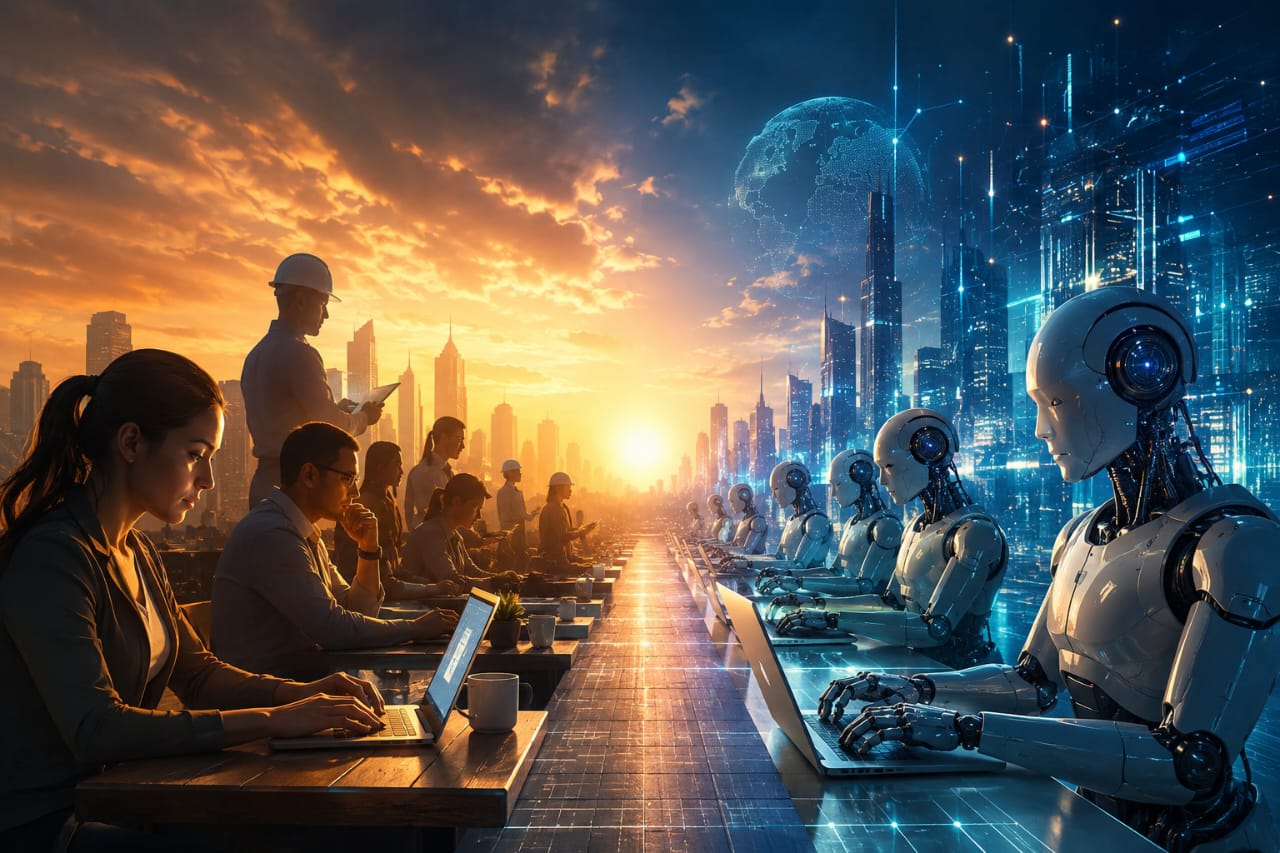
Instead of viewing AI as a competitor, many experts encourage people to see it as a powerful assistant. AI can complete repetitive and time-consuming tasks, allowing humans to focus on creativity, innovation, and decision-making.
For instance, doctors use AI to analyze medical scans more quickly, but they still rely on their experience to make final decisions. Teachers use AI-powered educational tools to create personalized learning experiences while continuing to guide and motivate students. Similarly, marketers use AI to analyze customer behavior, but creative campaigns still depend on human imagination.
This partnership between humans and AI often leads to better productivity and improved results.
Challenges That Must Be Addressed
Despite its advantages, AI also presents several challenges. Job displacement remains a serious concern, especially for workers whose roles involve repetitive tasks. In addition, issues such as data privacy, cybersecurity, algorithmic bias, and responsible AI use require careful attention.
Governments, educational institutions, and businesses must work together to prepare people for these changes. Investment in education, reskilling programs, and ethical AI policies will help workers adapt to the future job market. Without proper planning, the gap between highly skilled and low-skilled workers could continue to grow.
Conclusion
AI is neither entirely a threat nor entirely an opportunity. Instead, it is a powerful technology that is reshaping employment across the world. While some traditional jobs may disappear, many new careers will continue to emerge as innovation advances.
The future belongs to individuals who are willing to learn, adapt, and embrace change. Rather than fearing AI, people should focus on developing valuable skills that complement technology instead of competing with it.
Ultimately, AI should be viewed as a tool that supports human potential rather than replacing it. If society invests in education, innovation, and responsible AI development, technology can create a future where both businesses and employees grow together.