

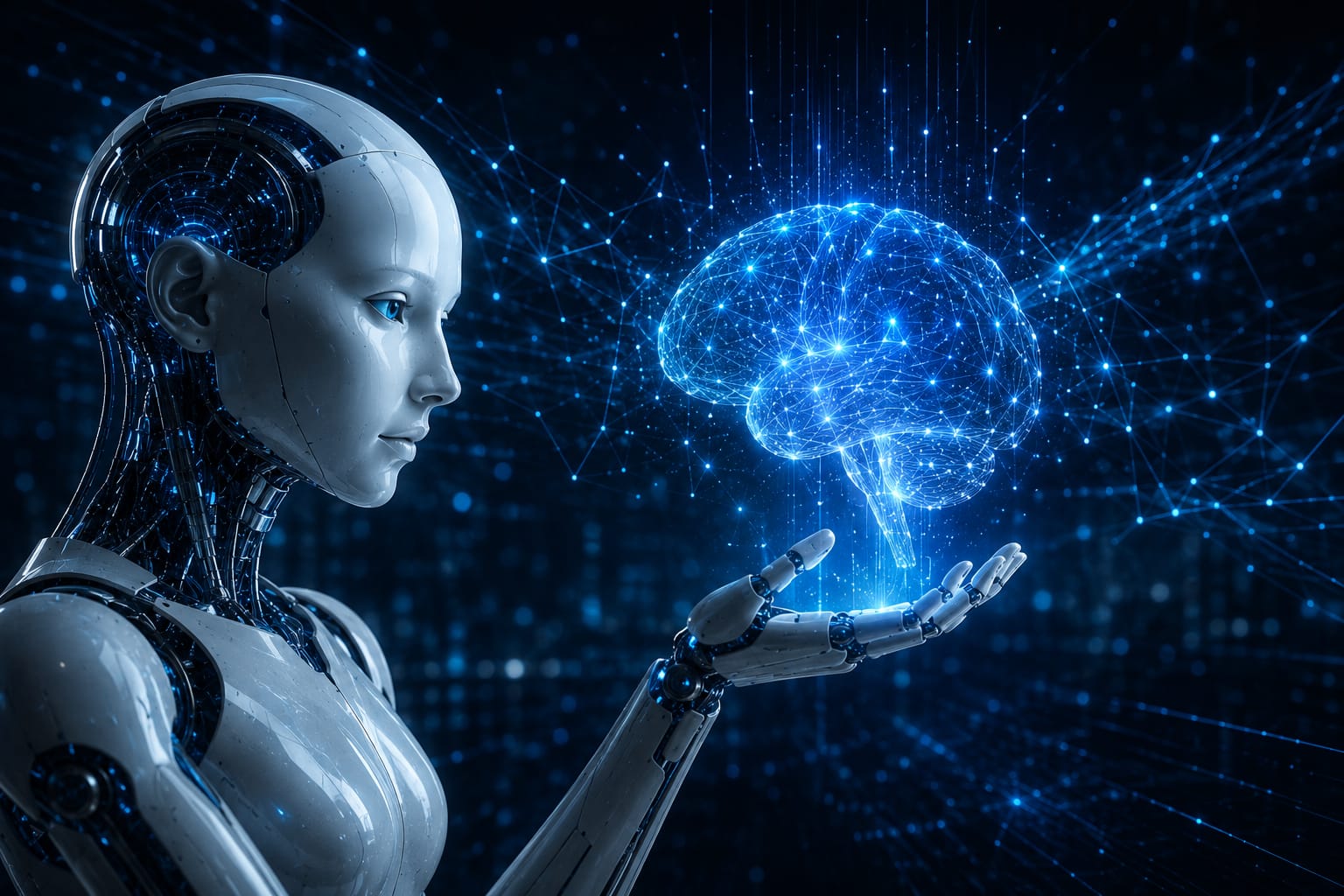
Intelligence (AI) is one of the most significant technological advancements of the modern era. It refers to the ability of machines and computer systems to perform tasks that normally require human intelligence. These tasks include learning, reasoning, problem-solving, understanding language, recognizing images, and making decisions. AI has become an integral part of our daily lives, influencing how we work, communicate, learn, and interact with the world.
What is Artificial Intelligence?
Artificial Intelligence is a branch of computer science that focuses on creating smart machines capable of simulating human intelligence. AI systems use algorithms, data, and computing power to analyze information and make decisions. Unlike traditional software, which follows fixed instructions, AI can learn from experience and improve its performance over time.
AI can be categorized into two main types:
Narrow AI (Weak AI): Designed to perform specific tasks such as voice recognition, language translation, or recommendation systems.
General AI (Strong AI): A theoretical form of AI that can perform any intellectual task that a human can do. This level of AI has not yet been achieved.
How AI Works
AI works by processing large amounts of data and identifying patterns within that data. Technologies such as Machine Learning (ML), Deep Learning, and Neural Networks enable AI systems to learn from experience and improve their accuracy.
Machine Learning allows computers to learn from data without being explicitly programmed. Deep Learning, a subset of Machine Learning, uses artificial neural networks inspired by the human brain to process complex information. These technologies have enabled remarkable advancements in fields such as speech recognition, image analysis, and autonomous vehicles.
Applications of Artificial Intelligence
AI is being used across various industries and sectors, revolutionizing the way tasks are performed.
Healthcare
In healthcare, AI helps doctors diagnose diseases more accurately and quickly. AI-powered tools can analyze medical images, detect abnormalities, and assist in treatment planning. Virtual health assistants and chatbots also provide medical guidance and support to patients.
Education
AI is transforming education by offering personalized learning experiences. Intelligent tutoring systems can adapt lessons according to a student’s learning pace and needs. AI-powered tools also help teachers automate administrative tasks, allowing them to focus more on teaching.
Business and Finance
Businesses use AI to improve customer service, analyze market trends, and automate routine processes. Banks and financial institutions employ AI to detect fraud, assess credit risks, and provide personalized financial advice.
Transportation
AI plays a crucial role in modern transportation. Self-driving cars, traffic management systems, and navigation applications rely on AI to improve safety and efficiency. AI can analyze traffic patterns and suggest optimal routes, reducing travel time and congestion.
Entertainment
Streaming platforms use AI algorithms to recommend movies, music, and content based on user preferences. AI also contributes to video game development, content creation, and digital marketing.
Benefits of Artificial Intelligence
Artificial Intelligence offers numerous advantages that contribute to economic growth and improved quality of life.
Increased Efficiency
AI can perform repetitive tasks faster and more accurately than humans. This increases productivity and allows employees to focus on more creative and strategic activities.
Better Decision-Making
AI systems can analyze vast amounts of data in a short time, providing valuable insights that help organizations make informed decisions.
Improved Accuracy
In fields such as healthcare and manufacturing, AI reduces human errors and enhances precision, leading to better outcomes.
24/7 Availability
Unlike humans, AI-powered systems can operate continuously without fatigue. This ensures consistent service and support around the clock.
Challenges and Concern
Despite its many benefits, AI also presents several challenges.
Job Displacement
Automation powered by AI may replace certain jobs, particularly those involving repetitive tasks. This raises concerns about unemployment and the need for workforce reskilling.
Privacy Issues
AI systems often require large amounts of data, including personal information. Ensuring data privacy and security is a major challenge.
Ethical Concerns
AI decision-making can sometimes be biased if the training data contains biases. Developers must ensure fairness, transparency, and accountability in AI systems.
Dependence on Technology
Excessive reliance on AI may reduce human involvement in critical decision-making processes. Maintaining a balance between human judgment and machine intelligence is essential.
The Future of AI
The future of Artificial Intelligence is promising. AI is expected to become even more sophisticated, enabling breakthroughs in medicine, science, transportation, and communication. Emerging technologies such as generative AI, robotics, and smart automation will continue to reshape industries and society.
Governments, businesses, and educational institutions are investing heavily in AI research and development. As AI evolves, it will create new opportunities for innovation, economic growth, and improved living standards.
Conclusion
Artificial Intelligence is transforming the world in unprecedented ways. From healthcare and education to business and transportation, AI is enhancing efficiency, accuracy, and convenience. While challenges such as job displacement, privacy concerns, and ethical issues must be addressed, the benefits of AI are immense. By developing and using AI responsibly, society can harness its potential to solve complex problems and create a brighter future for generations to come