

What is Cloud Computing?
The model is flexible, enabling organizations to scale up their resources based on business demands and only pay for what they utilize.
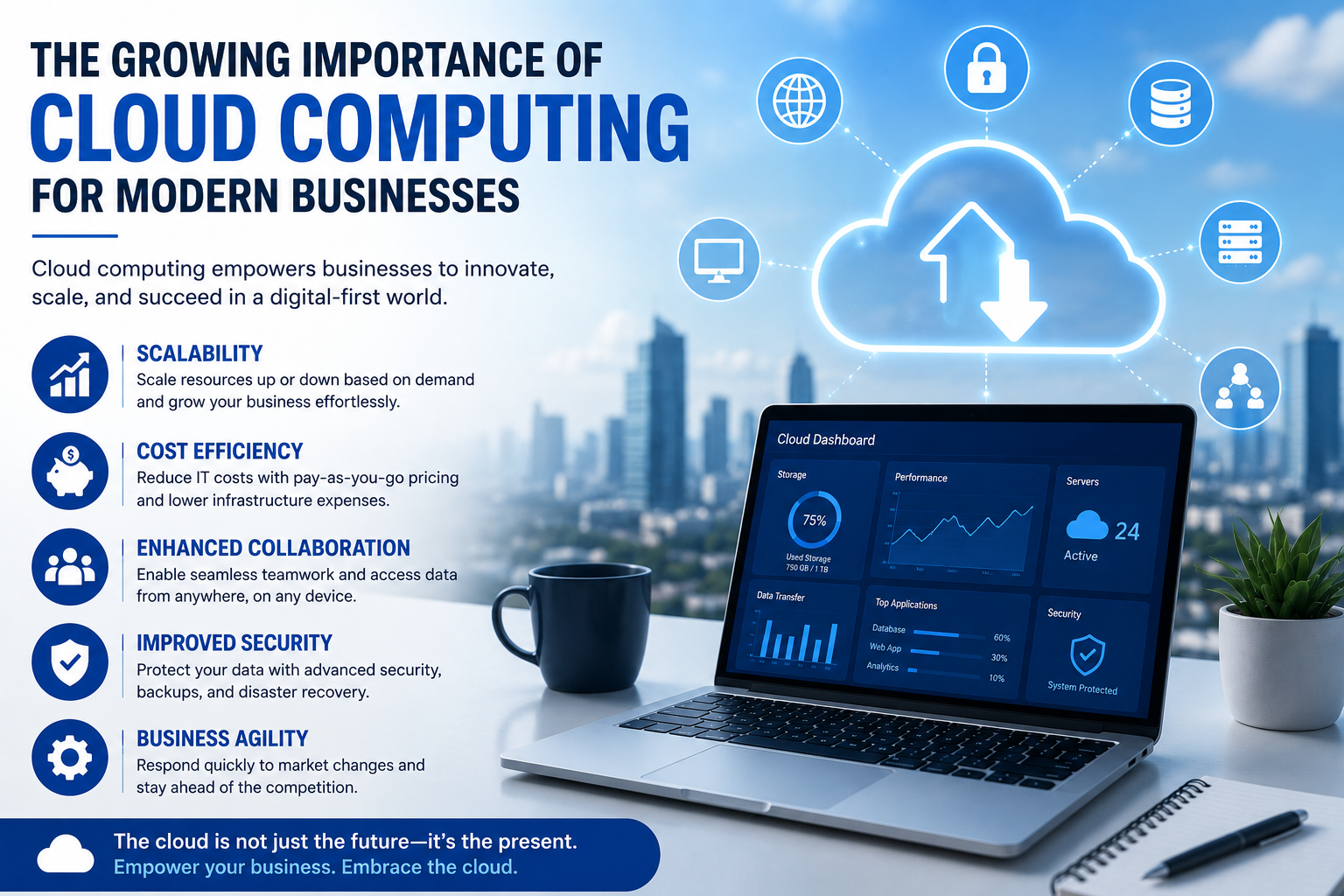
Cloud computing offers several outstanding advantages. Cloud computing has some great benefits.
Enhanced flexibility and scalability. Greater flexibility and scalability.
Cloud computing allows businesses to rapidly scale up or down their resources as needed. From accommodating seasonal traffic surges to exploring new markets, businesses can adjust quickly without the need for expensive hardware upgrades.
Cost Efficiency
Maintenance and software updates are expensive in traditional IT infrastructure, and the cost of the servers is substantial. Cloud services can help lower the total cost of capital by providing subscription fees for usage, which enables businesses to manage their resources more effectively.
Improved Collaboration
Enhanced Data Security
Cloud services providers focus much on their security infrastructure, which comprises of cutting-edge technologies such as encryption, multi-factor authentication, and real-time monitoring. Backup and Disaster Recovery solutions are essential for businesses to safeguard their crucial data against data loss and cyber threats.
Secure transactions and fraud detection are one of the other areas where financial institutions depend on cloud computing. Cloud-based analytics empower retail businesses to gain insights into consumer behavior and make informed decisions on stock management.
Educational institutions also benefit by delivering online learning platforms, enabling students and educators to access educational resources from anywhere.
Challenges and Considerations
Cloud computing has many benefits, but there are some challenges that need to be addressed before implementing it into the business. Data privacy regulations, compliance, internet connectivity, and vendor selection are some of the things that are taken into account. It is critical that organizations select reputable cloud providers that have robust security measures, clear service agreements, and excellent customer support.
Employee training is also a critical factor to help staff understand how to effectively use the tools they are putting into the cloud and help them take care of themselves and their company in cyber security best practices.
The future of cloud computing is looking promising. The future of cloud computing is bright.
. More businesses are taking on a hybrid and multi-cloud approach to enhance flexibility, minimize risk, and maximize performance.
As cloud technologies advance, enterprises will see more intelligent, secure, and scalable digital solutions that enable innovation and future growth.
Conclusion
Cloud computing has become an integral part of business operations today.