

Introduction
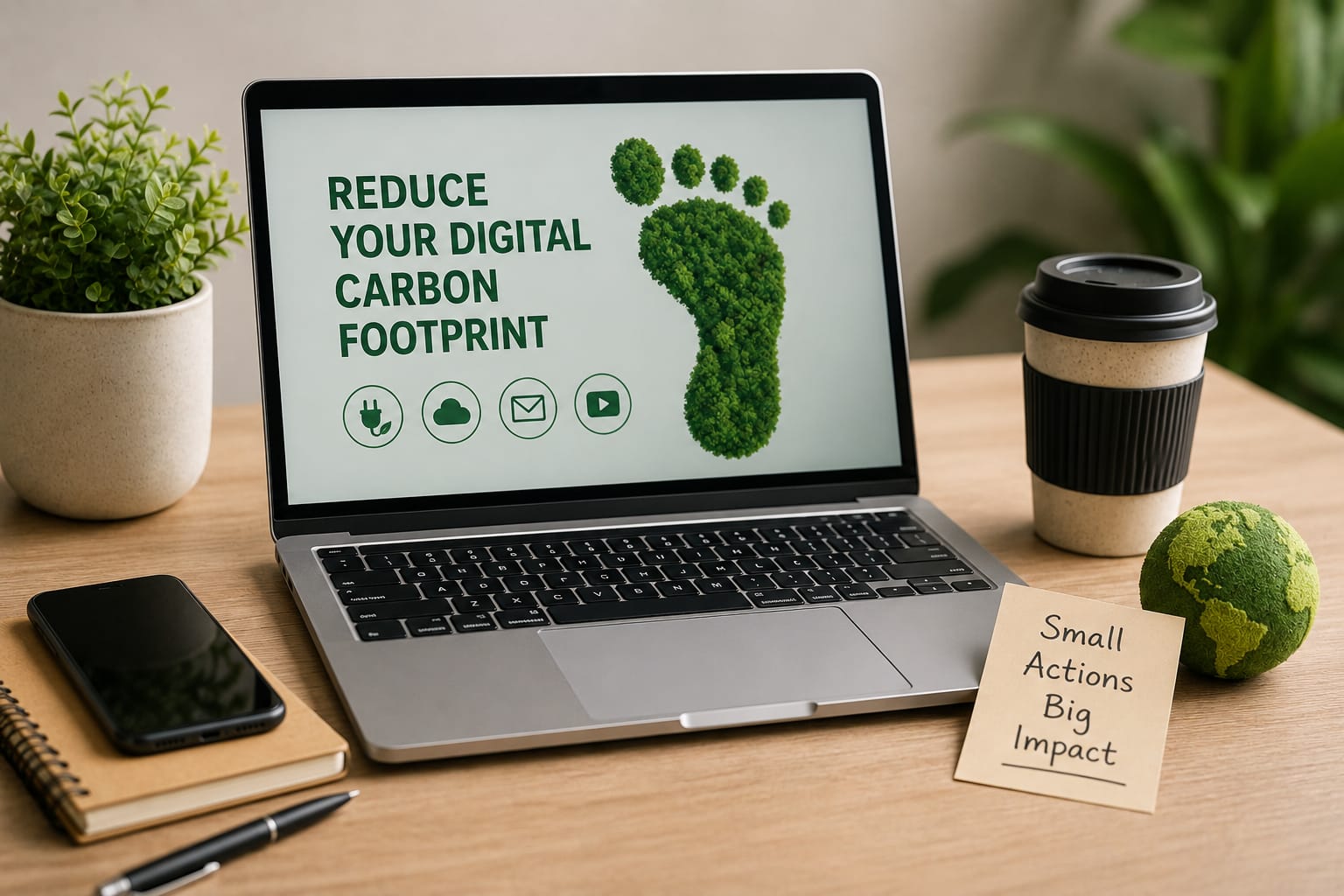
Digital Carbon Footprint: understanding Its Environmental Impact. Technology is an integral part of our lives in today’s digital age. Almost daily, we use our smartphones, laptops, social media, online streaming services, and cloud storage. Although many people know about the carbon impact of vehicles and factories, few realize that our digital actions are also responsible for carbon emissions. Our online presence generates an environmental footprint, or “digital carbon footprint.”
>With the growth of internet use globally, it is more important than ever to learn about and minimize our digital carbon footprint. Simple adjustments in our online activities can contribute to the environment and sustainability.
What is Digital Carbon Footprint?
A Digital carbon Footprint refers to the carbon emissions generated by the use of digital technologies and online activities. Each time we email, watch a video, surf the web, use social media or store files in the cloud, we use energy.
Data centers, servers, Internet networks and electronic devices all consume this energy. The majority of this energy is still provided by non-renewable sources like coal, oil and natural gas, that are adding carbon dioxide to the atmosphere.
>While one Internet activity might be a drop in the bucket, billions of people using digital services daily generate a great deal of environmental impact.
Sources of Digital Carbon Footprint
Online Streaming
YouTube, Netflix and other services that provide streaming videos use vast amounts of data. HD and 4K videos are even more energy consuming due to the need for increased data transfer and storage.
Social Media Usage
Data centers store all picture, videos, messages and posts shared on social media networks. Social media use can add energy use and carbon emissions.
Cloud Storage
There are numerous people who store documents, photos, and videos in cloud storage services. cloud storage services use continuously running severs that consume electricity to maintain these files.
Emails and Messaging
The transmission and receiving of emails are also a part of a digital carbon footprint. Large attachments with emails use up more storage and data transfer, which consumes more energy.
Internet Browsing
Data must flow through networks and servers to reach the end user, even for basic searches on the Internet and during a website visit, thereby consuming energy along the way.
Why is Digital Carbon Footprint Important?
The digital world may appear environmentally friendly because it reduces the need for paper and physical transportation. However, digital technologies require massive infrastructure and large amounts of energy to operate efficiently.
Data centers around the world operate 24 hours a day to store and process information. These facilities require electricity not only to run servers but also to keep them cool. As digital technology continues to grow, energy demand is increasing rapidly. Understanding this impact helps people become more responsible users of technology.
Digital Activities and their Environmental Impact
The Growing demand for digital services increases carbon emissions and contributes to climate change.
>Electronic devices are also a part of environmental issues. Smartphone, laptop, and electronic equipment manufacturing, shipping, and recycling result in further carbon emissions and e-waste.
With more and more individuals embracing digital technologies, environmental sustainability is a key component to fulfil the agenda of sustainable development globally.
Strategies for minimizing your digital carbon footprint.
Limit Unnecessary Streaming
If feasible, watching videos in regular quality instead of HD can help save data and energy.
Clean Digital Storage
Removing redundant files, emails, photos, and videos decreases the amount of data stored on servers or in the cloud.
Use Devices Efficiently
Even switching appliances off when they’re not being used, and using energy-saving settings can help keep electricity usage down.
Reduce Email Clutter
Do not send unneeded emails, and delete unwanted emails, particularly those containing large attachments.
Choose Sustainable Services
Collaborating with businesses that utilize renewable energy for data center operations can aid in mitigating environmental effects.
Extend Device Lifespan
Reduce the frequency of replacement of electronic components also helps to reduce electronic waste and emissions from manufacturing.
Reducing a digital carbon footprint has several advantages.There are several benefits to reducing digital carbon footprint.
There are a number of benefits to minimizing our digital carbon footprint. It aids in reducing energy usage, greenhouse gas emissions and environmental protection.
Users can optimize storage, enhance device performance, and be more aware of their digital practices. Overall, using technology responsibly helps create a more sustainable and clean environment.
Using some of the tips provided here, we can all make small changes that will have a big impact on the environment.
The role of individuals and organisations.
>>Everyone, whether as an organization or as an individual, has a part to play in cutting down on digital carbon emissions. Consumers can use smart digital practices and business owners can install energy-efficient systems and technologies and utilize renewable energy resources.
Technology companies can become more efficient designs of systems and data centers, which will require less energy. Policies and ecological measures can also be used to promote sustainable digital practices by governments.
To overcome environmental challenges with digital technology, people, businesses and governments need to work together.
Conclusion
Digital Carbon Footprint: Understanding its Environmental Impact. Digital technology has revolutionized the ways in which people communicate, learn, work and play. But, there is always an environmental impact associated with any online activity that goes unnoticed. A digital carbon footprint emphasises the link between technology and carbon dioxide emissions.
>With the knowledge of where digital carbon emissions are coming from, and making conscious decisions to practice responsible digital habits, our carbon footprints can also be lowered. Any little bit of manipulation that you can take and get rid of unnecessary streaming, and use your devices effectively can mean a huge difference. With the increasing development of digital technology, it’s crucial that everyone plays their part to make the future sustainable and environmentally friendly.