

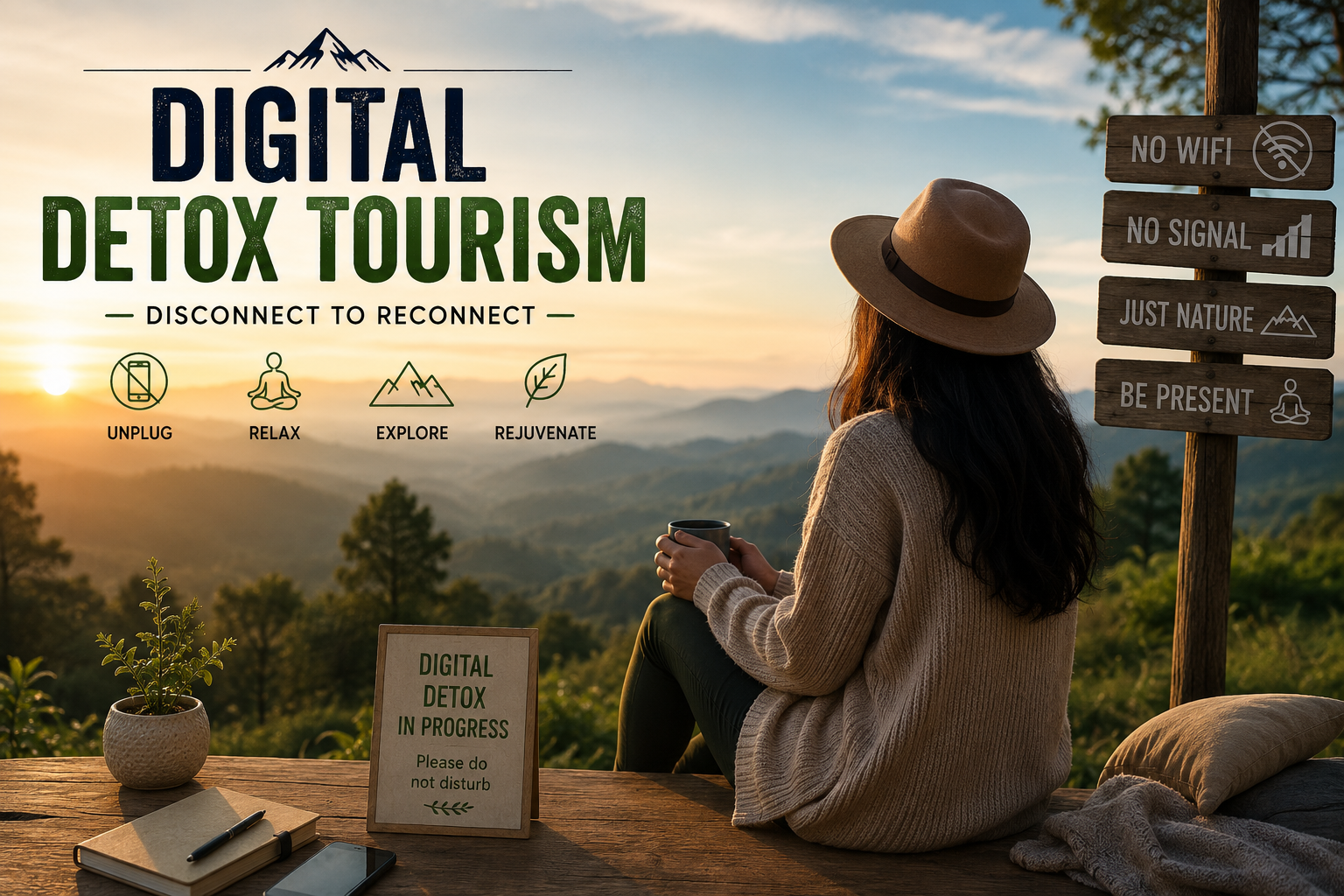
Why Digital Detox Tourism is on the Rise to Connect Some Travelers to Disconnect
Where many travelers are looking to travel and find spots with the fastest internet or the best cell service is now where they can unplug from technology and reconnect with themselves.
From hotels to eco-resorts, wellness centers to even rural villages, the demand is being met with experiences that help guests unplug their gadgets and connect with nature, mindfulness, and real-life experiences. Digital Detox tourism is one of the fastest-growing parts of the travel industry that’s been gaining traction as everyone becomes more stressed and fatigued by screens.
What exactly is Digital Detox Tourism?
Digital Detox Tourism involves taking a trip where individuals make an effort to either significantly minimize or eliminate their usage of a mobile phone, tablet, laptop computer, social media, or other electronic devices. The aim is to have a better mental health, less stress and more time spent enjoying activities without the constant distraction of online.
Some resorts even collect guests’ phones at check-in, and others offer technology-free areas to promote reading, hiking, meditation or something more meaningful.
Why are people opting for screen free vacations?
The typical individual spends 2 to 4 hours of time each day on different screens. Digital overload is a reality of today: business e-mail, social media, online conferences, streaming services, and more.
A lot of traveler’s state that they feel drained intellectually when they are always “on”. A digital detox vacation can provide a great opportunity to give yourself a break, space for creativity and self-reflection.
Benefits Beyond Relaxation
There are more advantages to digital detox tourism than just a break from technology.
Better Mental Health
Limit screen time to decrease stress and anxiety. Travelers can also find that they are able to concentrate better and that their emotional condition improves without being constantly notified and under pressure to stay connected.
Improved Sleep Quality
Exposure to blue light from mobile devices may disrupt good sleep habits. A week or two off screens often allows visitors to get a better night’s sleep and feel more energized when they wake up.
Stronger Relationships
Often families, couples, and friends find that they enjoy spending more quality time together without the distractions of phones. Gatherings are more profound and experiences are more significant.
Increased understanding of the environment. Enhanced awareness of the natural world.
Travelers are more here without the need to be online, constantly checking messages.
The tourism sector is responding in several ways. The tourism industry is reacting in multiple ways.
Hotels and travel companies are responding rapidly to this trend, which is increasing. Numerous wellness retreats offer a variety of digital detox activities such as meditation, yoga, forest walks, stargazing, and mindfulness workshops.
Some lodging establishments actively discourage using TVs in rooms, and others encourage people to participate in traditional craft and pottery sessions, farming, cooking or cycling, and bird watching.
Adventure tourism companies are also marketing to off-the-grid venues as places where not having access to mobile connectivity is a desirable feature instead of a hindrance.
Being offline is challenging. The difficulties of being offline.
The concept is a good one, but a complete disconnection is not so easy for all.
Many travelers are concerned about not receiving important messages from work or family emergencies. Yet others become eager to use their cellphone in times of stillness.
The experts agree that even if you want to go on a digital fast, it is better to go it slow. Making sure there is a limit on social media, deactivating unnecessary notifications, and establishing a time when the phone is not allowed at the table can make the transition a lot smoother.
Will Digital Detox Tourism continue to be a thing?
As awareness grows regarding digital well-being, the trend is expected to grow, according to industry experts. The impacts of too much screen time are becoming more apparent for younger people, remote workers, people who are self-employed, and families.
This trend is likely to benefit the most those destinations that offer a combination of wellness, sustainability, nature and authentic local experiences.
More than just about luxury, future travel experiences will be more about feeling mentally healthier, emotionally balanced and truly present.
Conclusion
With digital distractions everywhere, disconnecting could be the best way to reconnect—with nature, with loved ones and with us.