

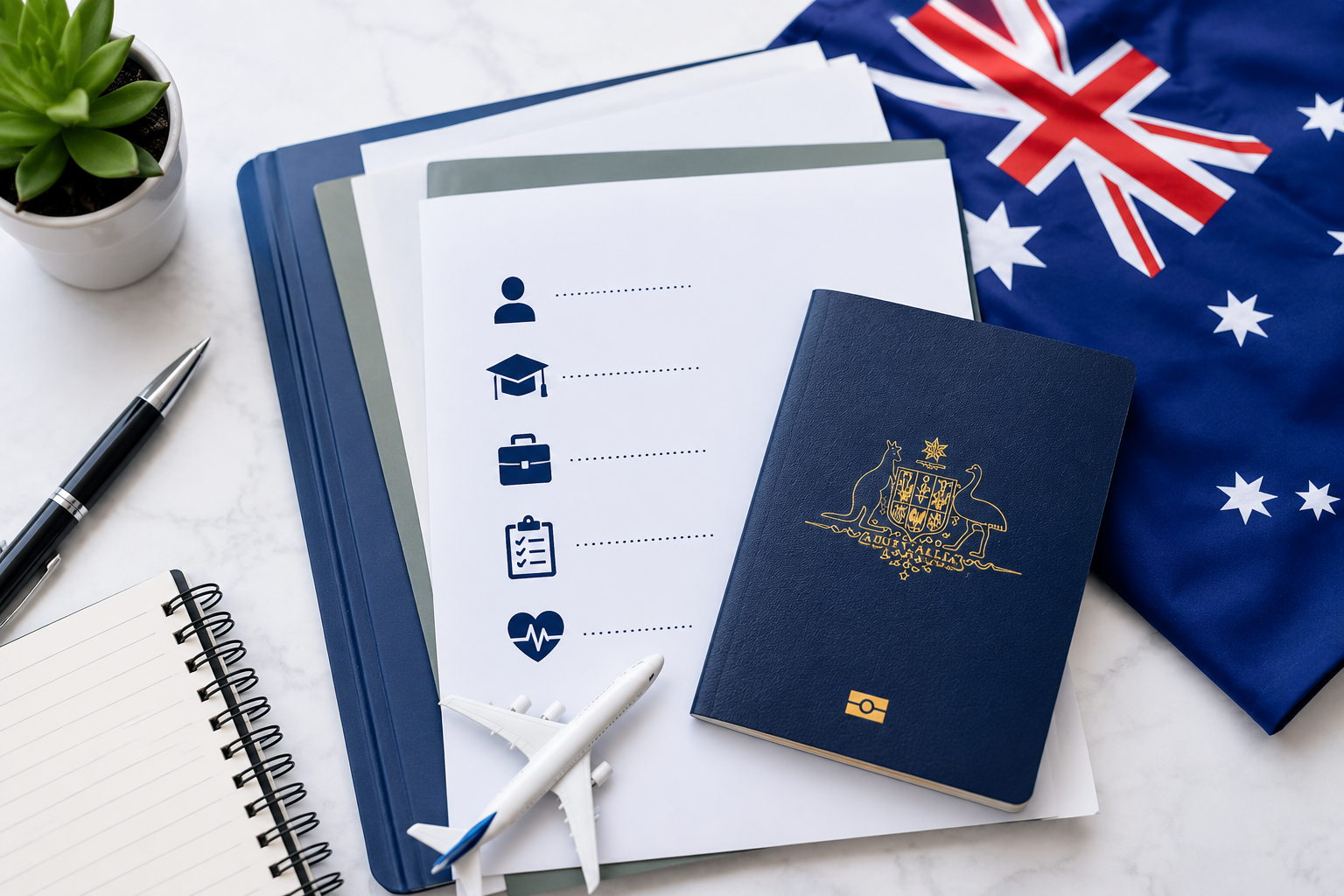
Australia continues to attract skilled professionals from around the world due to its strong economy, excellent quality of life, and diverse employment opportunities. The Australian Government offers several skilled migration pathways for qualified workers who can contribute to the country’s workforce and help address skill shortages.
If you are planning to apply for a skilled worker visa, understanding the required documentation is essential. Submitting complete and accurate documents can improve your chances of approval and help avoid unnecessary delays. This guide outlines the key documents commonly required for Australian skilled worker visa applications.
Understanding Skilled Worker Visas in Australia
Australia offers various skilled migration visa options, including:
- Skilled Independent Visa (Subclass 189)
- Skilled Nominated Visa (Subclass 190)
- Skilled Work Regional Visa (Subclass 491)
- Employer-Sponsored Skilled Visas
- Temporary Skill Shortage (TSS) Visa
While each visa category has specific requirements, many supporting documents are common across all skilled worker applications.
1. Identity Documents
The first step in any visa application is proving your identity.
Commonly required documents include:
- A valid passport
- Previous passports (if applicable)
- Birth certificate
- National identity card
- Recent passport-sized photographs
Applicants should ensure that all personal details match across their documents to prevent processing issues.
2. Skills Assessment Documents
For most skilled migration visas, applicants must obtain a positive skills assessment from an approved assessing authority.
Documents generally required for a skills assessment include:
- Skills assessment outcome letter
- Educational certificates
- Academic transcripts
- Professional licenses or registrations
- Detailed resume or CV
- Employment reference letters
A positive skills assessment confirms that your qualifications and work experience meet Australian standards for your nominated occupation.
3. Educational Qualification Documents
Your educational background plays an important role in determining eligibility and points for skilled migration.
Supporting documents may include:
- Degree certificates
- Diploma certificates
- Trade qualifications
- Academic transcripts
- Vocational training certificates
These documents help immigration authorities verify the qualifications claimed in your application.
4. Employment Experience Documents
Work experience is a major factor in many skilled visa applications. Applicants must provide evidence supporting their employment history.
Common documents include:
- Employment reference letters
- Job contracts
- Salary slips
- Tax records
- Promotion letters
- Social security contribution records
Employment references should clearly state job titles, duties performed, dates of employment, and working hours.
5. English Language Test Results
Most skilled worker visa applicants must demonstrate their English language proficiency.
Accepted tests include:
- IELTS
- PTE Academic
- TOEFL iBT
- Cambridge English
- Occupational English Test (OET)
Valid test results are required to support claims made in the visa application and may also contribute to points under Australia’s skilled migration system.
6. Health and Medical Documents
Australia has strict health requirements for migrants.
Applicants may need to provide:
- Medical examination reports
- Chest X-ray results
- Health assessment records
- Specialist medical reports if requested
Medical examinations are usually completed through approved panel physicians designated by Australian immigration authorities.
7. Character Requirement Documents
All applicants must satisfy character requirements before a visa can be granted.
Required documents may include:
- Police clearance certificates
- Criminal background checks
- Military service records (if applicable)
- Court documents related to legal matters
Police certificates may be required from countries where the applicant has lived for a significant period.
8. Family Member Documents
If you are including your spouse, partner, or dependent children in your application, additional documents will be required.
Examples include:
- Marriage certificate
- Birth certificates of children
- Adoption records
- Identity documents for dependents
- Relationship evidence
Each accompanying family member must also meet Australia’s health and character requirements.
9. State or Territory Nomination Documents
Applicants applying under Subclass 190 or Subclass 491 visas may need to submit state nomination documents.
These may include:
- State nomination approval letters
- Employment evidence
- Regional residence documents
- Commitment statements required by the nominating state
Requirements vary depending on the state or territory sponsoring the applicant.
Tips for a Successful Application
To improve your chances of success:
- Submit clear and high-quality document scans.
- Ensure all information is accurate and consistent.
- Translate any non-English documents using certified translators.
- Keep copies of all submitted documents.
- Check expiry dates on passports, police certificates, and English language test results.
Proper preparation can make the visa process smoother and reduce the likelihood of delays.
Conclusion
Applying for an Australian skilled worker visa requires careful planning and accurate documentation. Identity records, educational qualifications, skills assessments, employment evidence, English language test results, health examinations, and character certificates all play an important role in the assessment process.
By preparing your documents thoroughly and ensuring all information is accurate, you can improve your chances of securing a skilled worker visa and starting a successful career in Australia.
Frequently Asked Questions (FAQs)
1. Is a skills assessment mandatory for Australian skilled worker visas?
Yes, most skilled migration visas require a positive skills assessment from an approved assessing authority for your nominated occupation.
2. Which English language tests are accepted for Australian skilled visas?
Australia accepts IELTS, PTE Academic, TOEFL iBT, Cambridge English, and OET, depending on the visa category and occupation.
3. Do all documents need to be translated into English?
Yes. Any document not written in English must be accompanied by a certified English translation.
4. How long are English language test results valid?
Most English language test results are valid for up to three years for Australian migration purposes, though applicants should always verify current requirements.
5. Are police clearance certificates required?
Yes, most applicants aged 16 years and above must provide police clearance certificates to satisfy character requirements.