

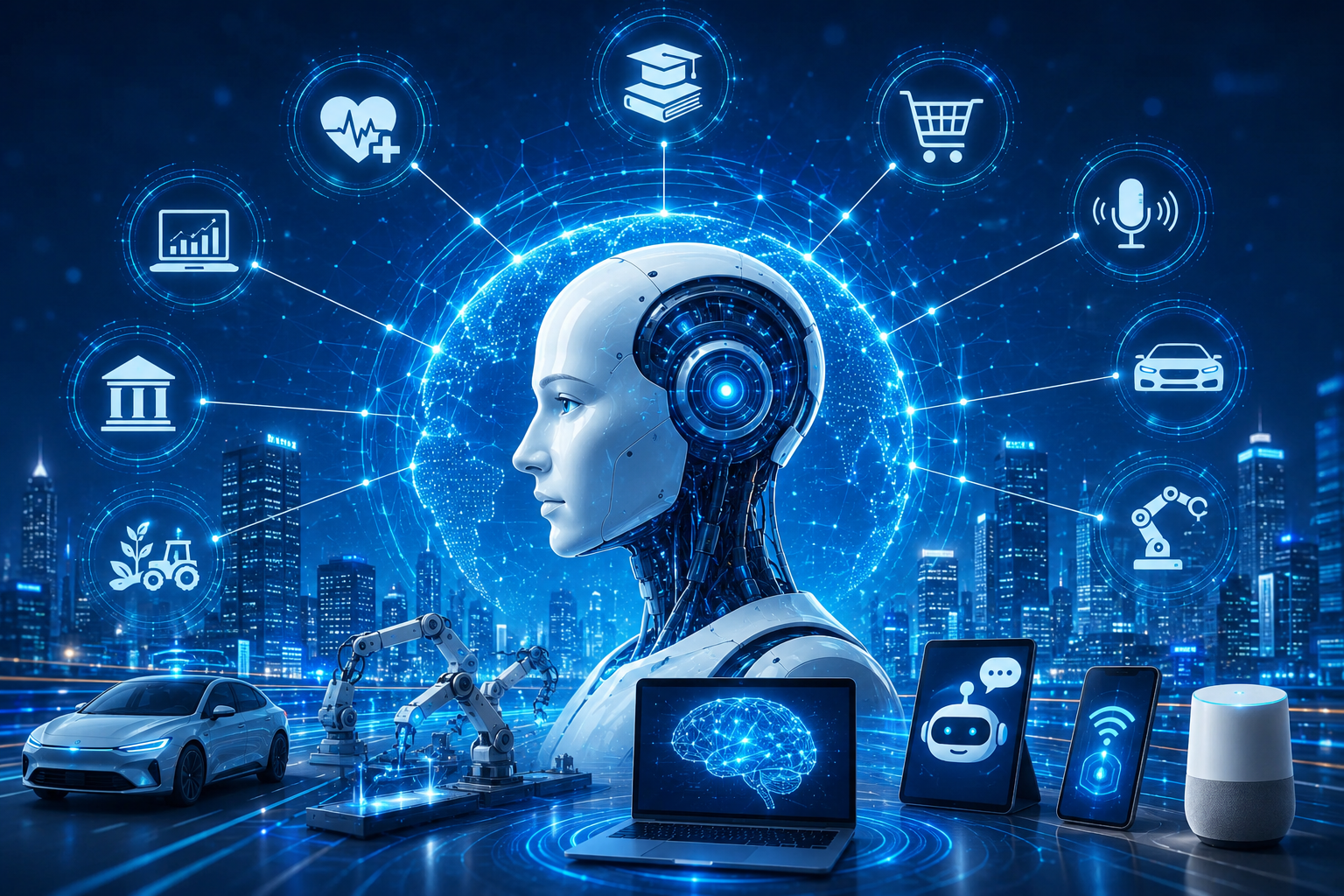
Artificial Intelligence: A Technology That Is Shaping the Future
Introduction
Artificial Intelligence (AI) is one of the most critical technologies of today’s world. It is the capability of machines or computer systems to engage in and execute actions traditionally associated with human intelligence, including learning, reasoning, problem-solving, and decision-making. In today’s world, AI is applied in virtually every field such as education, healthcare, business, transport, communication, and more. With the advancement of technology, AI is increasingly playing a role in our everyday lives.
Understanding Artificial Intelligence
Artificial Intelligence is a field in computer science that concentrates on developing smart systems that can execute tasks without constant human supervision. Such systems can learn, identify patterns, and enhance their ability from their experience. The way AI functions is by analysing vast amounts of data and employing algorithms to make decisions or predictions.
A lot of people are using AI without knowing it. Examples of AI applications include voice assistants, online recommendations, navigation systems, and language translation tools. These technologies help users accomplish tasks more efficiently and conveniently.
Applications of Artificial Intelligence
1. Healthcare
Artificial Intelligence has brought major improvements to the healthcare sector. It helps doctors diagnose diseases more accurately and quickly by analyzing medical records, laboratory reports, and diagnostic images. AI-powered systems can identify patterns that may be difficult for humans to detect. It also supports patient monitoring, drug development, and personalized treatment plans. As a result, healthcare services are becoming more efficient and accessible.
2. Education
In the field of education, AI helps create personalized learning experiences for students. Educational platforms can identify a student’s strengths and weaknesses and provide customized learning materials. AI-based tools assist teachers in grading assignments, tracking progress, and preparing educational content. These technologies help improve the quality of learning and make education more engaging.
3. Business and Marketing
Businesses use Artificial Intelligence to understand customer preferences and improve their services. AI helps analyze market trends, predict customer behavior, and develop effective marketing strategies. Many companies use chatbots to provide customer support and answer queries instantly. Automation of routine tasks also increases productivity and reduces operational costs.
4. Banking and Finance
AI has become an essential tool in the banking and financial sector. It helps detect fraudulent transactions, assess financial risks, and provide personalized financial advice. Banks use AI-powered systems to improve customer service through virtual assistants and automated support services. These applications enhance security and improve the overall banking experience.
5. Transportation
Artificial Intelligence contributes significantly to transportation and traffic management. AI systems analyze traffic conditions, suggest efficient routes, and help reduce congestion. Self-driving vehicle technology is another important development that relies heavily on AI. These innovations have the potential to improve road safety and make transportation more efficient.
6. Agriculture
The agricultural sector is also benefiting from Artificial Intelligence. Farmers use AI technologies to monitor crop health, predict weather conditions, and identify potential diseases. AI-driven tools help optimize the use of water, fertilizers, and other resources, leading to increased productivity and sustainable farming practices.
7. E-Commerce
Online shopping platforms use AI to recommend products based on customer interests and purchasing history. These recommendations improve customer satisfaction and help businesses increase sales. AI also supports inventory management, demand forecasting, and customer service, making e-commerce operations more efficient.
8. Communication and Language Services
AI has transformed communication by enabling language translation, speech recognition, and voice-based assistance. People can now communicate across language barriers using AI-powered translation tools. Virtual assistants and smart communication systems make accessing information easier and faster.
9. Manufacturing Industry
Manufacturing companies use AI to improve production efficiency and product quality. AI systems monitor equipment performance, predict maintenance needs, and identify defects during the manufacturing process. This reduces waste, minimizes downtime, and increases overall productivity.
10. Entertainment and Media
Artificial Intelligence is widely used in entertainment platforms to recommend movies, music, and other content based on user preferences. AI also contributes to video game development, content creation, and audience analysis. These applications enhance user experiences and make entertainment more personalized.
Importance of Artificial Intelligence
Artificial Intelligence offers numerous benefits to individuals and organizations. It improves efficiency by performing repetitive tasks quickly and accurately. AI can process vast amounts of information in a short period, helping businesses and institutions make informed decisions. It supports innovation, increases productivity, and contributes to economic growth.
Additionally, AI plays an important role in scientific research and technological development. Researchers use AI to analyze complex data, study environmental issues, and develop solutions to global challenges.
Challenges and Concerns
Despite its advantages, Artificial Intelligence also presents certain challenges. One major concern is the impact on employment, as automation may reduce the demand for some traditional jobs. This highlights the need for continuous skill development and education.
Privacy and data security are also important concerns because AI systems often rely on large amounts of personal information. Furthermore, biased or inaccurate data can lead to unfair decisions by AI systems. Therefore, ethical guidelines and responsible use of AI are essential for ensuring its benefits are shared fairly.
My Personal Interest in Artificial Intelligence
Artificial Intelligence is a subject that genuinely interests me because it combines innovation, technology, and problem-solving. I am fascinated by the ability of machines to learn from information and assist people in performing complex tasks. AI is transforming many aspects of life, and I believe it will continue to create new opportunities in the future.
What attracts me most is the positive impact AI can have on society. Whether it is helping doctors save lives, supporting students in learning, or assisting businesses in making better decisions, AI has the potential to improve the quality of life for many people. Learning about Artificial Intelligence helps me understand modern technology and prepares me for future developments in a rapidly changing world.
Conclusion
Artificial Intelligence has become a powerful force driving innovation and progress across various sectors. Its applications in healthcare, education, business, banking, transportation, agriculture, manufacturing, communication, and entertainment demonstrate its importance in modern society. While challenges related to employment, privacy, and ethics must be addressed, the benefits of AI are significant.
In my opinion, Artificial Intelligence is not only a technological advancement but also a valuable tool that can contribute to human development when used responsibly. As technology continues to evolve, AI will remain an essential part of the future, making it an exciting and meaningful area of interest and study.