

Introduction
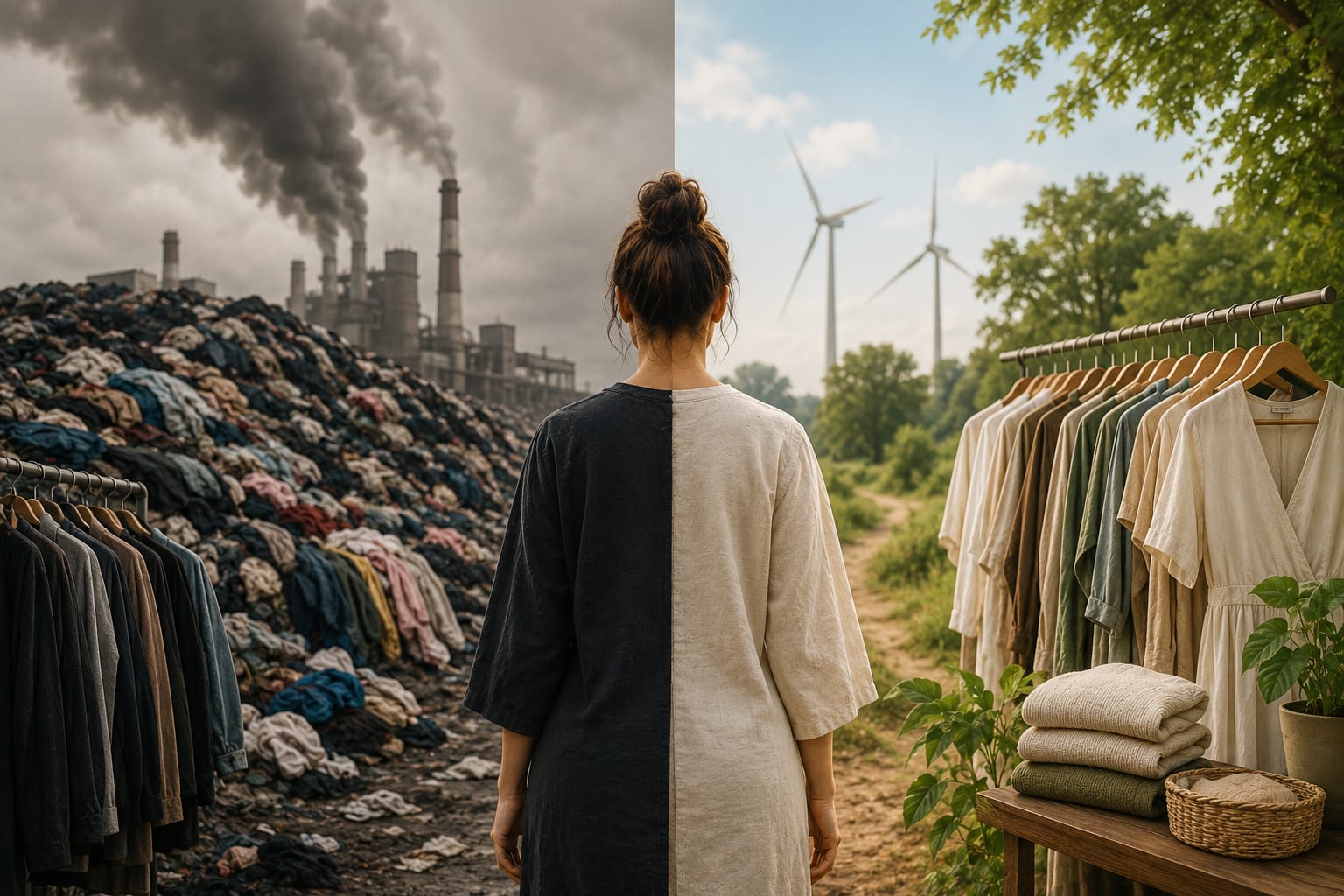
For than twenty years the way people buy clothes has changed a lot because of fast fashion. Every week stores get clothes in stock and they sell trendy clothes for very low prices. Social media also tells people to keep buying clothes to stay stylish. This has made clothes cheaper and easier for everyone to buy so people from all walks of life can try out styles.
There is a big problem with fast fashion that people do not see at first. The truth is that the fast fashion industry is one of the polluters in the world it wastes a lot of clothes uses too much water and treats workers unfairly. Now people are starting to realize that when they buy a T-shirt for ₹500 the environment and the people who made it are paying a price.
Today things are changing. People are taking sustainability seriously. It is becoming a big part of the fashion industry. Fast fashion is not the way to buy clothes anymore. People are thinking about whether it’s better to buy one good quality piece of clothing or ten cheap ones that will not last. The government is making rules companies are changing the way they make clothes and young people are asking for honesty from brands, about how they make their clothes.
Ethical Concerns Are Influencing Buying Decisions
Fast fashion has faced criticism over working conditions in its supply chain. Low wages, factories and long working hours have been concerns raised by labor rights organizations.
Consumers today have access to information than ever before. Reports, documentaries and online campaigns have made it easier for people to understand where their clothes come from and how they are made.
As a result transparency has become important when choosing brands. Companies that share information about their suppliers, worker welfare and production processes are earning consumer trust.
Many shoppers now think that affordable fashion should not come at the expense of workers rights.
Technology Is Creating Better Alternatives
Innovation is helping reshape the future of fashion. Artificial intelligence allows brands to predict customer demand accurately reducing excess inventory and waste. Digital design software enables designers to create samples before making physical garments saving materials and production costs.
Some companies have introduced on-demand manufacturing, where clothing is produced only after an order is placed. This approach reduces inventory and unnecessary waste.
Advances in textile recycling are making it possible to convert garments into new fabrics supporting a circular fashion economy where resources remain in use for longer.
Emerging technologies such as Digital Product Passports are expected to provide consumers with information about a garments materials, production process, repair options and recycling instructions making sustainable shopping more transparent.
Governments Are Increasing Regulations
Governments around the world are introducing environmental regulations for the fashion industry. Many policymakers think companies should take responsibility for the products they manufacture including what happens to clothing after consumers dispose of it.
New policies encouraging recycling reducing textile waste and improving supply chain transparency are pushing brands to rethink their production methods.
Businesses that continue relying on high-volume production without addressing sustainability concerns may find it difficult to meet future regulatory standards.
These policy changes indicate that sustainability is becoming a long-term expectation than a temporary trend.
Can Fast Fashion Adapt?
Although criticism of fashion continues to grow affordable clothing remains important for many consumers, particularly during economic uncertainty. For families low-cost clothing is still the most practical option.
Recognizing changing consumer expectations several fashion brands have started introducing recycled materials, repair services, resale programs and clothing collection initiatives. While these efforts represent steps critics argue that meaningful progress requires reducing overproduction rather than simply improving marketing campaigns.
The future of the industry may depend on finding a balance between affordability, accessibility and environmental responsibility.
Looking Ahead
Fast fashion transformed the clothing industry by making trends available to people at affordable prices. However todays consumers are asking questions that extend beyond style and price. They want to know how garments are made who made them and what impact their purchases have on the planet.
As sustainability, ethical production and conscious consumption become more important the fashion industry is entering a chapter. Success will no longer be measured by how quickly brands can produce clothing but by how responsibly they can create products that last.
Fast fashion may not disappear overnight. Its traditional model is being challenged. The future belongs to businesses that embrace innovation, transparency and sustainability while meeting the needs of consumers. In this changing landscape buying better-quality garments may become the new definition of fashionable.
The Rise of Fast Fashion
fashion emerged with the promise of making runway-inspired clothing affordable and accessible. Brands shortened production cycles dramatically allowing trends to move from fashion shows to store shelves within weeks of months.
This model revolutionized the industry. Consumers could purchase clothing at low prices without waiting for seasonal collections. Social media further accelerated this cycle by encouraging people to wear outfits for every occasion and share them online.
Perhaps the strongest evidence that fast fashion is becoming outdated is the rise of the economy.
Conclusion
Fast fashion is becoming outdated because the world is changing. Climate change, resource scarcity, growing consumer awareness, technological innovation and stronger environmental regulations are reshaping the fashion industry.
The future of fashion will not be defined by how trends change but by how responsibly clothing is designed, produced, used and recycled.
Sustainability is no longer a marketing strategy—it is becoming a business necessity.
Consumers are realizing that true style is not about owning the clothes but about making thoughtful choices that reflect personal values and protect the planet.
As the industry embraces fashion, innovative materials, ethical production and digital transparency fashion is entering a new era—one where creativity and responsibility go hand in hand.
Fast fashion may have transformed the past. Sustainable fashion is shaping the future. The brands that succeed in the coming decades will not be those that produce the garments but those that create lasting value, for people, communities and the environment.