

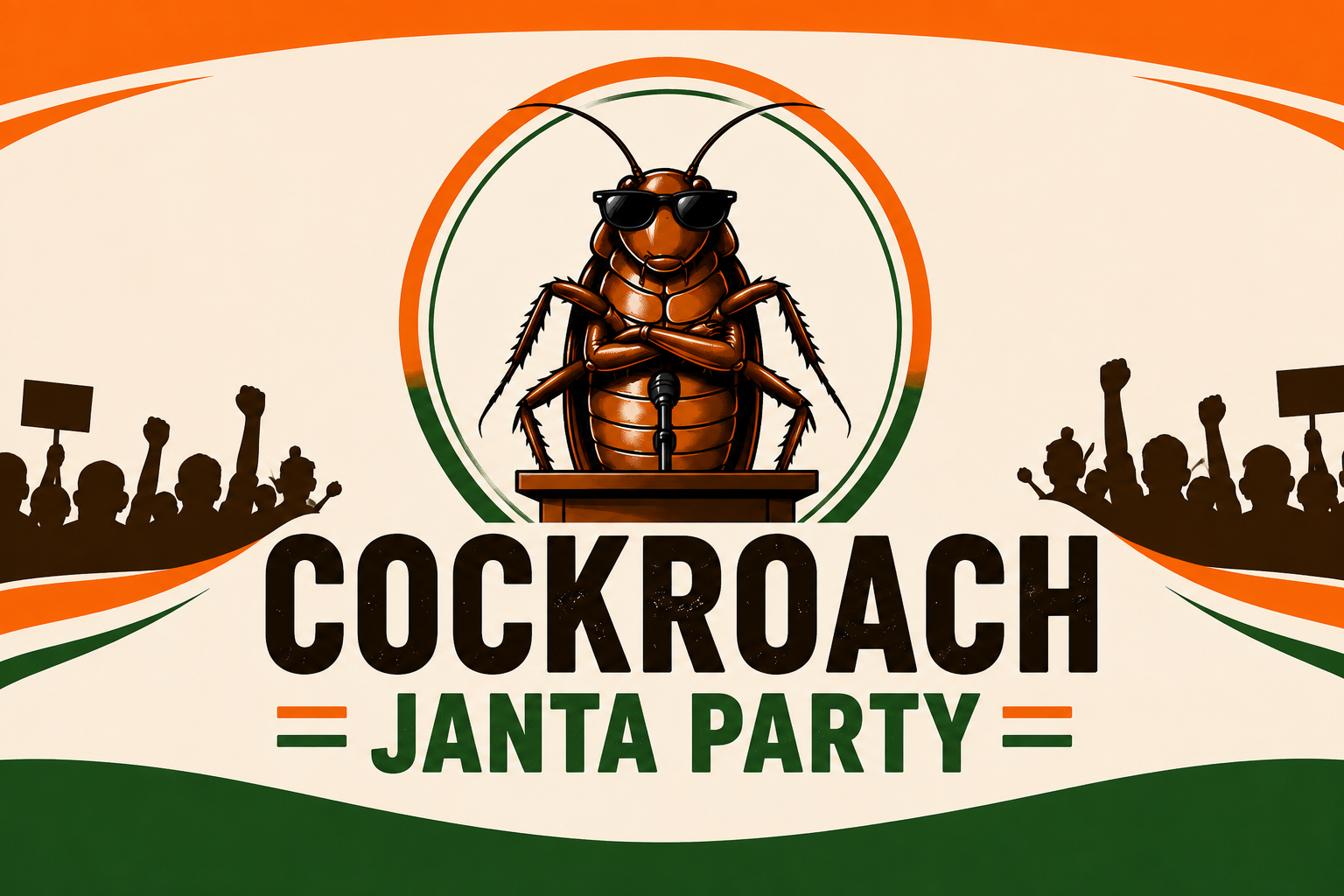
The Cockroach Janta Party, or CJP for short, has become a major talking point in India. What started as a joke on the internet in 2026 has grown into something much bigger. It is now seen by many as a way for young people in India to express their frustration and disappointment with the government.
The movement has attracted attention because it combines humor, satire, and social media with serious concerns about unemployment, rising prices, and the future of young Indians. While the name may sound humorous, the issues behind it are anything but funny.
How the Cockroach Janta Party Started
In India, many people are worried about problems such as unemployment, inflation, and challenges in the education system. The CJP has become a voice for many of these concerns.
The movement started on May 16, 2026, after comments made by the Chief Justice during a court hearing. While speaking about people criticizing the government online, he referred to some of them as “cockroaches” and compared them to parasites. The remarks quickly spread across social media and sparked widespread discussion.
Even though the Chief Justice later clarified that he was referring only to people who had lied about their qualifications, the damage had already been done. The word “cockroach” quickly became a trending topic online. Instead of feeling insulted, many young people embraced the term. They turned it into memes, jokes, and satirical content that rapidly gained popularity across social media platforms.
A Symbol of Survival
This is how the Cockroach Janta Party was born. What is really interesting about the CJP is how quickly it became popular. Within just a few days, it had millions of followers across different social media platforms. People created countless posts, short videos, artwork, and memes using the cockroach as the movement’s symbol.
For many supporters, the cockroach represents something more than an insect. It symbolizes resilience, survival, and the ability to keep going despite difficult circumstances.
For people in India, especially young people, this symbol carries a deeper meaning. Many are dealing with intense academic pressure, difficulty finding stable jobs, rising living costs, and uncertainty about their future. The cockroach has become a symbol of their determination to survive despite these challenges.
The Movement Goes Beyond Social Media
The CJP did not remain limited to the internet. People began organizing protests and demonstrations in different cities across India. One of the major issues raised by protesters was a controversy surrounding a large public examination. Students and parents expressed anger over the handling of the situation and felt that the government was not doing enough to address their concerns.
The movement also brought attention to broader issues affecting young people. Many participants used rallies and online campaigns to discuss employment opportunities, education reforms, transparency, and accountability.
Supporters believe that the movement gives ordinary citizens a platform to express concerns that they feel are often ignored in mainstream political discussions.
Humor as a Political Tool
The rise of the CJP shows how young people are increasingly using the internet to express dissatisfaction with the government. Instead of relying on traditional political speeches or press conferences, they are using humor, satire, memes, and viral videos to communicate their message.
The CJP uses jokes and funny videos to attract attention. However, beneath the humor lies genuine frustration over unemployment, corruption, rising prices, and problems within the education system.
Many observers believe that humor makes the movement easier for people to understand and share. A meme can spread across social media within minutes, reaching millions of users who may not otherwise engage with political discussions. This has allowed the movement to connect with a large audience, particularly younger generations.
Can the Movement Bring Change?
Not everyone believes that the Cockroach Janta Party will lead to lasting political change. Some critics argue that online movements often lose momentum once public attention shifts to another issue. They question whether internet activism alone can influence government policies or create long-term reforms.
Supporters of the CJP disagree. They believe that even if the movement never becomes an actual political party, it has already succeeded in drawing attention to the concerns of young Indians. By creating widespread public discussion, they hope decision-makers will be forced to listen more carefully to issues affecting students, job seekers, and ordinary citizens.
Many also argue that social media has changed the way public opinion is formed. Digital campaigns now have the power to influence conversations far beyond the internet and encourage wider civic participation.
More Than Just a Joke
The Cockroach Janta Party is more than an internet joke. For many people, it represents a generation demanding to be heard. Its supporters are asking for recognition, dignity, better opportunities, and meaningful action on issues that directly affect their daily lives. Rather than staying silent, they have chosen to use social media as a platform to express themselves.
Whether the CJP becomes a lasting movement or not, it has already demonstrated that young people in India are willing to speak up when they feel ignored. By using satire, humor, and creativity, they have found a new way to challenge authority and start conversations about important national issues.
The rise of the Cockroach Janta Party shows that even something that begins as an internet joke can evolve into a larger social movement. It reminds us that when people feel unheard or cornered, they can transform ridicule into resistance and use creativity to amplify their voices. Whether its long-term impact remains to be seen, the movement has already become a symbol of a generation seeking change and determined to make its concerns impossible to ignore.