

Introduction
Gender equality is a fundamental human right and a key factor in achieving sustainable development. It means that women, men, girls, and boys should have equal opportunities to learn, work, lead, and make decisions. Despite significant progress in recent decades, gender inequality continues to exist in many parts of the world. Promoting equality helps create stronger economies, healthier families, and more peaceful communities.
Why Gender Equality Matters
Gender equality allows every individual to reach their full potential. When people are treated equally, they can contribute their talents and skills without facing unfair barriers. Equal access to education, healthcare, employment, and leadership opportunities leads to greater innovation, economic growth, and social development.
Girls who receive quality education are more likely to secure better jobs, improve their quality of life, and contribute positively to society. Similarly, boys also benefit from a society that encourages fairness, respect, and equal opportunities for everyone.
Challenges to Gender Equality
Although many countries have made progress, several challenges remain:
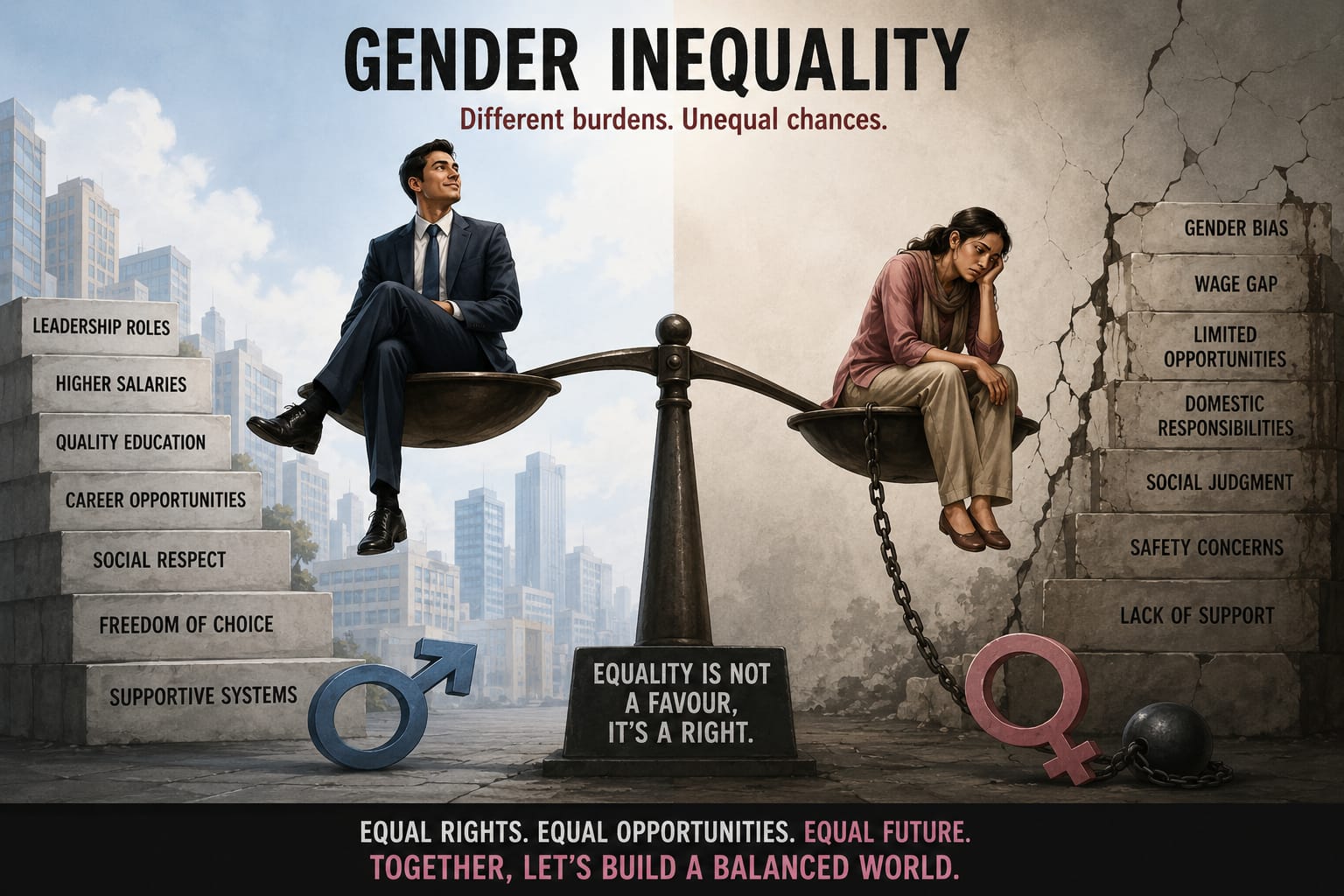
Gender discrimination in education and employment.
Unequal pay for equal work
Limited representation of women in leadership and decision-making roles.
Gender-based violence and harassment
Social stereotypes that restrict career choices and personal freedom.
These issues affect both individuals and society, slowing economic growth and limiting human potential.
The Role of Education
Education is one of the most powerful tools for promoting gender equality. Schools and colleges should encourage equal participation in academics, sports, science, technology, and leadership activities. Teaching children about respect, inclusion, and equal rights from an early age helps eliminate harmful stereotypes and creates a more accepting society.
Parents and teachers also play an important role by encouraging children to pursue their interests regardless of traditional gender expectations.
Gender Equality in the Workplace
Equal opportunities in the workplace are essential for economic development. Employers should ensure fair recruitment, equal pay, safe working environments, and equal opportunities for promotion. Flexible work policies and parental leave for both men and women can help create a balanced and supportive workplace.
Organizations that value diversity often experience higher productivity, better decision-making, and increased innovation.
Government and Society’s Responsibility
Governments can promote gender equality by enforcing anti-discrimination laws, improving access to education and healthcare, supporting women entrepreneurs, and ensuring equal legal rights. Society also has a responsibility to challenge stereotypes, promote respect, and support equal participation in all aspects of life.
Media, businesses, educational institutions, and community organizations all play an important role in creating awareness and encouraging positive change.
Benefits of Gender Equality
Gender equality benefits everyone by:
Reducing poverty.
Strengthening economic growth.
Improving education and healthcare outcomes.
Encouraging innovation and creativity.
Creating safer and more inclusive communities.
Promoting peace, justice, and social harmony.
When everyone has equal opportunities, societies become stronger and more resilient.
Conclusion
Gender equality is not only a human rights issue but also a foundation for sustainable development and social progress. Every individual deserves equal respect, opportunities, and freedom to achieve their goals. Governments, schools, workplaces, families, and communities must work together to eliminate discrimination and create an inclusive environment where everyone can thrive. By promoting gender equality today, we build a brighter, fairer, and more prosperous future for generations to come.