

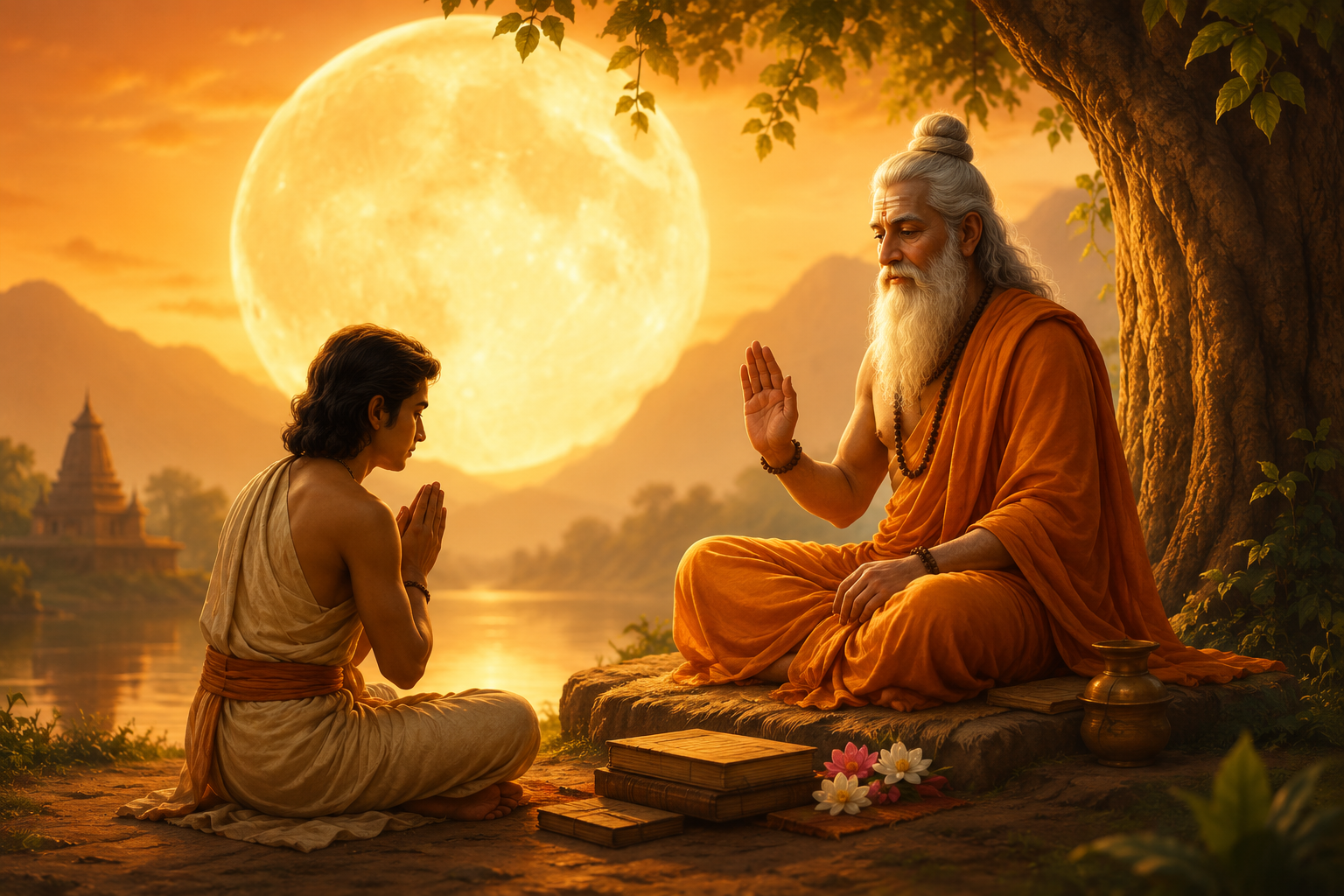
Honouring the Guiding Light of Wisdom
Guru Purnima is one of the most revered festivals in India, dedicated to expressing gratitude and respect toward teachers, mentors, and spiritual guides. Celebrated on the full moon day (Purnima) of the Hindu month of Ashadha, the occasion highlights the invaluable role of a guru in shaping knowledge, character, and spiritual growth. In 2026, Guru Purnima will be observed on Wednesday, 29 July.
The word Guru is derived from Sanskrit, where ‘Gu’ means darkness and ‘Ru’ means remover. Thus, a guru is regarded as the one who removes the darkness of ignorance and leads individuals toward wisdom and enlightenment. Guru Purnima is not only a religious festival but also a celebration of learning, guidance, and lifelong respect for teachers.
Why Guru Purnima Is Celebrated
Guru Purnima is traditionally observed to honour Maharishi Ved Vyasa, the sage who compiled the Vedas, authored the Mahabharata, and composed several Puranas. Because of his immense contribution to Hindu scriptures and philosophy, the day is also known as Vyasa Purnima.
Furthermore, the festival holds significance in Buddhism and Jainism. Buddhists believe that Lord Buddha delivered his first sermon at Sarnath on this day, while Jains associate Guru Purnima with Lord Mahavira, who accepted Gautama Swami as his first disciple.
Significance of Guru Purnima
Guru Purnima reminds us that knowledge is one of life’s greatest treasures. A guru provides not only education but also moral values, discipline, confidence, and the wisdom to overcome challenges. Therefore, the festival encourages people to acknowledge those who have positively influenced their personal, academic, professional, or spiritual journeys.
Additionally, the occasion inspires self-reflection, humility, gratitude, and a renewed commitment to learning. Many devotees also dedicate the day to spiritual practices and personal growth.
How Guru Purnima Is Celebrated
People observe Guru Purnima in various meaningful ways across India and other parts of the world. Common celebrations include:
- Offering prayers and flowers to gurus and teachers.
- Visiting temples, monasteries, and ashrams for special ceremonies.
- Reading sacred scriptures and listening to spiritual discourses.
- Seeking blessings from parents, teachers, and mentors.
- Performing meditation, chanting, and charitable activities.
- Expressing gratitude through messages, gifts, or acts of service.
Educational institutions and spiritual organizations also organize cultural programs, lectures, and felicitation ceremonies to honour teachers and scholars.
Guru Purnima in Modern Times
Although Guru Purnima has deep spiritual roots, its message remains relevant in today’s world. Modern gurus can include school teachers, professors, coaches, mentors, counsellors, and anyone who guides us toward success and personal growth. In today’s fast-paced society, the festival serves as a reminder to appreciate those who inspire us with knowledge, kindness, and wisdom.
Moreover, Guru Purnima encourages lifelong learning and respect for education, values that continue to shape individuals and communities alike.
Conclusion
Guru Purnima is a timeless celebration of wisdom, gratitude, and the sacred relationship between a teacher and a student. Observed on 29 July 2026, the festival offers an opportunity to honour those who have illuminated our lives with knowledge and guidance. Whether through spiritual devotion, heartfelt gratitude, or simple acts of appreciation, Guru Purnima reminds us that every meaningful journey begins with the guidance of a great teacher.
Read More: Looking for more important observances, festivals, and awareness days in July? Explore our comprehensive July Content Calendar: Festivals, Vrats, and Important International Days to stay updated with key national and international events, religious festivals, fasting days, and awareness campaigns celebrated throughout the month. It is a helpful guide for content creators, businesses, students, and anyone planning timely posts and activities.