

Introduction
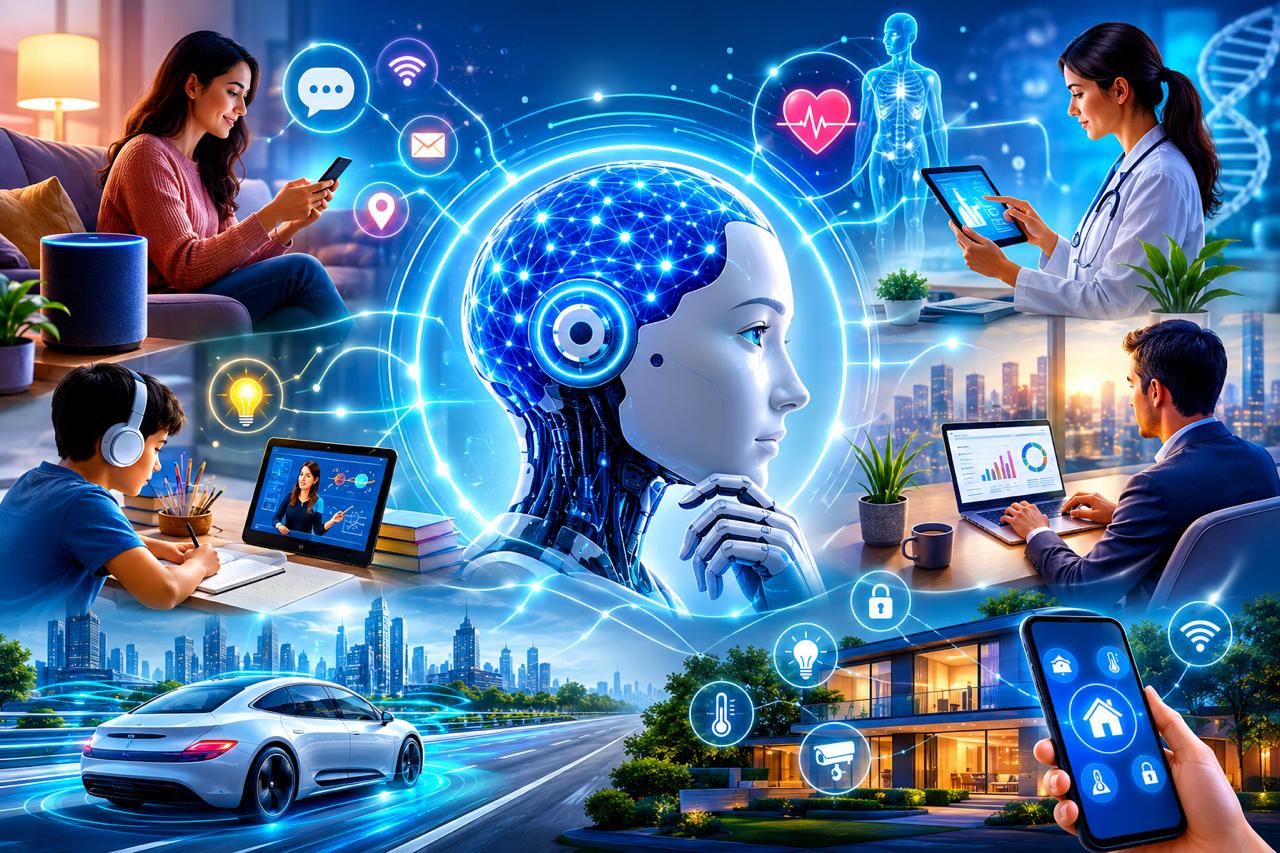
AI (Artificial Intelligence) is one of the game-changers of the modern era. It is the ability of machines and computer systems to undertake tasks normally associated with human intelligence, such as learning, reasoning, problem-solving, decision-making etc. Artificial Intelligence, once a futuristic concept, is now a part of our lives. AI is reshaping the lives of people, from their smartphones and online shopping to their healthcare and transportation. It is increasingly impacting everyday activities in a way that makes them more convenient, efficient, and personalized.
AI in Communication
One of the most common uses of AI is in communication. Virtual assistants like Siri, Google Assistant and Alexa enable users to use their voice to do things. It’s possible to ask these assistants questions, send messages, make calls and set reminders within seconds. Another use of AI in the business world is through the use of chatbots for immediate customer support. These chatbots can respond to frequently asked questions and resolve common problems without any human involvement. Plus, AI translation software facilitates communication between people of different languages, fostering connections and eliminating obstacles in the path of global communication.
AI in Education
Artificial Intelligence has revolutionized the educational industry to a great extent. AI-driven online learning platforms offer customized learning based on individual student’s learning styles and speeds. AI for learning can recognize difficulties in the learning process and offer extra materials to help learners grasp the material. Virtual tutors and AI learning systems provide 24 hours of support, creating easy access to learning. AI has also advantages for teachers by automating administrative duties, like grading and attendance monitoring, permitting them to concentrate more on teaching and mentoring pupils.
AI in Healthcare
AI has shown to be transformative in the healthcare industry. AI systems help doctors diagnose diseases using medical records, lab results and medical images. Such systems can identify patterns that may be hard for humans to see, yielding quicker and more accurate diagnoses. Artificial Intelligence allows smartwatches to track sleep, physical activity, and heart rate. This allows people to maintain a healthier lifestyle and detect early on health problems. Medical research and drug development are also benefiting from AI, with the potential to lead to the discovery of new treatments and better care for patients.
AI in Transportation
The use of AI has made transportation smarter and safer. AI can be leveraged in navigation applications to track live traffic and recommend the quickest route to drivers. This not only saves time but also fuel. AI is also helping to optimize scheduling and efficiency in public transportation. While still in the early stages of development, self-driving cars are one of the most exciting applications of AI. The cars feature sensors, cameras, and AI systems that can help them navigate roads and avoid collisions, which could minimize accidents related to human error.
AI in Shopping and E-Commerce
AI has revolutionized the shopping landscape. AI algorithms that online retailers employ can learn what customers like and dislike, and make suggestions based on their browsing history and previous purchases. Such personalization enhances the customer experience and aids in delivering products that align with customer requirements. AI-powered chatbots assist customers by answering questions and providing recommendations. AI helps retailers automate inventory management, predict customer demand, and optimize delivery schedules to ensure products are in stock when consumers want them.
AI in the Workplace
In the healthcare sector, AI is reshaping healthcare workplaces by streamlining patient care and improving outcomes.In retail, AI is changing retail jobs by optimizing stock management and customer service. AI tools handle mundane, repetitive tasks like data entry, scheduling and report generation in business. This helps to optimise efficiency and help staff to concentrate on creative and strategic tasks. Organizations use AI tools to sift through massive data, find patterns and make informed decisions. AI systems are leveraged by customer service teams to swiftly answer customer questions, and by marketing teams to analyze customer behavior and design personalized marketing campaigns. As a result, companies are more productive and competitive.
Discuss any challenges or moral issues.Talk about challenges & ethics.
While AI offers numerous advantages, it also comes with some drawbacks. With many AI systems gathering and analyzing vast amounts of personal data, privacy is a significant worry. The issues of cyber security and safeguarding sensitive data are also a concern. A second issue is job displacement which is likely to happen as a result of automation. Machines are taking over more functions, which might result in the lessening of the relevance of traditional jobs. Moreover, there are ethical concerns like the bias in AI decision-making and accountability that need to be discussed. The government and technology companies need to collaborate to create rules and guidelines for the responsible and ethical use of AI.
Conclusion
AI is transforming daily life in numerous ways. It has created a better communication, better education, revolutionised healthcare, transformed transportation and made shopping and work efficient. There are certain challenges like privacy concerns, job displacement, etc., but the advantages of AI are immense, and they are on the rise. With the development of technology, AI will play a more significant role in society in the future, bringing along new possibilities of innovation and progress. With responsible and ethical use of AI, humanity can unlock its potential to build a smarter, safer, and more prosperous future.