

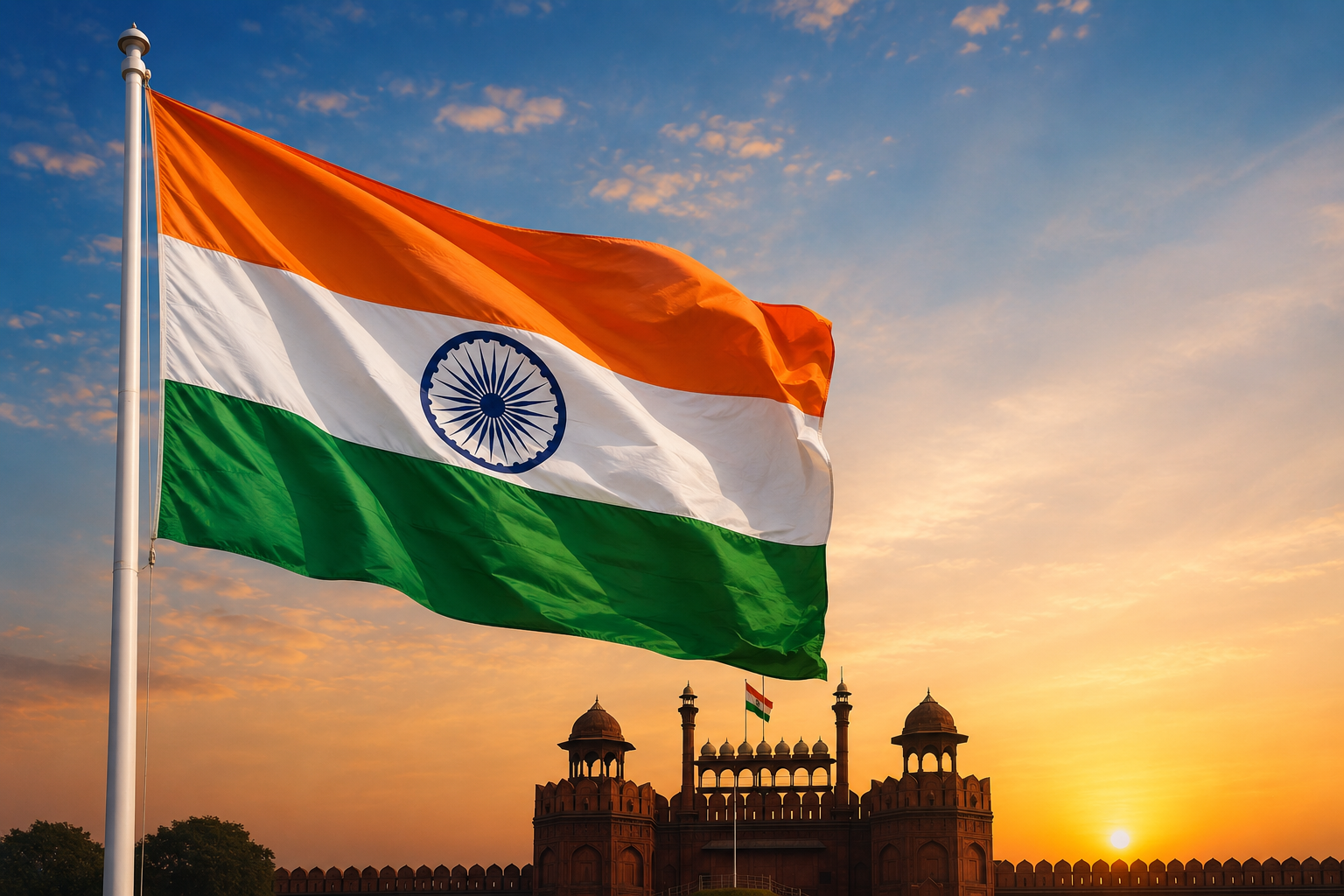
India celebrates Independence Day every year on 15 August to commemorate its freedom from British colonial rule in 1947. It is one of the country’s most significant national holidays, marking the birth of an independent nation after decades of struggle, sacrifice, and determination. The day pays tribute to the countless freedom fighters whose courage and resilience made independence possible.
History of Independence Day
On 15 August 1947, India gained independence from British rule after nearly 200 years of colonial administration. The freedom movement was led by several remarkable leaders, including Mahatma Gandhi, Jawaharlal Nehru, Sardar Vallabhbhai Patel, Subhas Chandra Bose, Bhagat Singh, Rani Lakshmibai, and many others. Their efforts, along with the participation of millions of ordinary citizens, helped shape India’s journey to freedom.
The first Prime Minister of independent India, Jawaharlal Nehru, delivered his historic “Tryst with Destiny” speech on the eve of independence, marking the beginning of a new chapter in the nation’s history.
How India Celebrates Independence Day
The main national celebration takes place at the Red Fort in Delhi, where the Prime Minister hoists the national flag and addresses the nation. The ceremony includes the singing of the national anthem, a guard of honour, cultural performances, and a tribute to the country’s freedom fighters and armed forces.
Across India, schools, colleges, government offices, and communities organize flag-hoisting ceremonies, patriotic songs, parades, cultural programs, essay competitions, and awareness campaigns. Buildings and public spaces are decorated with the colours of the Indian tricolour, while people proudly display the national flag.
Significance of the Day
Independence Day is more than a celebration of political freedom. It is a reminder of the values that form the foundation of the nation—democracy, unity, equality, justice, and freedom. The day inspires citizens to contribute to India’s development while respecting its diverse cultures, languages, and traditions.
It also offers an opportunity to remember the sacrifices of freedom fighters and members of the armed forces who have dedicated their lives to protecting the nation’s sovereignty.
Ways to Celebrate Responsibly
Citizens can observe Independence Day by participating in local flag-hoisting ceremonies, learning about India’s freedom movement, visiting historical sites, supporting community service initiatives, and teaching younger generations about the importance of national unity. Celebrating with respect for the national flag and following the Flag Code of India further reflects patriotism and civic responsibility.
Conclusion
Independence Day stands as a powerful reminder of India’s remarkable journey from colonial rule to becoming the world’s largest democracy. As the nation celebrates another year of freedom, the occasion encourages every citizen to honour the sacrifices of the past while working together to build a stronger, more inclusive, and prosperous India. By embracing the ideals of unity, peace, and progress, Indians can continue shaping a brighter future for generations to come.
Read More: August Special Days: Complete List of Festivals, National and International Observances to explore all the important festivals, national events, international observances, and special days celebrated throughout the month of August.