

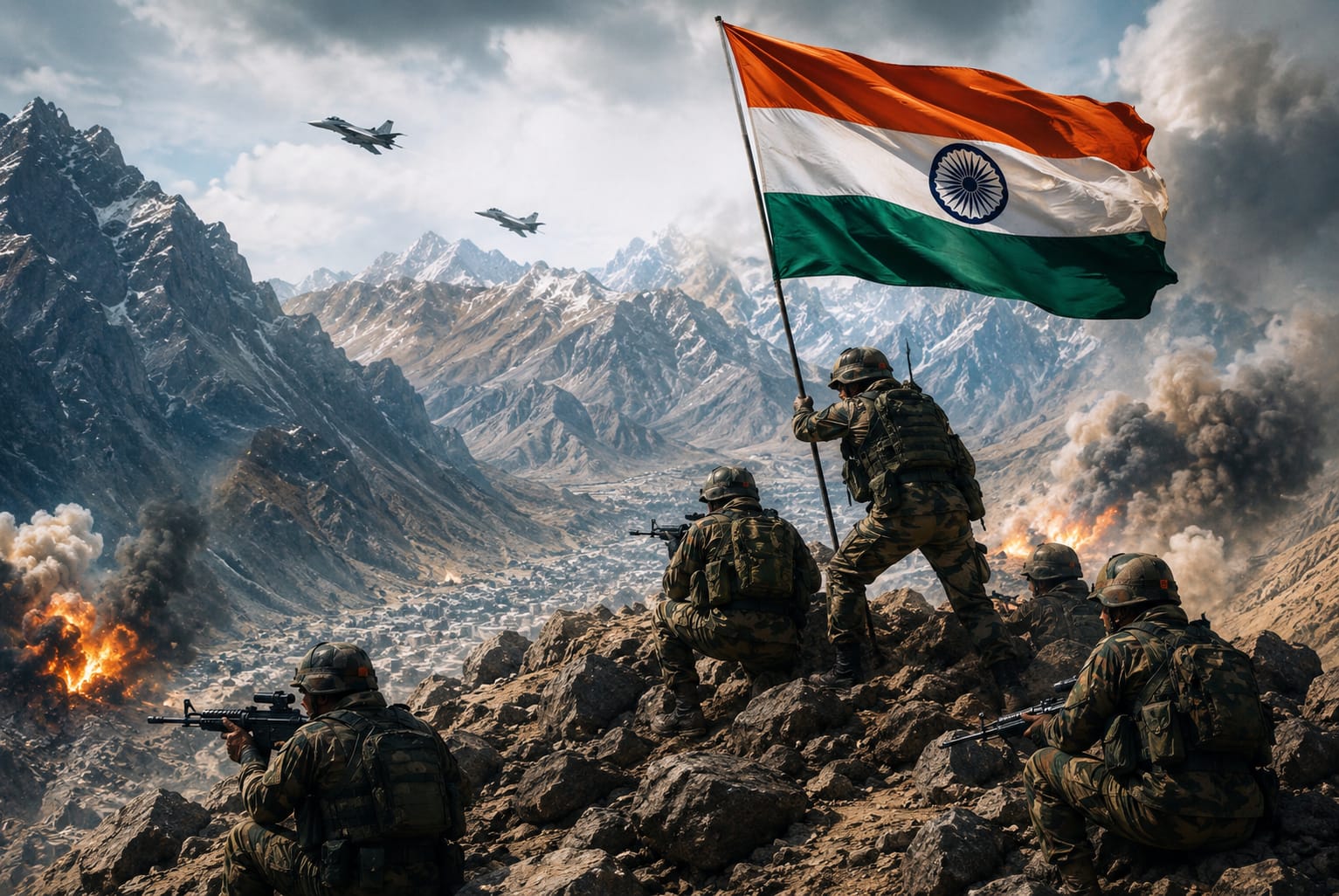
The Kargil War: A Story of Courage, Sacrifice, and Victory
The Kargil War is one of the most significant events in modern Indian history. Fought between India and Pakistan in 1999, it showcased the courage, determination, and patriotism of Indian soldiers. They fought under extremely difficult conditions to protect the nation’s sovereignty. The war tested the strength of the Indian Armed Forces and united the entire country in support of its soldiers. Even today, the Kargil War stands as a symbol of bravery, sacrifice, and national pride.
The conflict took place in the Kargil district of Jammu and Kashmir. The region consists of rugged mountains, steep cliffs, and harsh weather conditions. During winter, heavy snowfall often forces troops to vacate some high-altitude posts. In early 1999, Pakistani soldiers and armed intruders secretly crossed the Line of Control (LoC). They occupied several strategic positions on the Indian side.
At first, Indian authorities did not detect the intrusion. However, local shepherds noticed unusual movements in the mountains and informed the army. After an investigation, the Indian Army discovered a large-scale infiltration. The intruders had captured important mountain peaks overlooking key roads. Their presence threatened India’s security and communication routes.
Operation Vijay
In response, India launched Operation Vijay to reclaim the occupied territories. The mission posed enormous challenges. Soldiers had to climb steep mountains at heights above 16,000 feet while facing enemy fire. The freezing temperatures, rocky terrain, and lack of oxygen made the task even more difficult.
Despite these obstacles, Indian soldiers fought with exceptional courage. They advanced toward heavily defended enemy positions and recaptured one peak after another. Battles at Tololing, Tiger Hill, Point 4875, and several other locations became historic examples of military heroism. Many soldiers charged uphill under direct enemy fire, one of the most demanding tasks in warfare.
Several brave officers and soldiers emerged as national heroes during the war. Among them was Captain Vikram Batra, whose courage inspired the entire nation. His famous words, “Yeh Dil Maange More,” became a symbol of determination and victory. He displayed extraordinary leadership and sacrificed his life while serving the country. Other heroes, including Lieutenant Manoj Kumar Pandey, Grenadier Yogendra Singh Yadav, and Rifleman Sanjay Kumar, also showed remarkable bravery and received India’s highest military honours.
The Indian Air Force also played a crucial role through Operation Safed Sagar. Air Force pilots carried out precision strikes against enemy positions at high altitudes. They worked closely with the Army to destroy enemy defenses and support ground operations. This strong coordination between different branches of the military contributed greatly to India’s success.
As the conflict intensified, the international community closely monitored the situation. India consistently maintained that Pakistani forces had crossed the LoC and occupied Indian territory. Through effective diplomacy and military action, India gained support from many countries. Facing growing international pressure and heavy losses, Pakistan eventually began withdrawing from the occupied areas.
On July 26, 1999
India successfully recaptured most of the infiltrated positions and declared victory. The nation now celebrates this day every year as Kargil Vijay Diwas. The occasion honours the courage and sacrifice of the soldiers who fought in the war. Many brave men gave their lives to defend the nation, and India remembers them with deep respect and gratitude.
The Kargil War taught several important lessons. It highlighted the need for constant vigilance along the borders and stronger intelligence systems. After the war, India improved its surveillance capabilities and strengthened coordination among the Army, Navy, and Air Force. These reforms enhanced the country’s defense preparedness and national security.
The war also left a deep emotional impact on the people of India. Citizens across the country came together to support the armed forces. News reports from the battlefield brought stories of courage into every home. As a result, people developed a greater understanding of the sacrifices made by soldiers. The conflict strengthened both patriotism and national unity.
The Kargil War reminds us of the challenges soldiers face every day. While most citizens live peacefully, soldiers protect the nation’s borders in difficult and dangerous conditions. Their dedication, discipline, and willingness to sacrifice deserve the highest respect.
In conclusion
the Kargil War was much more than a military conflict. It demonstrated the courage, resilience, and patriotism of India’s armed forces. The victory reflected the determination of the soldiers and the unity of the nation. The heroes of Kargil continue to inspire future generations through their selfless service and devotion to the country. Their legacy reminds us to value our freedom and honour those who protect it. The Kargil War remains a lasting source of pride and inspiration for India.