

Mumbai Takes Action Against Plastic Pollution
Mumbai is taking a major step in the fight against plastic pollution. The city has started a cleanup plan to stop millions of kilograms of waste from going into the ocean every year. The Ocean Cleanup has joined hands with the city authorities and environmental groups to help clean up Mumbai’s waterways and protect the city’s coastline.
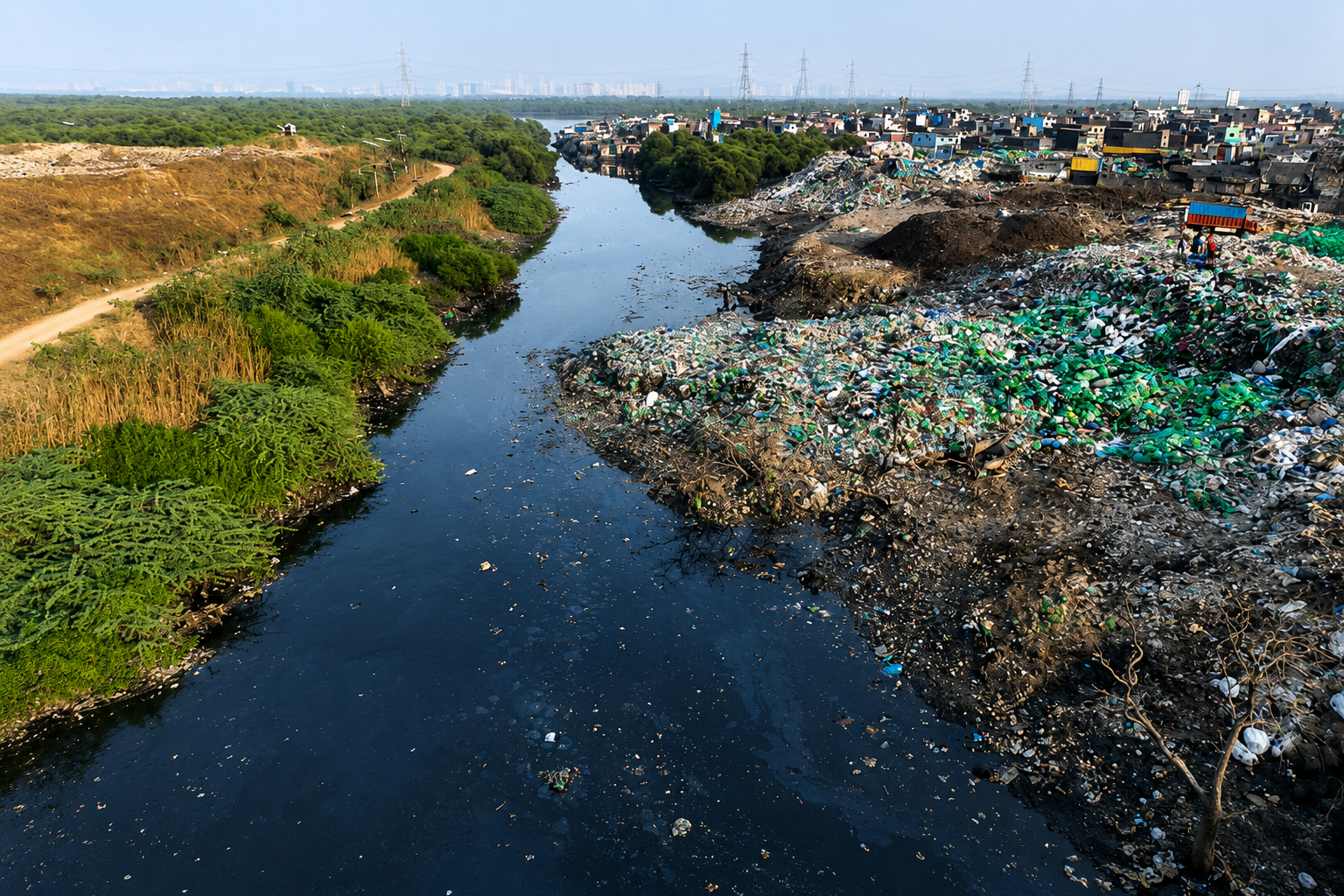
This plan is a major step for Mumbai because the city is facing a huge plastic waste problem. According to The Ocean Cleanup, Mumbai releases nearly 5 million kilograms of plastic waste into the Arabian Sea and the wider Indian Ocean every year. This is very harmful to marine life, the coastline, and the people who depend on these ecosystems to survive.
Growing Threat of Plastic Waste
Plastic pollution is one of Mumbai’s biggest environmental problems. The city’s waste is not only hurting its coastline but also threatening more than 220 kilometers of shoreline, around 152 square kilometers of mangroves, and 107 protected species. Nearly 1.9 million people, including fishermen, tourism workers, and coastal communities, are also at risk because their livelihoods depend on healthy coastal ecosystems.
During the monsoon season, the problem gets even worse. Heavy rain washes large amounts of waste from the streets, drains, and rivers into the sea. Plastic bottles, food wrappers, and bags often block waterways, cause flooding, and eventually end up in the ocean, where they can remain for decades.
Environmental experts say that preventing plastic from entering rivers is one of the most effective ways to reduce ocean pollution. Once plastic reaches the sea, it becomes much harder and more expensive to remove. Intercepting waste early helps protect marine ecosystems while reducing long-term environmental damage.
Technology to Stop Waste Before It Reaches the Sea
To solve this problem, The Ocean Cleanup will use advanced technology to catch plastic waste before it reaches the sea. This technology will focus on stopping trash from flowing through rivers and drains, where much of the pollution begins. This is especially important in cities like Mumbai, where waterways often carry waste directly into the ocean.
Unlike traditional beach cleanups, this plan will stop pollution before it reaches the coastline. By stopping waste upstream, the project aims to reduce the amount of debris entering the Arabian Sea and make cleanup efforts more effective and efficient.
Key Partners Behind the Initiative
The Ocean Cleanup is working with Plastic Fischer, which will help collect and process the intercepted trash. Plastic Fischer has experience in cleaning rivers and recovering waste. The organization has successfully carried out similar projects in several Asian countries and is well-equipped to support Mumbai’s environmental goals.
Community participation is also crucial to the project’s success. United Way Mumbai will help raise awareness about responsible waste management and encourage local people to get involved. The organization will work with residents, schools, businesses, and community groups to promote better waste management practices and reduce plastic pollution.
Public awareness campaigns, educational workshops, and volunteer activities will also be part of the plan. Experts believe that reducing plastic pollution requires not only better infrastructure but also changes in consumer habits, recycling practices, and proper waste segregation.
The project has also received support from DP World, which has helped speed up the implementation. Chairman and CEO Sultan Ahmed bin Sulayem emphasized the importance of protecting Mumbai’s environment, saying that environmental conservation remains a key part of the organization’s commitment to sustainability and community development.
A New Approach to Urban Pollution
This collaboration is more than a cleanup operation. It represents a new way of addressing urban pollution. Instead of only managing waste after it has entered rivers and oceans, the initiative focuses on preventing pollution, encouraging innovation, and increasing public awareness. This approach aims to create long-term environmental impact by combining technology, policy, research, and community action.
The signing of the Memorandum of Understanding (MoU) and the permits granted by the authorities mark the beginning of the implementation phase. The first deployments are expected to begin soon, and the performance of these initial systems will help guide future expansion across Mumbai.
The Ocean Cleanup’s Global Mission
The Ocean Cleanup is a global leader in marine conservation. Founded in 2013 by Boyan Slat, the nonprofit develops technologies to remove plastic from rivers and oceans. The organization has collected more than 50 million kilograms of waste from aquatic ecosystems worldwide and currently operates in 10 countries, highlighting the growing impact of its cleanup programs.
Scientists have warned that if plastic pollution continues, marine ecosystems could suffer irreversible damage. Marine animals often mistake plastic for food or become trapped in discarded fishing gear and plastic packaging. Over time, plastic breaks down into microplastics that enter the food chain and may eventually affect human health.
A Cleaner Future for Mumbai
Mumbai’s partnership with The Ocean Cleanup sends a strong message about the need for environmental action. As climate change, rapid urbanization, and pollution continue to threaten coastal ecosystems, cities must adopt innovative solutions to protect natural resources. By combining advanced cleanup technologies with local engagement, scientific expertise, and institutional support, Mumbai is positioning itself as a model for sustainable coastal conservation.
The success of this initiative could inspire similar efforts across India, where plastic waste remains a major environmental concern. If implemented effectively, the project could improve Mumbai’s waterways, preserve marine biodiversity, protect livelihoods, reduce flooding, and build a cleaner and healthier future for generations to come. It also shows how governments, nonprofit organizations, private companies, and local communities can work together to address one of the world’s biggest environmental challenges.