

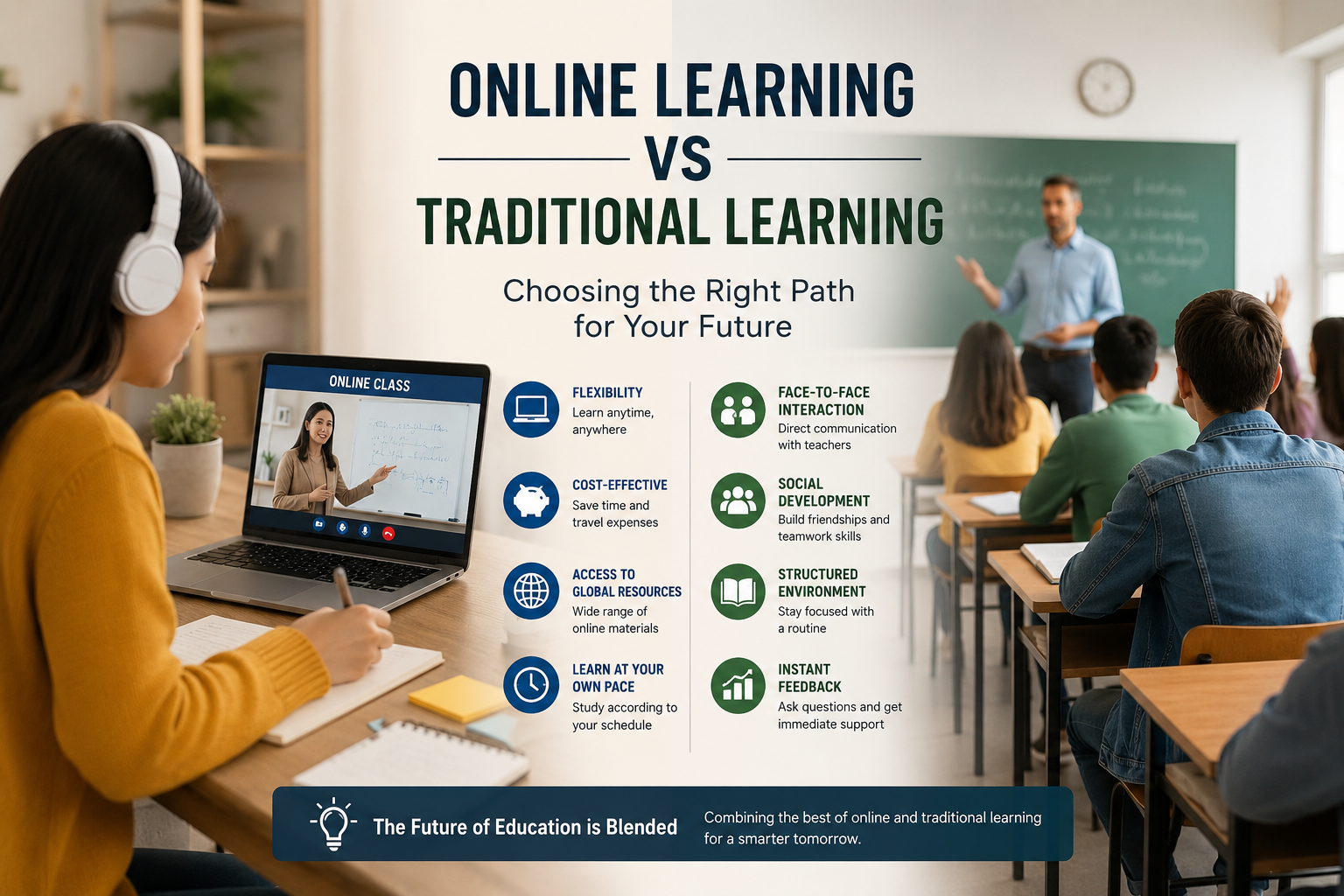
Education plays a vital role in shaping an individual’s future and helping them develop the knowledge and skills needed for success. For centuries, traditional classroom learning was the primary method of education. However, advancements in technology and widespread internet access have introduced online learning as a popular alternative. Today, students can attend classes, complete assignments, and even earn degrees from the comfort of their homes. Both online and traditional learning offer unique benefits and challenges, making it important to understand their differences.
Online learning is a modern method of education that uses digital platforms, virtual classrooms, recorded lectures, and online resources to deliver lessons. Students can access learning materials anytime and from almost anywhere using a computer, tablet, or smartphone. One of its greatest advantages is flexibility. Learners can study at their own pace and manage their schedules according to their personal needs. It also eliminates travel time and expenses, making education more accessible to people living in remote areas. Additionally, online learning provides access to a wide range of educational resources, including videos, e-books, and interactive tools.
On the other hand, traditional learning takes place in physical classrooms where teachers and students interact face-to-face. This method encourages direct communication, allowing students to ask questions and receive immediate feedback. Traditional learning also promotes social interaction, helping students build friendships, teamwork skills, and confidence. The structured environment of schools and colleges often helps learners stay disciplined, focused, and motivated.
Despite its advantages, online learning has certain limitations. Students may feel isolated due to the lack of personal interaction, and they must possess strong self-discipline and time-management skills to stay on track. Technical issues such as poor internet connectivity or device problems can also disrupt the learning process. Traditional learning, meanwhile, may be less flexible because students must attend classes at fixed times and locations. Commuting can be time-consuming and costly, and the pace of classroom instruction may not suit every learner.
Ultimately, neither method is universally better than the other. The best choice depends on a student’s learning style, goals, and circumstances. Online learning is ideal for those who value flexibility and independence, while traditional learning is better suited for students who thrive in structured and interactive environments. Many institutions now use a blended learning approach, combining online and classroom education to provide the benefits of both systems. As education continues to evolve, this balanced model may become the most effective way to support future learners.