

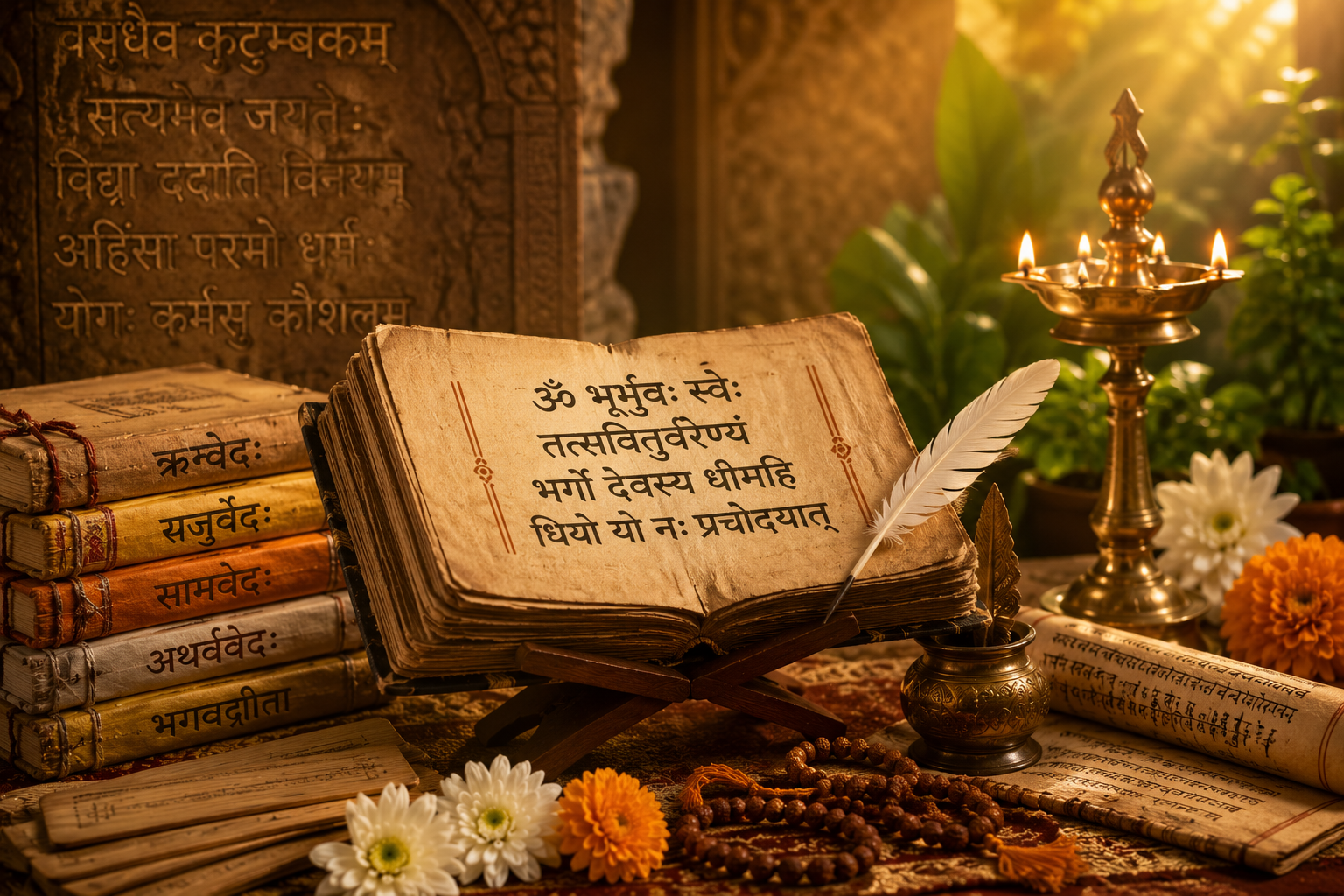
Honouring the Language of Ancient Wisdom
Sanskrit Diwas is celebrated every year to recognise the importance of Sanskrit, one of the world’s oldest and most influential languages. In 2026, Sanskrit Diwas will be observed on Friday, 28 August, coinciding with Shravana Purnima. The day promotes awareness of Sanskrit’s rich literary, philosophical, scientific, and cultural heritage while encouraging its study and preservation for future generations.
Educational institutions, cultural organisations, and government bodies across India mark the occasion with seminars, recitation competitions, workshops, lectures, and cultural performances that showcase the enduring relevance of Sanskrit.
History of Sanskrit Diwas
The Government of India introduced Sanskrit Diwas in 1969 to encourage the learning and appreciation of Sanskrit. Since then, the observance has become an annual event celebrated on Shravana Purnima, a day considered auspicious in the Hindu calendar.
Sanskrit has played a vital role in shaping Indian civilisation. It is the language of the Vedas, Upanishads, Puranas, the Mahabharata, the Ramayana, and many classical works on philosophy, mathematics, astronomy, medicine, grammar, and literature. Its structured grammar, developed by the ancient scholar Panini, continues to influence modern linguistic studies around the world.
Significance of Sanskrit Diwas
Sanskrit Diwas serves as a reminder of India’s rich intellectual and cultural traditions. The language has preserved centuries of knowledge, including spiritual teachings, scientific discoveries, literary masterpieces, and philosophical ideas that continue to inspire scholars worldwide.
The observance also encourages younger generations to explore Sanskrit beyond religious texts. Many universities and educational institutions now offer Sanskrit courses, while digital platforms and research initiatives are making classical literature more accessible than ever. As a result, the language continues to find relevance in education, research, yoga studies, and Indian cultural heritage.
How Sanskrit Diwas Is Celebrated
Schools and colleges organise Sanskrit speech competitions, essay writing contests, quizzes, and recitation events to encourage students to learn the language. Universities often host seminars highlighting Sanskrit’s contribution to literature, linguistics, and ancient sciences.
Temples and cultural organisations conduct Vedic chanting sessions, lectures, and performances based on classical Sanskrit plays and poetry. Many people also read verses from ancient scriptures or learn basic Sanskrit phrases to appreciate the language’s beauty and precision.
In recent years, online webinars, virtual classes, and social media campaigns have further expanded the reach of Sanskrit Diwas, making it easier for people around the world to participate.
Preserving a Living Heritage
Sanskrit Diwas is more than a celebration of an ancient language—it is a tribute to India’s enduring cultural and intellectual legacy. By promoting Sanskrit education and preserving its vast body of literature, the observance helps keep centuries of wisdom alive for future generations. As Sanskrit Diwas 2026 is celebrated, it offers an opportunity to reconnect with a language that continues to influence philosophy, literature, science, and culture across the world.
Read More: August Special Days: Complete List of Festivals, National and International Observances to explore all the important festivals, national events, international observances, and special days celebrated throughout the month of August.