

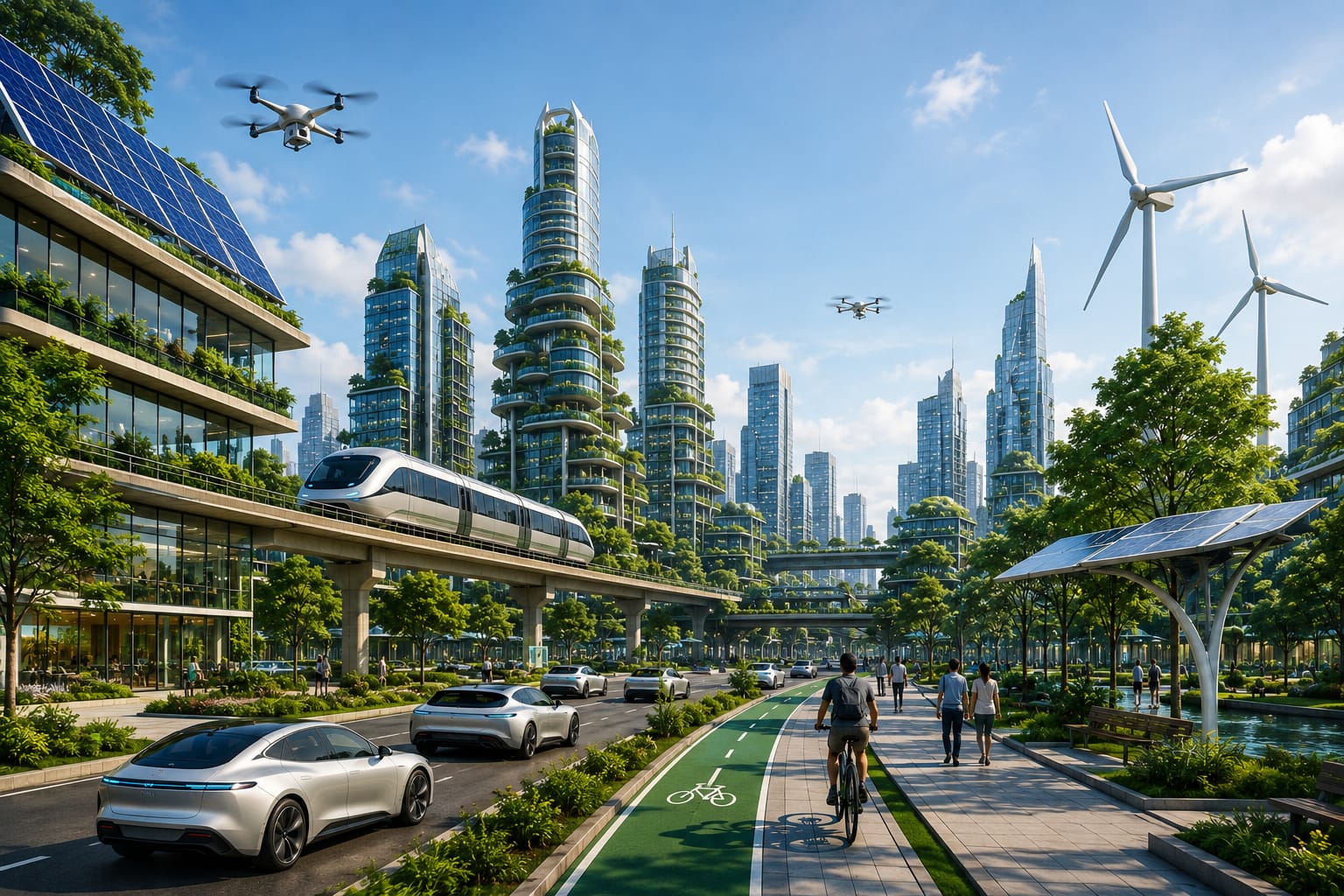
Smart Cities: The Future of Urban Living
As the world’s population continues to grow, cities are facing increasing challenges related to transportation, energy consumption, waste management, public safety, and environmental sustainability. To address these issues, governments and urban planners are turning toward an innovative concept known as smart cities. By integrating advanced technologies into urban infrastructure, smart cities aim to create more efficient, sustainable, and livable environments for residents. As technology continues to evolve, smart cities are becoming the blueprint for the future of urban living.
What Is a Smart City?
A smart city uses digital technologies, data analytics, and connected devices to improve the quality of life for its citizens. These technologies collect and analyze real-time information, enabling city authorities to make informed decisions and optimize public services. From intelligent traffic systems to energy-efficient buildings, smart cities leverage innovation to solve urban challenges and enhance everyday experiences.
The foundation of a smart city lies in connectivity. Through the Internet of Things (IoT), sensors, cameras, and devices communicate with one another, creating a network that gathers valuable data. This information helps city officials monitor infrastructure, manage resources, and respond quickly to issues.
Smarter Transportation Systems
One of the most visible features of a smart city is its transportation system. Traffic congestion is a major problem in many urban areas, leading to wasted time, increased pollution, and economic losses. Smart transportation solutions use real-time data to improve traffic flow and reduce delays.
Intelligent traffic lights can adjust signal timings based on current traffic conditions. Smart parking systems guide drivers to available parking spaces, reducing the time spent searching for parking. Public transportation can also become more efficient through GPS tracking, allowing commuters to receive accurate arrival times and route updates.
In the future, autonomous vehicles and connected transportation networks may further transform urban mobility, making travel safer, faster, and more convenient.
Sustainable Energy and Environmental Protection
Smart cities prioritize sustainability by using technology to reduce energy consumption and minimize environmental impact. Smart grids help manage electricity distribution more efficiently, ensuring that energy is used where and when it is needed most. These systems can also integrate renewable energy sources such as solar and wind power.
Smart streetlights automatically adjust brightness based on pedestrian activity and weather conditions, conserving electricity. Energy-efficient buildings equipped with smart sensors can monitor temperature, lighting, and occupancy, reducing unnecessary energy usage.
Environmental monitoring systems track air quality, noise levels, and water usage in real time. This data allows city officials to take proactive measures to protect public health and preserve natural resources
Improved Public Safety
Safety is a key priority in any city, and smart technologies are helping create safer communities. Surveillance systems equipped with artificial intelligence can identify unusual activities and alert authorities to potential threats. Emergency response teams can use real-time data to respond more quickly and effectively during crises.
Smart sensors can detect natural disasters such as floods, earthquakes, or fires, providing early warnings to residents and emergency services. Connected communication systems ensure that important information reaches citizens quickly, helping reduce risks and save lives.
While these technologies offer significant benefits, cities must also ensure that privacy and data protection remain a top priority.
Efficient Waste Management
Waste management is another area where smart city technologies are making a difference. Traditional waste collection methods often result in inefficiencies and unnecessary costs. Smart waste bins equipped with sensors can monitor fill levels and notify collection services when they need to be emptied.
This approach reduces fuel consumption, lowers operational expenses, and keeps public spaces cleaner. By analyzing waste patterns, cities can also improve recycling programs and promote more sustainable waste disposal practices.
Enhanced Citizen Experience
Smart cities are designed not only to improve infrastructure but also to enhance the daily lives of residents. Digital platforms allow citizens to access government services online, report issues, and participate in community decision-making processes.
Mobile applications can provide information about public transportation, local events, utility usage, and emergency alerts. These services make city living more convenient and encourage greater engagement between citizens and local governments.
Technology also supports healthcare and education through telemedicine services, online learning platforms, and digital access to public resources, ensuring that essential services are available to more people.
Challenges and Considerations
Despite their advantages, smart cities face several challenges. Implementing advanced technologies requires significant investment and long-term planning. Cities must also address concerns related to cybersecurity, data privacy, and digital inequality.
Not all residents have equal access to technology, which can create gaps in participation and benefits. Therefore, successful smart city development must focus on inclusivity, ensuring that all citizens can benefit from technological advancements.
Governments, businesses, and communities must work together to create policies and systems that balance innovation with ethical and social considerations.
Conclusion
Smart cities represent a transformative vision for the future of urban living. By combining technology, sustainability, and data-driven decision-making, these cities can address some of the most pressing challenges facing modern urban environments. From intelligent transportation and energy management to improved public safety and citizen services, smart cities offer a pathway toward more efficient, sustainable, and connected communities.
As urban populations continue to rise, the adoption of smart city technologies will play a crucial role in shaping the cities of tomorrow. The future of urban living is not just about building bigger cities—it is about building smarter ones that improve the quality of life for everyone.
This version is suitable for a blog, online article platform, or magazine-style publication.