

Introduction
Social media has become an important part of our daily lives. Platforms like Instagram, Facebook, X, Snapchat, and YouTube allow people to connect, share ideas, and stay informed. While social media offers many benefits, it often presents a version of reality that is different from real life. Understanding the difference between social media and the real world is essential for maintaining a healthy and balanced lifestyle.
The Positive Side of Social Media
Social media has transformed the way people communicate. It helps friends and families stay connected regardless of distance. Students can access educational content, professionals can build networks, and businesses can reach customers across the globe.
It also gives individuals a platform to express their creativity through videos, blogs, photography, and artwork. Social media has played an important role in spreading awareness about social issues, fundraising for important causes, and providing real-time updates during emergencies.
For many people, it has become a valuable tool for learning new skills, finding job opportunities, and staying connected with communities that share similar interests.
The Reality Behind Social Media
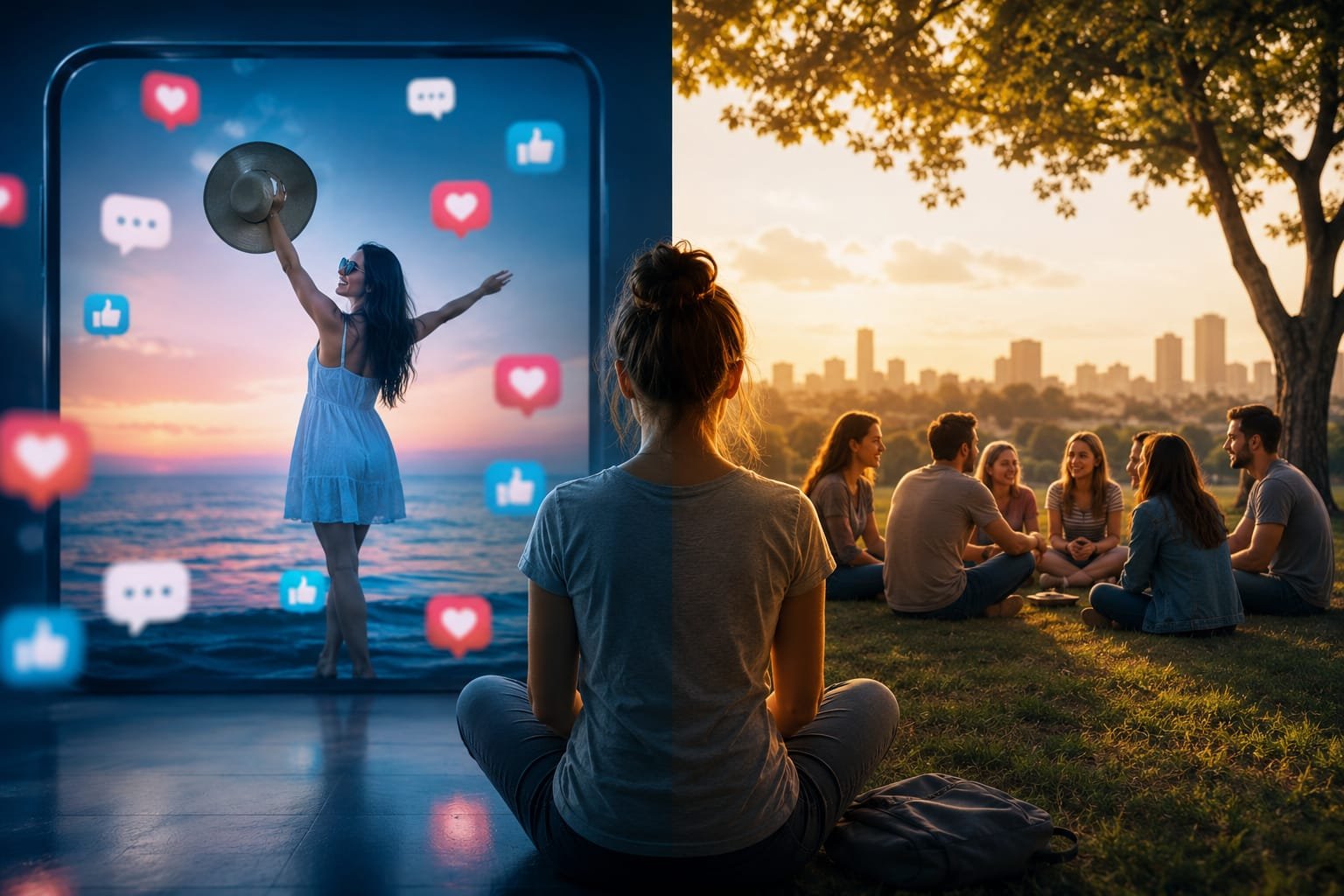
Although social media appears exciting and glamorous, it often shows only the best moments of people’s lives. Users usually post happy memories, achievements, vacations, and celebrations while hiding their struggles, failures, and everyday challenges.
Many photos and videos are carefully edited using filters, lighting, and editing apps. As a result, viewers may believe that others have perfect lives, perfect relationships, or perfect appearances. This creates unrealistic expectations and can make people feel dissatisfied with their own lives.
The truth is that everyone experiences difficulties, stress, disappointment, and failure. These parts of life are rarely visible on social media.
Effects on Mental Health
Excessive use of social media can affect mental health. Constant comparison with others may lead to feelings of anxiety, loneliness, low self-esteem, and depression. Young people are especially vulnerable because they may judge their worth based on likes, followers, or comments.
The pressure to look perfect or gain online popularity can create unnecessary stress. Fear of Missing Out (FOMO) also affects many users, making them feel left behind when they see others enjoying events or achievements.
Taking regular breaks from social media and focusing on real-life relationships can improve emotional well-being and reduce stress.
The Importance of Real-Life Connections
Real-world relationships provide emotional support that social media cannot replace. Spending time with family, meeting friends, participating in community activities, and enjoying hobbies create meaningful experiences.
Face-to-face conversations help build trust, improve communication skills, and strengthen emotional bonds. Real-life interactions also teach empathy, patience, teamwork, and problem-solving—qualities that are difficult to develop through online communication alone.
Creating memories through shared experiences often brings greater happiness than collecting likes on social media.
Finding the Right Balance
Social media is neither completely good nor completely bad. The key is to use it wisely and in moderation. Setting screen-time limits, following positive and educational accounts, avoiding unnecessary comparisons, and spending time offline can help maintain a healthy balance.
People should remember that social media is a tool, not a measure of success or happiness. Real achievements come from learning, working hard, building genuine relationships, and taking care of physical and mental health.
Parents, teachers, and society also have an important role in teaching digital responsibility and encouraging healthy online habits.
Conclusion
Social media has changed the way we communicate, learn, and share information. It offers countless opportunities for education, entertainment, and connection. However, it is important to understand that social media often presents only a small and carefully selected part of reality.
The real world is filled with both joyful moments and challenges that help people grow and become stronger. By using social media responsibly while giving equal importance to real-life relationships and experiences, individuals can enjoy the benefits of technology without losing touch with reality. A balanced approach allows people to live happier, healthier, and more meaningful lives.